Showing posts with label Nawazuddin Siddiqui. Show all posts

Friday, January 24, 2014

Sleaze and the unmanly man - notes on Miss Lovely

At one point in Ashim Ahluwalia’s Miss Lovely, a soft-core sex scene is being shot for a horror-titillation movie – the sort of C-grade movie that the Duggal brothers Vicky (Anil George) and Sonu (Nawazuddin Siddiqui) specialise in. A bosomy starlet, writhing on a bed in bridal wear, is being given directions – “Tera mard na-mard hai” (“Your husband is impotent”) – and we get a vague sense of what the scene is about: the woman on the bed has her eyes closed or turned away (in the manner expected of a good Indian bride), and so she doesn’t realise that she is being necked not by her husband but by a scaly-headed monster.

The film being shot is a cheesy, low-budget thing that might make the work of the Ramsays seem refined in comparison, and the monster looks more comical than scary. But the contrast between a na-mard (which can be shorthand for a passive, hence “effeminate” man) and a rapacious, hyper-masculine bully is also at the heart of Miss Lovely’s own plot. Of the movie-making Duggals, the younger brother Sonu – our point of entry into the film, because we are privy to his inner thoughts and personal stirrings – is effete and dreamy-eyed, and seems to want to break away from this world. Vicky, on the other hand, is a ruffian who mockingly says “Bada mard bannta hai” when his brother tries to strike out for himself. He is the real fiend here, more of a threat than the badly made up monster in that sex scene could ever be, and he is presented in menacing terms: in one scene in a darkened disco, there is a striking shot of him looking down from a height, a red light next to him blinking away as if to signal Danger.

The brothers will fall out over a seemingly innocent girl named Pinky (Niharika Singh), who wants a break in films and who Sonu becomes besotted with. But that makes Miss Lovely sound more narrative-driven than it is. The idea here isn’t so much to tell “a story” (the plot, such as it is, could be scribbled on the palm of your hand, much like Pinky quickly writing her phone number down on Sonu’s hand during a stolen moment) but to create the mood of a particular world – the world of small-time moviemakers in the late 1980s, conducting shady deals, negotiating the chaos of a profession where things have to be done fast, in hurriedly improvised locations, with the knowledge that a police raid may always be around the corner.

Being abstract and often anti-narrative, this is a slow-moving film (I’ll confess my attention wandered at times) but it tries to do something very interesting: to admit us into this milieu, and the states of mind you might find in it, without over-explaining anything – letting the visuals, the art direction and the sound design do most of the work instead. Much of it is shot in the style of a handheld-camera documentary. There are relatively few outdoor scenes, the main impression is of oppressive interiors, rooms that are small and dimly lit and overcrowded, characters who are almost brushing up against the camera; there is a sense of drifting through shadowy places and hearing faraway voices as if through a tunnel. (I read that director Ahluwalia counts Seijun Suzuki among his influences. I don’t know Suzuki’s films apart from Branded to Kill, but parts of Miss Lovely reminded me of the work of another non-mainstream Japanese director of the 1960s, Nobuo Nagakawa, especially Jigoku, which offered a stylised vision of hell and its lost souls, looking for small salvations.) In fact, a viewer can get so steeped in this setting that it may come as a minor shock to hear – in one scene – the polished, anodyne voice of an English-speaking newsreader talking about exploitation movies and forced prostitution. These incidents seems like they belong to another world, the newsreader says in what sounds like a dispassionately patronising tone, and of course, from her perspective, they do.

But this is also an “other world” film in the sense of the past being a foreign country - it is a reminder that the late 80s and the early 90s were a time of transition, in India’s metropolises at least, and in the entertainment industry: the last years of the video-cassette culture, the shift to an era of multiple TV channels(!) and the greater possibilities they brought for home entertainment. We see Ambassadors and Fiats (and a few Maruti 800s) on the roads, black-and-white TV screens with pictures barely visible through static. Nataraj pencil ads play over transistors and little boys fight each other with makeshift maces, no doubt in imitation of the TV Mahabharata which would have been playing at the time. Even the film’s opening titles play like a homage to 1980s B-movies (or some 80s “A-movies” for that matter) – garish background colours, names like Biddu and Nazia Hassan improbably sharing space with Ilaiyaraaja

At the same time there is nothing dated about the contrast between the supposedly glamorous world of show-business (even in a C-movie universe) and behind-the-scene realities. A newspaper clipping places a photo of a starlet smiling out at the camera next to a picture of her muddy corpse found in a swamp. A mother tells a producer that her daughter will do anything and gets the approving response, “Bahut acchhe sanskaar deeye hain”. Throughout, one is aware of the divide between people who are motivated and single-minded enough to make a life for themselves in this world, and those who are unable to.

Which brings us back to Sonu, for Miss Lovely also begs the question: what might happen when a man with a strong introspective impulse, given to philosophising and dreaming, finds himself born to the manor of a coarse, cut-throat world like this one? His voiceovers (which overlap sometimes with the dialogue in a scene) include lines like “Aadmi ka level hona chahiye – level nahin toh aadmi kya”. He is too idealistic and too meditative to join his brother in playing the “bada game”. And for me one problem was that I didn’t really feel like I had got to know him, or understand how he came to be working in this business for so long without having his heart in it. One shot in that disco scene has Sonu, left in the lurch, holding two glasses and looking confused as the smoke of the dance floor envelops him. This film has many intriguing things in it, but its protagonist – the person we want to relate to or at least empathise with – remains as distant and hazy as that shot suggests.

Wednesday, May 08, 2013

Fathers and storytellers (notes on Bombay Talkies)

Last month I wrote about a film – Lessons in Forgettingthat centres on a protective father and his free-spirited daughter, the latter’s personality colliding with stereotypical ideas about the “good Indian girl”. Coincidentally, a few days ago, while watching the anthology film Bombay Talkies, it struck me that all four short movies in it touch on the relationship between fathers and their children, as well as on changing perceptions of masculinity and “male roles”. And a buried theme is a man’s ability – or inability – to tell stories and to deal with different types of narratives.

In fact, the very first scene in Bombay Talkies – in the short film directed by Karan Johar – has a young man angrily confronting his intolerant father who can’t accept, or perhaps even comprehend, that his son is gay. (The film’s title “Ajeeb Dastaan Hai Yeh” comes from one of the great Hindi-film songs, a rendition of which is beautifully used here, but it can also at a stretch be translated as “This is a queer tale”.) Later, in Zoya Akhtar’s short film, another middle-class father – more sensitive on the face of it, but also a man who has clear ideas about what a son should grow up to be – slaps his little boy when he sees him dressed in a girl’s clothes.


There is some ambiguity in this child’s obsession with “Sheila”, the Katrina Kaif character in the Tees Maar Khan item number: does it entail a straight crush on Kaif, expressed through joyful imitation (I’m thinking now of my own childhood dalliances with Parveen Babi or Sridevi songs), or does it reflect gender identification, a biological imperative to “be” a girl? Whatever the case, Akhtar’s film ends with an idyllic scene where the boy gets to perform “Sheila ki Jawani” in front of a small, initially bemused but eventually appreciative audience. Beyond this, his future is uncertain; it’s hard to see him pursuing his dancing ambitions in the long run without a serious conflict with his dad.

Watching that scene, I couldn’t help think that exactly a hundred years ago Dadasaheb Phalke was making films where male actors performed in drag (because respectable women weren’t supposed to act in these shady motion-picture things) - and this led to reflections on gender roles and the creative impulse. In a world that encourages easy classifications, artists, performers or creative people are supposed to be particularly sensitive, and “sensitivity” in turn – broadly defined – is a trait associated more with women than with men. But think of gender characteristics and behaviour as existing along a continuing line (rather than clearly demarcated), and there may be something to the idea that when a man performs on stage, or briefly turns storyteller for his child or for a group of people in his train compartment (which are things that happen in Bombay Talkies), he is tapping into his existing “feminine” side. Or that he is temporarily made more introspective, placed at a remove from the aggression that society
often demands of men. (Those men in Phalke’s films – some of them might have felt embarrassed in women’s clothes, but the more dedicated actors among them may have felt briefly liberated from gender expectations. In addition to having a grand time preening about the set, or just reveling in the experience of being “someone else”.)

Bombay Talkies has a number of characters who are performers or mimics or tellers of tales, or people who (channeling Eliot) prepare a face each morning before going out to deal with the world. In Johar’s film, Gayatri (Rani Mukherjee) and her husband are living a lie of sorts; one can easily see the little boy in Akhtar’s film growing up to do the same thing; in Dibakar Banerjee’s film, Purandar (Nawazuddin Siddiqui) dreams of getting rich through emu-farming (though the bird is clearly taking more than it gives) while his mundane real-world existence requires that he heads out to find a building-watchman job where (as he himself puts it) you aren’t required to do much more than stand at attention for hours on end. 


Purandar has other dimensions: he is a loving father who unselfconsciously does household work alongside his wife and is apparently comfortable in female presence, hanging about with the women of his chawl as they exchange a salty joke or two. Perhaps these traits are inseparable from his qualities as an actor who brings all his integrity to a bit-part role, and as a storyteller who puts on a silent performance for his little girl at the end. (Banerjee – who is of course a storyteller himself – has said that his own experience with fatherhood informed his treatment of this narrative.)

Finally, in Anurag Kashyap’s film about a son who travels to Bombay to try and meet his father’s favourite film star, I think one can suggest that movie-love has turned both the protagonist Vijay and his father into raconteurs – people who have a feel for the spoken word, for parody, dramatic flow and the right pauses. They are amateur performers, and I’d think this would make them more attentive people and strengthen the bond between them. If violence and intolerance are failures of the imagination, perhaps the problem with the fathers in Johar’s and Akhtar’s films is that never having developed a taste for fantasy and role-playing, they lack the empathy that comes with it.

*****

Sidenote: In reviews and in casual discussions with friends, I have heard Kashyap’s film being described as disappointingly simple – and indeed, on the face of it, there is something pedestrian about the story of a young man trying to get a darshan of Amitabh Bachchan (who eventually “blesses” us viewers with a cameo appearance and underlines His divinity by doing unto a murabba what Lord Rama did unto the berry offered him by Shabari). It might seem even more trite if you recall all the behind-the-scenes talk about Kashyap’s real-life reconciliation with Bachchan, and how gratified he seemed by it. But given this director’s sly sense of humour and the awareness in his earlier work of the subtle ways in which worship and irreverence mingle (see his superb short film Pramod Bhai 23, for example), I think the story invites more than a face-value reading.


Vineet Kumar is very good as Vijay, but also consider the casting in light of the small part Kumar played in Kashyap’s Gangs of Wasseypur. There he was Sardar Singh’s eldest son Danish, the heir apparent, with the dialogue at one point likening him to the Vijay played by Bachchan in Trishul – the clear hero of that film, whose smouldering presence made younger brother Shashi Kapoor seem effete in comparison. (Indeed there is an oft-circulated joke that Shashi Kapoor was one of Bachchan’s most convincing heroines. In Trishul, when the two men have a fight scene where they get to land an equal number of punches on each other – the obligatory ego-salve for male stars of the time – you don’t for a minute buy into it.)

But Gangs of Wasseypur’s depiction of life as the banana peel on which the fondest cinematic fantasies may slip included a sequence of events where the limp-wristed younger brother Faisal becomes - to his own surprise - the film's protagonist. “Jab aankh khuli to dekha ki hum Shashi Kapoor hai. Bachchan toh koi aur hai,” Faisal says in an earlier moment of drug-addled self-pity, but this “second lead” ends up as the kingpin after his elder brother is casually bumped off. Watch GoW, then see Vijay’s father in Bombay Talkies mimic Dilip Kumar while telling his story about his own encounter with that thespian decades earlier, and consider the eventual fate of the murabba that Bachchan so self-importantly bites into; I think Kashyap’s film is more than a straight-faced, rose-tinted view of supplicants trying to collect stardust in a glass jar.

Saturday, April 06, 2013

Our films, our selves: thoughts on the upcoming Bombay Talkies

[From my new cinema column for DNA newspaper. The e-paper version is here]

The enthusiastic if somewhat diffused celebrations around the 100th anniversary of Indian cinema found a new focal point last month, with the unveiling of the trailer for Bombay Talkies. This is an anthology film made up of short movies – each around 25 minutes in length – by four of our best-known directors; Karan Johar, Zoya Akhtar, Anurag Kashyap and Dibakar Banerjee were each given choice of subject and treatment, as long as it had something to do with cinema. So Kashyap’s film, for instance, is about a man from Allahabad on a mission to meet his hero Amitabh Bachchan.

While a celebratory project can be expected to run along such lines, it is worth noting that much of modern cinema is about cinema anyway. It feels like we have been living in an age of meta-film for a while, where movies constantly reference other movies (and in some cases are impossible to properly appreciate unless you are familiar with those reference points). Even remakes, while updating a story, miss no opportunity to make nudge-wink allusions to our cinematic past. I haven’t seen the new Himmatwala yet, but I wasn’t surprised to hear the dialogue where the hero tells the heroine how to bandage his wound: “Yeh 1983 hai, yaar. Pallu phaado aur baandh do.” The patronising tone is almost enough to make one feel defensive about the terrible 1980s.

As it happens, two of the four directors in the Bombay Talkies project have already made feature-length films that can be viewed as tributes to cinema. Anurag Kashyap’s epic from last year, Gangs of Wasseypur, was – to me at least – less noteworthy as a straight-faced depiction of gang wars in Dhanbad, and more stimulating as a commentary on how people interact with their popular culture, even modelling their own personalities and relationships on what they see in movies. (In one of that film’s many witty little touches, the sole character who is uninterested in cinema is played by a real-life director, Tigmanshu Dhulia. Naturally, this grinch is also the story’s primary villain.) Zoya Akhtar’s excellent Luck by Chance, on the other hand, was explicitly about the workings of the movie industry – a sympathetic yet hard-edged tale about the fortunes of two aspiring actors, neither of whom are to the manor of a filmi khandaan born. The multiple cameos in that film by real-life actors and directors might easily have become tiresome, but they were marvellously done. Two of the most delightful, in fact, were by Akhtar’s Bombay Talkies co-directors: Karan Johar played himself as someone darker and more intriguing than you’d ever think from watching his actual movies, while Kashyap played a writer whose artistic cravings are rudely snuffed out by money-minded producers. Such are the ways in which an industry comments on its own underpinnings.

Of the four short films, the one I’m most looking forward to is Dibakar Banerjee’s updating of Satyajit Ray’s story “Patol Babu, Film Star”, about a small-time actor and dreamer who is hired to play a tiny part in a film. (It is a pleasing coincidence that Ray’s story was first published in 1963, Indian cinema’s half-centenary year, though I doubt he had that in mind while writing it.) I met Banerjee last year during one of the script sessions, and learnt that his alterations included making the protagonist younger (the original Patol is 52), putting in a little subplot about emu-farming, and shifting the setting to contemporary Mumbai. But what I thought most interesting was his stated intention to bring elements of non-fiction filmmaking into fiction, to “explore the method of serendipity of documentaries within the format of a pre-written story”. 


Part of the idea was to work with an actor who might relate to Patol Babu’s struggles – someone whose own emotional trajectory resembled that of the character. It seems appropriate then that the role is being played by Nawazuddin Siddiqui, a short, dark-complexioned, “non-hero type” who has gone from being a bit-part player to one of our most respected performers, and a poster boy for the heart-warming (if illusory) idea that if you have talent, you can make it big no matter what. The last I heard, Banerjee and his collaborators were plumbing Siddiqui’s own background for cues to the updated Patol, though I don’t know how much of this has made it into the final film.

What Banerjee probably realised was that the line between fiction and non-fiction can become very blurred in a context where cinema is commenting on cinema. Two of the best
documentaries I have recently seen are not part of the 100-year celebrations, but they could easily have been. Faiza Khan’s affectionate Supermen of Malegaon chronicles the struggles of small-town filmmakers as they make a superhero movie on a tiny budget with basic computer technology; this is a story about people fighting the odds (the plural “supermen” in the title refers to director Nasir Shaikh and his team in Malegaon), trying to highlight their daily problems – poverty, pollution, apathy – while also indulging their passion for filmmaking.

Even more compelling is Jagannathan Krishnan’s Videokaaran, about the world of underground video parlours. The lead character here – he is a real person, but one instinctively thinks of him as a “character” – is a colourful young man named Sagai, and as he addresses the camera, holding forth about his life, analysing his own personality, we see that (like the people in Gangs of Wasseypur) he is partly a construct of the movies he loves. As he and his friends argue passionately about the relative merits of Rajinikanth, Amitabh Bachchan and other heroes, it is obvious that they are already performers themselves – the cockiness, the braggadocio, the smart one-liners come easily to them. If they watch Bombay Talkies, they are likely to see their own movie-obsessions mirrored in it.

Sunday, March 24, 2013

Exit, pursued by a bear (a grizzly TV set and other horrors in Aatma)

The new film Aatma knows something the cinema of horror has known for decades now – that there is nothing quite as terrifying as a sweet little girl, especially a sweet little girl who looks into your eyes and chirrups “I love you, mama.” Aatma, subtitled “Feel it Around You” (displayed on the neon ticker outside the hall as “Feel Around You”), begins with a sequence where we see just such a girl, Nia, watching a home video on a fancy plasma TV screen that appears to be.... nestled inside the belly of what is either a giant panda or a polar bear with a zebra gene.

It is a heart-stopping moment and yet, astonishingly, it turns out that this is not what we are meant to find scary! The panda is mere interior decoration in a child’s nursery, unremarked on and never held up for judgement or scrutiny. The film doesn’t ask us to consider the effect that this creepy ursine wall-adornment (along with what look like a number of Angry Bird soft toys on a giant bed) might have on the girl’s mental state. Instead, the intended object of terror is harmless little Nawazuddin Siddiqui, who plays the ghost of Nia’s over-possessive father and looks only as menacing as he did in his early scenes as the drug-wasted Faisal, timidly asking for “permission” in Gangs of Wasseypur.

As the deceased but still angry Abhay, Nawazuddin gives the best performance in this film (which is saying very little), but I maintain that the real source of the chills is the girl – not in the scenes where she is possessed (those are just funny) but in the ones where she is being a normal privileged child doing the things normal privileged children these days do with their fake pink cellphones and their furry TV sets.

Okay, seriously: being a big fan of the genre and defensive about the snobbery that comes its way, I really wanted to like Aatma. And this is a good-looking film in many ways, with some interesting – if derivative – things happening at the level of camerawork and framing: a showy tracking shot early on plays like a tribute to Kubrick’s The Shining as well as some of De Palma’s great 70s work; there is a long, self-consciously stationary shot in a judge’s chamber where Abhay is denied custody of his child (and Nawazuddin gets to Act with a capital A). But given the minor flair for psychological tension that the film shows in its initial scenes, I wish it had held back for a while before moving into the realm of the explicitly supernatural. Perhaps it could have kept us guessing for a bit longer, allowed us to wonder if Nia’s mother Maya (Bipasha Basu) is to be trusted, whether Abhay really is dead (and then again, whether he really is undead), or if the kid and her mom have serious emotional issues and are imagining things. But the ghostly stuff kicks in too fast, putting paid to any larger-narrative suspense.


A predictable story arc follows, as the people who offer help or support to Maya are bumped off one by one. This is not in itself problematic, but what could have been fine setpieces are irritatingly listless in their execution, and most of the characters are underwritten and barely performed at all. Consider Nia’s class-teacher, who merely looks a little put out during a spelling session when the little girl spells out words that haven’t even been enunciated yet. Later, working alone in the school, the teacher sees a recently deceased boy walking the corridors, and her ludicrous reaction is to call out “Paras! Paras!” in a flat voice as she follows him around.

Tilottama Shome, who plays this thankless part, is capable of better things, which is a reminder that dialogue-writers and actors working in horror films are often content to be foot-soldiers to the paisa-vasool moments – the ones that they know will (if handled with even minimum competence) make viewers bolt up in their seats or splay their fingers across their eyes. Thus, while Aatma has a couple of obligatory scary moments, it has many more slack “dramatic” scenes where indifferent writing meets (or facilitates) indifferent acting. “Nia, papa se baat kar rahe ho?” Maya asks in an expressionless tone when she sees her daughter talking to her ghost-dad on her pink toy phone. “Aur kya kaha papa ne?” She seems equally impassive after the grisly murder of her child’s psychiatrist (while he was sitting in his office with little Nia) and even manages a rueful little smile (or maybe that’s just the natural curve of Bipasha’s mouth) when she speaks with her colleague shortly after the body has been discovered.

And so it goes. There are purifying havans and jaadu-tona and amulets intended to ward off evil. There are unintentionally funny shots such as the one of the ghost plaintively looking up at the balcony with his arms spread out, after Maya has thwarted one of his attempts to have his daughter join him in the after-life. (Nawazuddin here looks a bit like a sad farmer hoping for rain.) There is not the slightest attempt at making the past history of Maya and Abhay credible, or fleshing out the family’s inner dynamics, or explaining how Abhay managed to simultaneously be so savage towards his wife and so tender towards his daughter.


And maybe I’m becoming bleeding-heart socialist in my old age, but I can invest only so much emotion in the misfortunes of beautiful rich people who react to a loved one’s savage murder with mildly worried expressions (as if the new Koala Bear-TV has malfunctioned and eaten the new Gucci handbag). At least Nawazuddin looks and sounds somewhat like a human being capable of real emotion (even if that emotion is wife-beating rage). It’s another matter that he also looks like a boy from Wasseypur suddenly teleported to Malabar Hill. As a police officer played by Jaideep Ahlawat – who was also in Wasseypur and looks like he preferred it there – says, “I have a bad feeling about this.”

Speaking of Wasseypur and Malabar Hill, in theory at least it is interesting that the film’s two main male figures are rustic types who speak coarsely and seem out of place in this luxurious setting, while the women are self-sufficient, chic and upper-class. If Aatma had been a better-written film, it might have done intriguing things with this men-as-primitive-women-as-modern subtext. It might, for instance, have been a comment on conservative men who feel threatened by confident, working women (Abhay flies into a temper when he suspects Maya has been talking on the phone with her male colleague; the police officer has a nightmare where he sees Maya and her daughter at the edge of his bed, looking back at him menacingly, perhaps implying that he sees them, rather than the father, as the problem). But the implications of this aren’t explored, and what could have been a subtle exploration of the man-woman relationship within the changing contexts of marriage, parenthood and modernity – while also being a very good horror film – ends up being neither.


P.S. (Spoiler Alert) It seems a little unfair that even after dying you have to dig your way out of a pit while other ghosts stand around cackling at you. But at the film’s end Maya heroically overcomes this inconvenience and shows up in time to beat the crap out of Abhay and save their daughter. What she saves her for is questionable though: make what you will of the final scene, in which an 18-year-old Nia, surrounded by zombie-like friends and whatever surviving family members there are, celebrates her birthday in the same mansion while the spirit of her mother watches fondly from a distance (and the television-bear growls “Who’s been sleeping in my bed?”).

-------------
*** The Fellini short “Toby Dammit” is just one of many movies that cast little girls as Satan. More on that here

Thursday, November 29, 2012

Screen savers - 10 trailblazers of the new cinema

[Doing the blog-as-storehouse thing again. This is an extended version of my piece on “young experimenters of the new Hindi cinema” for the 5th anniversary issue of Vogue India – short, snappy profiles of 10 people across categories]

The Actor: Nawazudin Siddiqui


At the time of writing this, Nawazuddin Siddiqui has his cell-phone numbers on his official website, much like a struggling actor piecing together a portfolio – it belies the fact that this grounded, soft-spoken man is becoming one of our most celebrated performers. As Khan in Kahaani – the intelligence bureau officer willing to be amoral in pursuit of a greater good – he was a stick of dynamite, smouldering and exploding in turn. As the sensitive Faizal, destined for a life of crime, he brought kinetic energy to Gangs of Wasseypur (in addition to looking as sensual as the young James Dean in the first part of the film).

For a long time, recognition eluded Nawaz because he wasn’t “hero material”. “Lamba hona chahiye, gora-chitta hona chahiye, aur woh toh main nahin bann sakta. (I can't become tall and fair-skinned.) When you send in a portfolio photo to someone, you can do a bit of colour correcting, but when you are physically present in front of the agent they reject you straight away.” But perseverance has paid off (“luck always plays a part, but it was also important that I didn’t let myself get depressed or negative”) and he isn’t interested in being a “star” anyway. An actor should play completely different roles, he says – there should be no residue of the body language and gestures he used for his last character. “That’s what makes the process exciting to me. When I see big stars who repeat mannerisms in role after role, I wonder how they never get bored.”

His own enthusiasm is very visible when he discusses the intricacies of Method acting (“it gets mocked in India because we don’t have a tradition of layered characters in our cinema”) or reels off the colourful titles (Miss Lovely, Haraamkhor, Great Indian Circus) of the many films he has due for release. Though he is swamped with projects, don’t expect this chameleon-like performer to repeat himself anytime soon.


The Casting Director: Nandini Shrikent

Before she was offered the job of casting director on Lakshya, Nandini Shrikent had learnt set decoration and worked briefly as an assistant director. “I loved being on sets, but couldn’t handle it physically.” Her current work has its own rewards. She gets to read scripts early, discusses them at length, and sees diverse interpretations of a scene at auditions. “Some actors come in complete character – costume, mood, vibe in place.” Her scouting methods include speaking to talent agents, monitoring an ever-growing database and watching lots of theatre: “It’s so much fun to spot an exciting new actor and imagine the roles he might be suited to.”

Since many “big” movies are launched expressly for stars, Shrikent usually finds it more challenging to work on lower-budget or independent films. “A big-bonanza film can work against you because there can be politics involved – different camps and cliques, making it difficult to cast a particular person.” But there are exceptions. “One of my most fun assignments was for Aamir Khan’s Talaash, because the script had so many finely etched characters.”

What is tough – and saddening – is being inundated by calls from struggling actors. “Thousands of people arrive in Mumbai with beaten-up attaché cases and a heart full of dreams, but it isn’t possible to engage with everyone.” However, this has made her more sensitive to day players who are vulnerable to being exploited. “It’s important to ensure that they are paid promptly and fairly.” And it’s hugely satisfying for her when any role has been cast well – even if the character is a deliveryman who appears for just a few seconds. “So much hinges on intuition – you only know if something has worked when you see the final film.”

 
The Music Director: Sneha Khanwalkar


Listen to Sneha Khanwalkar’s compositions and one imagines she has been an inveterate traveller all her life. Her incredibly varied scores – drawing on musical idioms from around the country – have defined the mood of such films as Oye Lucky! Lucky Oye! and Gangs of Wasseypur (which includes the 1940s-style folk ballad “Ik Bagal”, the hippie-reggae tune “I am a Hunter” and much else besides). Her MTV show Sound Trippin also involves travelling to understand indigenous forms of music. It’s surprising then to learn that until the age of 21, Sneha was very much “the girl from a middle-class family, who never got to go out by herself”. Her mother’s relatives taught classical music in Indore, but her self-education began when she “became cocky” and set out to discover the world and its melodies.

Since then, with the encouragement of such directors as Dibakar Banerjee and Anurag Kashyap, she has connected with local musicians and employed singers who have no link with the Mumbai film industry – people who have, indeed, never even been to a city. “The relationship between people and their music changes with each state,” she observes. There have been priceless encounters such as the one with the septuagenarian Des Raj Lachkani, who sang “Jugni” for OLLO. “His voice is incredible – it’s like he has an equaliser in his vocal box – but I was concerned that he would have trouble singing the whole song at one go. Thankfully, he nailed it at the actual recording”. With innovators like Sneha at the helm, such voices will continue to reach larger audiences and few will accuse Hindi-film music of being one-dimensional, insular or unimaginative.


The Wild Card: Qaushiq Mukherjee (Q)

How do you define “alternative” or counter-culture in a country like India? It’s difficult, admits Qaushiq Mukherjee, a.k.a. Q. “The western form of counter-culture works because life is much more homogeneous there. Here, cultural shifts and clashes are entirely natural.” For him, therefore, going against the grain means experimenting with form rather than content – as he did with the Radha-Krishna relationship in Love in India. “The strength of the story lies in the telling. I am trying to find my own language.”


Having worked on documentaries for years, he set out to make a feature film that would shock. The controversial Gandu – still officially unreleased in India – drew attention for its explicit sexuality (much of which features Q’s real-life girlfriend Rii), but there’s more to it than that: it’s a full-blown assault on the senses, mashing up and regurgitating conventional narrative language, forcing you to rethink everything you knew about “non-mainstream” cinema. The film has been widely watched on the internet and Q would love to show it “as it should be seen, inside a theatre. However, a stupid relic of a law from the colonial past is haunting the system, and making it impossible to distribute in India, while we are showing the film around the world”.

It’s no surprise that Q’s influences include the English street artist Banksy, the legendary Japanese cartoonist Osamu Tezuka and rap-rave musicians Die Antwoord – all known for subverting norms in their fields. Ask if regular Hindi cinema appeals to his sensibilities and he replies with a terse “No”. Do his family members refer to his film by its title? “Hesitantly.

The Documentary Maker: Faiza Ahmed Khan

In under an hour, Faiza Ahmed Khan’s documentary Supermen of Malegaon captures a micro-universe about small-town filmmakers trying to make a Superman film on a tiny budget – with very basic computer technology and a bashful and emaciated leading man. The result is a story about people fighting the odds (the plural “supermen” in the title
of Khan’s film refers to director Nasir Shaikh and his team), following their love for pure filmmaking and commenting on their daily hardships: poverty and pollution among them. (Superman has to fly upwards because the cell-phone reception in Malegaon is bad; the villain is obsessed with dirt and filth.)

Khan has always been fascinated by Iranian cinema, “in which the line between fiction and fact is blurry. That’s the space I wanted to be in”. Documentaries are not widely seen because a formal distribution set-up is lacking, but with companies like Magic Lantern Foundation and PVR providing new screening initiatives, she is optimistic that the medium will have a mainstream future. Her next film is set in Golibar, a Bombay slum that is being demolished by a builder in connivance with the government and the police. “The country is currently going through the Great Indian Clearance Sale, with the government out to sell everything they can. Someone has to talk about these things.”

The Scriptwriter: Juhi Chaturvedi

Writing always played a role in Juhi Chaturvedi’s life, even if it took the form of long, expressive emails sent to friends. “I’m from Lucknow, where everyone is steeped in the storytelling culture,” she points out. Working in advertising – including the Titan series with Aamir Khan – she learnt how to tell stories in 30 seconds, and then got a chance to pen the dialogues for Shoojit Sircar’s still-unreleased film Shoebite. Then came Vicky Donor, which became one of the year’s sleeper hits. The idea for a film about a sperm donor “just happened”, but more important was the execution: Chaturvedi and Sircar took a premise that was a magnet for crude, fratboy humour and fashioned from it a charming, life-affirming story, as well as a commentary on Delhi’s sub-cultures. “The subject is such a sensitive one, I was very conscious of not making it cheap,” she says, “The process of sperm donation instantly evokes certain imagery, but we didn’t go there at all.” Even the character of Dr Chaddha – who might in other hands have become a leering old man – is a likably obsessive professional who sees all people as “sperrrm” types.

Chaturvedi has no plans to give up her advertising career, but is currently working on another screenplay. “I normally write at night, and plan to concentrate on one movie at a time.” Dr Chaddha would call her a “busy sperrrm”.

The Film Editor: Namrata Rao

Cliché has it that the editor’s job is thankless: it is invisible, most viewers don’t even understand it, and there is always danger of conflict with directors or actors who don’t want a shot to be cut. But Namrata Rao enjoys working with opinionated people who have differing views. “My job is to add value to the director’s vision – to be a facilitator and a sort of psychologist, and to show that I’m as concerned about his baby as he is. For Shanghai, Dibakar [Banerjee] was clear that the film should have a closed, claustrophobic feel to it, with very few establishing shots; there are many scenes where you have the characters shot in close-up or medium-shot at most, so it had to be put together very tightly.”

When Rao discusses a film, her language is that of a good critic; clearly she spends time thinking about the characters (and how the viewer should relate to them), the setup and shot composition. It helps to be involved with a project from the very beginning, she says, but she came in late on Kahaani and that was useful too – she wasn’t emotionally invested in the making of the film and could look at the footage with a more detached eye. Thus, a beautifully shot crowd sequence, with the sun rising over a river, was dropped because “it held up the narrative – and this was a suspense film where the viewer mustn’t get a breather, which would give them time to think about all the plot possibilities”. The biggest-budget project she has worked on is the soon-to-be-released Yash Raj Films film. Compared to some of her earlier assignments, this is a more conventional film in the way it is shot, with an emphasis on
dialogue and held shots – it doesn’t require frenetic editing. But it’s good to have different challenges, she says: “I can’t cut breathlessly all the time.”

For now, Rao’s acting aspirations – she did theatre in Delhi – are on the backburner. However, she did a short, very effective part in LSD as a loudmouth salesgirl – and one is glad that she didn’t edit herself out!


The Cinematographer: Nikos Andritsakis

Having directed six short films, Nikos Andritsakis became interested in cinematography during his time at the London Film School. “I was trying to understand how light and composition affect storytelling.” A Mumbai trip – to shoot a bike commercial – and a meeting with director Dibakar Banerjee led to the Love, Sex and Dhokha and Shanghai assignments. The challenge in the former, shot through CCTVs and handheld cameras, was “to simulate the un-staged randomness of real life – which is difficult because a filmmaker’s eye is always aware of technique even when it is trying not to be”. But the claustrophobic, noirish look of Shanghai was another matter. When he first came to Mumbai, Nikos says, he was impressed by the colourful night-time atmosphere in the streets. “This film was an opportunity to look back at my virgin, romanticised impressions and mould them into a cynical and threatening shape that would serve this story.”

With improved technology, he admits that today’s lensmen have much greater control over their images. “But this control has not always made films look better – sometimes roughness is part of the beauty of art.” He hopes to work on more Indian films because “there is a rapid transformation going on – it’s an exciting space”.


The Director: Anusha Rizvi


When Peepli Live was released, writer-director Anusha Rizvi was cagey about the label “Comedy” because she felt that would mislead audiences. But her film about farmer suicides and media excesses is very much a dark satire on the human condition – it has you chuckling and feeling squeamish at the same time. And it reflects a very particular sensibility. As Rizvi rhetorically asks, “How else do we deal with everything that’s going wrong around us? We have a headless government, and look at the crises in Chhatisgarh, in the north-east; at times it feels similar to the dying days of the Mughal Empire, when everything was getting decentralised. There are so many issues that one becomes numb to them.”

How do filmmakers living and working in the metropolises go about chronicling the many Indias hidden from their view? Rizvi believes it is possible, but you need a supportive and conscientious production team. Shooting in a village, she was adamant that her crew shouldn’t become as intrusive as the journalists depicted in the story. “We didn’t want to interrupt the villagers’ daily lives or usurp their space,” she says, recalling an incident where she stopped a light boy from chopping off a tree’s branch to set up his equipment.

Rizvi – who studied history and worked in journalism before entering the film world – is now working on Afeem, based on Amitav Ghosh’s sprawling historical novel about opium trade, Sea of Poppies. This may appear a very different sort of project, but as she points out, like Peepli Live it is a story about migration and its psychological and social effects. Ultimately, the human spirit is her subject.

The Mentor: Anurag Kashyap

One of our edgiest filmmakers, Anurag Kashyap overcame a long dark night-time of the soul – when his film Paanch was held up by the censors – and emerged from it stronger, wiser and ready to provide guidance to other writer-directors. Remarkably, he has settled into this avuncular role while losing none of his boyish enthusiasm for cinema. “I take a lot of time deciding who to encourage,” he says, “People like Vikramaditya [Motwane] and Rajkumar [Gupta] had worked with me for a long time. With others whom I haven’t had a long association with, I still need time to see their short films and scripts. And I prefer working with people who don’t know how to flatter you – people who haven’t yet learnt the industry tricks.” When he produces a film, he makes it clear he won’t step in for a quick-fix job. “I also give them less money than they need, to see if they have the courage to get it done on that budget, without stars etc.”


One of his protégés, Vasan Bala, showed exactly that initiative. “I initially rejected his script for Peddlers,” Kashyap admits, “but he went out and made the film anyway, and I was happy to be proven wrong.” Other acclaimed films to have received his backing include Motane’s Udaan and Bejoy Nambiar’s Shaitan – offbeat projects, but he believes the future lies in the coexistence of independent films with mainstream Bollywood. “There is room for both, and I will encourage both. Bollywood is very important and mustn’t go away – we need our songs and dances and our uniqueness – but the mainstream has to be redefined.”

Tuesday, August 14, 2012

Post abhi baaki hai...some more Wasseypur rambling

[Warning: none of this will make any sense if you haven't seen Gangs of Wasseypur, and possibly even if you have]

Looking at my GoW post again, I realised it came across as more negative than intended, perhaps giving the impression that I didn’t like the film – which is very far from the truth. Part of the reason is that the post wasn’t a consolidated “review”, it was a specific attempt to discuss some things that didn’t work for me – and so, the tone necessarily leant in a particular direction. (I could have written a piece twice as long gushing about the many things I loved in the film, but that wasn’t the intention here.)

It’s always a good thing when a movie can provoke impassioned, well-articulated conversations, and GoW has certainly been doing this. I’m not about to quote all my email chats with friends on the subject, but here’s an example of a discussion of a relatively minor plot point. My friend Shougat has written three separate pieces about GoW for Tehelka. In the last of these, he notes:
An arresting image, Kashyap should be told, is not the same as an idea. For instance, in GoW1, a consigliere (one of two, like everything in this film) of the Khan family crime syndicate self-flagellates in the manner of Shia Muslims to punish himself for his lust. There are other scenes of collective Shia self-flagellation in GoW1, and in GoW2 the same character once again cracks the lash against his back, his face set in stoic denial, while listening to Nawazuddin Siddiqui and Huma Qureshi’s extended post-nuptial frolicking. This must mean something, you think, must reflect something about this man’s character, or perhaps make some general point. But, no, Kashyap just likes the sight and sound of a man whipping himself.

My response to the above passage:
Actually, I think Farhan's self-flagellating was intended to make a point about his character (whether it's made convincingly is another matter). His inability to control his sexual drives in the first film plays a big part in defining Faisal's life trajectory, and one gets the impression that from this point onwards Farhan is on a relentless, self-conscious mission to detach himself from the material world in the face of his baser instincts. (His role as the sutradhaar lusting after successive generations of clan women reminded me oddly of Vyasa's ambiguous role in the Mahabharata.) Perhaps there is some sort of moral point intended in the fact that, all those namaazes and self-flagellations later, he is essentially the sole survivor at the end (and looking after Mohsina and her child the same way Vyasa was lingering about at the epic’s end as preceptor for the heir-apparent Parikshit after the Pandavas f***ed off to Heaven). Or perhaps nothing moral is intended.

To which Shougat tersely replied:
Sounds plausible to me... except that two scenes of the chap whipping himself followed by a last scene in Bombay is very little on which to hang an elaborate but interesting analysis.
Indeed, so rushed is the pace of GoW and so hard is it to take anything in it at face value that at times it feels like the only way to discuss the film is through subtextual analysis, playful speculation and guesswork. Which might simply mean that we need the evolution of a new mode of criticism to deal with a new type of cinema.

[Speaking of the Pandavas - and subtextual analysis - did Faisal’s ganja addiction remind anyone else of Yudhisthira’s gambling? Did Perpendicular’s activities put you in mind of Bheema’s appetite for random, cruel violence? No? Well, then.]

****

The fun thing about discussing this film is that nearly every intelligent viewer I know has expressed some ambivalence about their reactions, and wondered if they misread the tone of a crucial scene. On my post and elsewhere, the possibility has been raised that even Faisal’s big emotional moment near the end may have been an inside joke – another meta-reference to how the hero of a “typical” mainstream Hindi movie might be expected to behave in a certain situation. It has also been suggested that the characters of GoW – or at least the characters of GoW 2 – are not meant to have the interiority and roundedness that so many reviewers have been seeking; they are meant to be nothing more than hollow constructs of the movies they watch.

At risk of getting “meta” and self-indulgent myself, I want to again clarify something about my main objection to the film. I can’t do better than to simply quote a poster named Ami, who (in the comments thread of this blog) articulated my position better than I did. Here goes (bold marks mine):
I don’t think he is criticizing the film for its tragicomedic humour but for the fact that it cannot decide whether it wants the viewers to be emotionally invested in its characters and view them as real people or whether it wants to present its characters more as archetypical composites of popular culture living in a cardboard universe that is playfully derivative of gangster films and masala movies.

[...] He’s objecting to the uneven emotional engagement that the film provokes – not the fact that it is both serious and playful but the fact that it is both emotionally superficial and emotionally deep.
To reiterate: I respect any work that recognises the possibility of playfulness/levity in a tragic moment, and vice versa. (The scene where Faisal stumbles back to wear his shoes is one of a few scenes in GoW where I thought this was done quite nicely.) But I also think that in the really successful examples of such juxtapositions, those apparently contradictory moods are integrated within a given context. And in GoW, there were too many cases of the film simply telling us “This is how you're supposed to feel about these characters” in one scene and then “Now you have to feel this way” in the next scene.

Anyway, like I said in the earlier post, I look forward to watching the whole 6-hour shebang a second time and quite possibly changing my mind about it completely. Maybe a second viewing will reveal that the entire story is a ganja dream along the lines of the hallucinatory opium den scenes in Once Upon a Time in America.

Saturday, August 11, 2012

Mind the gaps: conflicting thoughts on Gangs of Wasseypur

Much of the conversation around Anurag Kashyap’s multi-generational gangland epic Gangs of Wasseypur has centred on authenticity (or its absence). Some of the negative criticism has been based on pre-release publicity that appeared to flag GoW as a grittily realistic film with its roots firmly in the hinterland. I’ll avoid getting into that particular argument because I know nothing about the real Wasseypur, about its violent history and about when its young people first discovered the special pleasures of sunglasses – but also because “authenticity” and “realism” in cinema are always ambiguous things. I find it more useful to consider another level of reality – the one involving the creation of an internally consistent world. Given that GoW is a family epic involving layers of personal tragedy, I was perplexed by its wildly shifting tone, which made it difficult (for me at least) to feel strongly invested in its people.

In what is essentially a single five-and-a-half-hour film (released in two parts), it’s strange how little attempt there is at sustained character development. Partly, that’s because of the sheer size of the canvas – perhaps as big as any Hindi film has ever had. The narrative, with its panoply of characters, spans six decades, and the use of a voiceover (by Piyush Mishra’s sutradhaar Farhan) facilitates a speedy recording of events: courtships are hurriedly conducted, children are born, they grow up and we learn all the essential things about them in a few minutes (or seconds); vignettes flash by in the time it takes for a revolver to be cocked. Colourful characters (like an adolescent thug with a speech impediment and the nickname Perpendicular) hold the screen briefly and then exit, the main purpose of their existence being to amuse the viewer. Which in itself is fine (the totla Perpendicular’s mangling of cuss words - bhen tod - provides a superb laugh-out-loud moment), but it can become problematic if they divide the film’s running time among themselves in such a way that one doesn’t get to spend enough time with the principal characters.

Consequently Gangs of Wasseypur can be a confounding film to watch. There are so many brilliant things in it (and regardless of everything I say here, I look forward to watching Part I and Part II back to back on DVD at some point). There are the performances, notably by Manoj Bajpai, Richa Chadda, Tigmanshu Dhulia, Nawazuddin Siddiqui and especially the film’s co-writer Zeishan Qadri in an (ahem) author-backed part as the imperturbable Definite. There is Sneha Khanwalkar’s versatile music score, ranging from the 1940s-style ballad “Ik Bagal” (written by the multitalented Mishra) to the reggae-hippie song “I am a Hunter” (which incorporates elements from Trinidadian music with what sounds – to my ears – like a hint of the classic children’s song “Nani teri morni”).

In Part II the music becomes noisily contrapuntal, and by this point the film in general is defined by constantly clashing tones. Many of the darkest scenes are treated with humour, occasionally to the point of inappropriateness (so that it’s common to find audience members laughing during moments of extreme violence, as they would during a Tom and Jerry cartoon). Admittedly, some of the little touches of levity are well done. When a sleeping (and probably ganja-addled) Faisal Khan is told that his father has been killed, he jumps off the charpoy and dashes down a stairway and out of the frame, looking very much the purposeful hero about to assume a responsibility – but a second later he scampers back awkwardly because he has forgotten to put on his shoes. It’s a nice touch – a pointer to the mundane things that can interfere with the playing out of the dramatic “scenes” in our lives, and the kind of shot one wouldn’t see in the Bachchan-starrer Trishul, which Faisal is so obsessed with. (More about that in this post.)

A notable thing about GoW is how its characters are influenced by cinema, and there is explicit commentary on this in one of the rare quiet scenes in Part II where the ancient Ramadhir Singh (looking increasingly like the old Don Ciccio, destined to be cleanly gutted by De Niro’s Vito Corleone near the end of The Godfather Part II) mulls that one reason he has stayed alive for so long is “kyonke main cinema nahin dekhta” – he has never been swayed by the flair and the heroics he sees onscreen, played out over the decades by generations of movie stars from Dilip Kumar through “Bachchan Amitabh” to Salman Khan. Elsewhere, there is much evidence of personalities and relationships shaped by celluloid dreams, such as when Mohsina (Huma Qureshi) sees that Faisal has come to her house to ask for her hand in marriage, and reacts by pirouetting dreamily in slow-motion the way Madhuri Dixit might have done in a less self-conscious film of an earlier age. These scenes are notable as meta-commentary about a people’s connection with their cinema, but it also means that most of the characters in Gangs of Wasseypur are about as fleshed out as movie-star posters.

The strongest emotional response I had to any killing in the film was when the imperial, dignified Shahid Khan is assassinated in Varanasi relatively early in Part I. And after watching Part II, just because of that “main cinema nahin dekhta” scene, I came away feeling like Ramadhir Singh was the character I knew best in the entire film. Perhaps it’s no coincidence that both these moments involve members of the old guard – people whose heyday takes place very early in this epic story. This could be tied to the idea that there was a certain intrinsic honour in the earlier generations, even a rationale for violence, and that the younger lot – culminating in the amoral Perpendicular and the opportunistic Definite – have lost that grounding; nihilism has set in.

Caught between these two worlds is the Faisal Khan character, who might be called GoW's protagonist. The role is well-performed and Faisal’s initial trajectory recalls Michael Corleone in The Godfather – the innocent sucked into a vortex of crime. Indeed he even has a scene late in the second part where he cries in his wife’s arms about how he didn’t want to have anything to do with this violent life. Yet there’s something random about this scene: it comes out of nowhere, feels psychologically improbable given how far gone Faisal is by this point (besides, if he was initially unwilling, it was probably because he was immersed in ganja, not because of any moral compulsions) and I thought it existed only to give us a reason to feel sorry for Faisal in light of what will happen later. In any case this pathos-filled moment is soon rendered meaningless: the grim bloodbath that Faisal engages in at the end doesn’t suggest someone who was ever a reluctant participant – this is killing for the fun of it, pure bloodlust combined with a boy’s fantasy of cornering his mortal enemy in a no-escape position and emptying round after round into his body.

The outlandish, cartoon violence of that final sequence – blood rendered shinily aesthetic, so that Ramadhir Singh’s ravaged corpse looks like it is studded with rubies – is a reminder that the film has stopped taking any of these killings seriously. Earlier, when the young widow Shama is shot dead in the Khan clan's house, the voiceover quickly tells us that this has come as a big shock to everyone because it’s the first time ever that a woman has been killed thus during the gang wars; cut to a very brief shot of Faisal sitting by himself, looking despondent, and then everyone gets back to the business of revenge and the business of business. A little while later, Faisal’s mother – a key character – is gunned down in the market, and this again is glossed over. And once you have heard faux-maudlin versions of Hindi-film songs like “Teri Meherbaniyan” being played alongside what are mean to be genuinely sad scenes (a family weeping over a young son’s body), it’s hard to take any of the emotions at face value. Gangs of Wasseypur encourages the viewer to chuckle at its violence and at the mourning that follows it, but also wants us to feel strongly enough about the main characters that there is a sense of genuine tragedy in the last act (and the last scene, which returns us to the plaintive “Ik Bagal”). Possibly this is my failing, but – much as I enjoyed many things about this epic film – I couldn’t muster both feelings at once.

Sunday, August 05, 2012

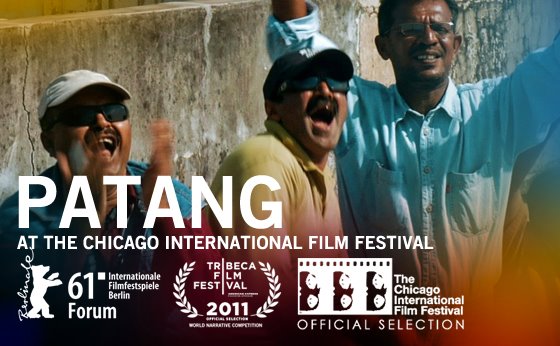
Kite and kin: notes on Patang

At a film festival like Cinefan, some of the more poetic things get said after a screening is over, when the movie’s crew comes up on the stage to address the audience. Consider Aakash Maheriya, a non-professional actor from Ahmedabad, who played one of the main roles in Prashant Bhargava’s fine film Patang. Too many people choose to highlight the unpleasant things about his city’s recent history, Maheriya said – communal riots, for example. “Lekin Prashant ne kuay mein haath daalkar hamaari khushiyan nikaali aur aapko dikhayee.” (“But Prashant dipped his hand in the well, found the happier side of our lives and put it into this film.”)

Much of this khushi is expressed during Ahmedabad’s vibrant kite festival Uttarayan, the event around which the film pivots. Patang, which won the Special Jury Award at Cinefan earlier today, is one of the least plot-driven movies I’ve seen in a while (this isn’t meant as criticism). Its slice-of-life story takes place over two days: a middle-aged businessman named Jayesh (Mukkund Shukla) visits his hometown with his young daughter Priya (Sugandha Garg); they stay with Jayesh’s mother, his widowed bhabhi Sudha (the excellent Seema Biswas in one of her too-infrequent screen appearances) and his nephew Chakku (Nawazuddin Siddiqui in another of a continuing line of impressive performances), who sings in a wedding band. Not very much “happens” – kites are flown, the old city is explored, Sudha seems happy but a little guarded, the family engages in everyday talk, the uncle is patronising towards his nephew – but steadily, deftly, little details of character and circumstance are revealed.

Early on, with no explicit information provided about Jayesh’s current life (and given the knowledge that the film itself was made by non-resident Indians), I assumed that Jayesh and Priya had come from “abroad”. (Clearly I wasn’t the only one: someone brought it up during the post-screening Q-A.) But midway through the film it is disclosed that they live in Delhi, and one realises that this father and daughter are in some ways foreigners even though they are in the same country, a few hundred miles away; the gulf between the lives they lead in the capital and the lives of their lower-middle-class relatives in old Ahmedabad (for whom they bring such wondrous gifts as iPods and "scent") is nearly as wide as it would have been if they were in the US.

As the narrative progresses, one sees the calm but insistent hegemony exercised by the big-city man who wants to settle his mother in a posh colony that has everything he thinks she could want (“AC hai, gardens hain ... mandir bhi hai”), as well as the vulnerability of the old woman, keen to avoid offending her son. One realises that Chakku, his loud shirts and sunglasses aside, is an insecure young man, very possessive of his mother, bitter about the past and essentially childlike (indeed he spends much of his time with the poor local children, who have their own daily struggles). Another young man, Bobby – apparently smug and self-assured – finds himself out of his depth when faced with the sexual frankness of a big-city girl (and with her goggle-eyed, admiring reaction when she discovers he is a college dropout - though in truth he would have preferred to continue studying). And in Priya’s behaviour, there are hints of an unhappy, neglected childhood (her mother was too busy to come along, she hesitantly reveals, because she was “wine-tasting”).

Most of this is not spelled out, it emerges through throwaway conversations. And though I understand what Maheriya meant in his quote about Ahmedabad ki khushi, it would be simplistic to describe this as a “happy” film. Seemingly commonplace early scenes – such as one where the old mother is asked to sign a document – come to suggest darker possibilities later; fractures appear in relationships. The most conventionally dramatic scene is a confrontation between Chakku and his uncle, but tension has already been building for a while, and the film’s pacing reflects this. When the kite-fliers take to the rooftops for friendly competition, the cuts become shorter and more urgent, the music more conspicuous, and though everyone is laughing and joking the event soon acquires a primal, ritualistic intensity. On the screen is a manic dance of hands (some of them bandaged) pulling at strings with increasing fervour; faces become tighter, more focused. Here is the spirit of festivity turned into the survival of the fittest (and this is, in more than one sense, a story about undercutting) – it’s possible, for a while at least, to believe that these people, nominally friends, will do anything to bring a rival kite down. These edgy scenes are later offset by quieter, more graceful night-time shots of kites with paper lanterns tied on their strings, but a point about human nature – and about sibling rivalries and class conflict – has already been made.

Patang combines a few well-chosen stylistic flourishes (such as hazy, dreamlike imagery when Jayesh recalls his childhood flying kites alongside his elder brother) with elements of cinéma vérité, including the casting of non-actors and the use of unobtrusive camerawork. Though based in Chicago, Prashant Bhargava spent months at a time living in Ahmedabad’s old city, observing the pulse of daily life, getting to know everyone from the chai-wallahs to the local gangsters. Later, during the shoot, he encouraged his crew to do the same. “In the first week we did nothing but hang out,” Sugandha Garg said after the screening, while Seema Biswas added that the camera was often left on for three or four hours until the actors became less conscious of it.

This brings a nice spontaneity to many shots, which must then have been painstakingly assembled in the editing room - the final film contains many close-ups of faces and hands, people caught in half-gestures and half-glances, and most of it works very well for this story. There are a few heavy-handed touches: the use of titles in the first 10 minutes to identify the major characters and their relationships to each other (this was presumably done to make things simpler for a non-Indian audience); a trite, over-expository conversation between Priya and Bobby during a romantic moment. But for most of its running time, Patang is a pleasingly intimate observation of small-town India (or rather, "old-city India") and of the many little complications attending family life.