Two years ago, an excerpt from Vinod Mehta’s 1972 biography of Meena Kumari appeared in the anthology The Greatest Show on Earth. Reading it without context, I assumed Mehta’s book was a very personal project, which he was compulsively driven to write after years of fawning over Meena Kumari as a young man. His proprietary use of “my heroine” and “my tragedienne” to describe the then-recently deceased actress suggested this, as did the terms in which he celebrated her Sahib Bibi aur Ghulam performance: “Beautiful. How beautiful she appeared. For once the camera captured my heroine and did justice to a face that was now at its zenith […] Biting her man’s ear, ruffling his hair, caressing his neck, running her hands over his kurta, she created an environment of pulsating, titillating and mouth-watering sexuality.”
 Now, reading Meena Kumari (republished more than 40 years after it first came out) in its entirety, the bench-posts shifted for me as a reader. It turns out the book was a commissioned project, and the repeated use of “my heroine” isn’t so much a marker of personal affection as a tic inspired by the New Journalism of Norman Mailer and others, which had so captured the young Mehta’s imagination. He is honest about this: it might even be said he takes introspection to showy extremes, repeatedly wondering about his own qualifications to write this biography; noting that having been away from India between 1962 and 1969, he was cut off from the Bombay film world for that period (though he had watched Sahib Bibi aur Ghulam just before leaving); and even admitting that his initial interest in the actress came via a larger fascination for another tragic, non-Indian movie star:
Which suggests a mild form of necrophilia underlying the relationship between the biographer and his subject. If that sounds morbid, there is something apt about it: consider how even Meena Kumari's defining role as Chhoti Bahu (which paralleled and foreshadowed aspects of her real life) involved her casting a spell of sorts on the film’s leading man from beyond her unmarked grave. When Mehta describes going to the actress’s grave shortly after her death and being shocked at how unkempt the Shia cemetery was, I thought of Chhoti Bahu’s sad fate – a melodramatic response perhaps, but an inevitable one when the line between a movie star and an iconic role becomes so blurred. And he is probably right that Meena Kumari would have seemed a less interesting figure to us today if she had lived to a ripe old age, not fully undone by melancholia and alcoholism but half-heartedly doing underwritten mother roles in the 1970s and 1980s.
Once you move past the disappointment of realising that this book is not a product of intense, no-holds-barred fandom, there are two things that work very well for Meena Kumari: The Classic Biography (as it has been re-titled). First, Mehta clearly worked hard on it as a journalist, researching meticulously, speaking to nearly all the key figures in his heroine’s life (a notable exception being Dharmendra, who granted him no audience despite repeated tries) and then trying to reconcile their often-contradictory stories into something resembling a narrative. The re-printing makes sense too: such an endeavour is arguably more useful today than it was immediately after the actress's death, when fans and voyeurs had easy access to many in-depth stories and interviews in film magazines.
Second, the author is a palpable presence in this book. Back in 1972, this apparently did not appeal to many readers and critics – in his new Introduction, he recalls some of the initial response: “I had produced an over-sentimental, maudlin life story compromised by the gratuitous insertion of my own personality into the narrative.” Today it should stand a better chance, partly because authorial presence in narrative non-fiction is more widely accepted and partly because Mehta himself – as one of the country’s leading magazine editors – is a person of greater interest now than he was then.
 And given the way this book is written, that is no small matter, for his voice – a distinct, opinionated one, sometimes acerbic, often bombastic, mixing sympathy with snark – comes through on nearly every page. Even on the ones dealing with dry biographical facts: a section about Meena Kumari’s (or Mahjabeen Bano’s) early years as a child artiste includes the aside “Purely on a personal level, I find my heroine’s film name nondescript, sterile and flavourless [...] She deserved something better. I think we could all spend an intriguing evening finding substitutes for ‘Meena Kumari’.” Offering a sociological summary of the year in which she was born, he notes: “You could get nicely drunk for 84 paise (a bottle of beer costing 28), buy a kilo of sugar for 3 paise, smoke a packet of Gold Flake cigarettes for 10 paise, get a woollen suit stitched for Rs 3, find a decent whore for Rs 4. This then was the scenario.” And after quoting from her account of how helpful her much senior co-star Ashok Kumar was during the Parineeta shoot, he can’t resist throwing in a “Like me, you are probably wondering where the director was while these lessons were going on.”
The book’s first section, which takes up 140 pages, is mostly linear and contains the biographical meat: the early years in penury, the first dalliances with the movie camera in films by Vijay Bhatt and Homi Wadia, the rise to stardom as an adult with Baiju Bawra, the tempestuous relationship with her husband Kamal Amrohi, the anecdote about a dacoit-fan who asked her to autograph his hand with his knife, the years of alcoholism and increasingly erratic behaviour – all of it leading up to a bleak portrait of Room 26 in the nursing home where she had her “deedaar” (last audience), and rounded off by an anecdote about the non-payment of medical bills, which brought a depressingly farcical quality to the last act of her life.
 Having got the chronological stuff out of the way, Mehta then moves on to more abstract things in Section Two, commenting on his own feelings about his subject (which, one assumes, must have deepened during the writing of this book) and then assessing her as an actress and as a person. I don’t myself agree that Meena Kumari was miles ahead of her contemporaries, including Nutan and Waheeda Rehman, but there is little faulting his ability to make and sustain an argument. If the book’s first section was sprinkled with very superficial analysis that suggested Mehta had not closely watched or re-watched many of Meena Kumari’s films (“the music was good, the direction showed promise and my heroine was magnificent”), here at last we get something deeper and more thoughtful. He notes some of her special qualities such as a respect for phonetics and the cadences of speech (“too many of our present-day stars speak from the area of the mouth; my heroine went down a little and from some mysterious inner reserve produced the sounds of music”). And again, he gets personal in a good way. (“I find nuances of sadness on a woman’s face fatally irresistible.”)
But the final segment – about “the woman” – is possibly the weakest, because Mehta is placed in the bothersome journalistic position of providing a summary, of neatly tying together a life’s strands into a Narrative (even though he has spent a large part of the book protesting that this cannot be done). What emerges here is a casual sentimentalism that is at odds with much of the rest of the writing. Take this contradiction at the very end: the line “I do not ask you to worship Meena Kumari” is followed immediately by “if you have [understood her], you must join me in proclaiming that she was not only a great actress but a great human being”. Sounds like a case of proselytising to me! The book is at its strongest when Mehta is tentatively exploring, conjecturing, wondering out loud – telling the reader it was impossible to collect even one “undisputed” fact about this woman, or decode her mystery – and at its weakest when he is pronouncing judgements as if from a position of objectivity.
As for the actual writing, it is uneven – fluid and spontaneous at times, self-conscious at other times; showiness and grammatical awkwardness run together in sentences like “She set foot on this earth, head first, in the early hours of 1 August 1932”. (When Mehta writes “I was coming in a taxi a few nights ago”, one hopes it IS a case of grammatical slackness!) But the honest curiosity, the willingness to go off on an entertaining tangent every now and again, make up for the flaws in the prose. More problematic is the condescending tone of passages like the following, which Mehta himself – four decades older and wiser now – must now be embarrassed about: “All right, she was a third-rate poet. But does Raakhee write poetry? Does Hema Malini write poetry? Does Sharmila Tagore write poetry? Did Vyjayanthimala write poetry? Meena Kumari was not only the greatest actress of the last 20 years, she was also the most literate.”
Still, there is something refreshingly contrapuntal about a book on the Great Tragic Hindi Film Heroine being written in a humorous (but also affectionate and probing) tone by a UK-returned 30-year-old hung up on Gonzo Journalism. Still among the most unusual entries in the sparse body of accessible writing on Hindi cinema, Meena Kumari is whimsical in its range of references: Mehta brings up foreign films (from the work of the comedian WC Fields to Anouk Aimee in A Man and a Woman) and literature (the Dharmendra-Meena Kumari relationship is likened to the one between Lady Chatterley and Mellors in D H Lawrence’s novel!). And this naturally means it is show-offish in places. But I’ll take a biography like this – however esoteric or indulgent it might get at times – over a dry, prosaic, impersonal one. We already have too much of that sort of film writing.
[A somewhat related post: a long review of Lois Banner’s biography of Marilyn Monroe]
 Now, reading Meena Kumari (republished more than 40 years after it first came out) in its entirety, the bench-posts shifted for me as a reader. It turns out the book was a commissioned project, and the repeated use of “my heroine” isn’t so much a marker of personal affection as a tic inspired by the New Journalism of Norman Mailer and others, which had so captured the young Mehta’s imagination. He is honest about this: it might even be said he takes introspection to showy extremes, repeatedly wondering about his own qualifications to write this biography; noting that having been away from India between 1962 and 1969, he was cut off from the Bombay film world for that period (though he had watched Sahib Bibi aur Ghulam just before leaving); and even admitting that his initial interest in the actress came via a larger fascination for another tragic, non-Indian movie star:
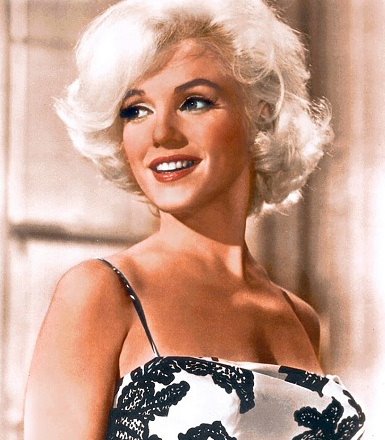
The source of my interest in Meena Kumari, I must point out, was not direct; rather it was nourished through another woman (white, naturally) who in my juvenile fantasy years exercised an erotic and emotional influence which I will not even begin to analyse. The woman was Marilyn Monroe and though my heroine and this woman performed thousands of miles apart, there were several parallels. Publically they had little in common; behind the scenes they were sisters. The same legendary physical powers, the same unfulfilled relationships, the same consuming irresistible wistfulness, the same self-destructive urges.In this light, another of Mehta’s confessions is revealing. “The woman whose portrait I had been asked to sketch,” he writes, “interested me immensely – not while she was alive but once she was dead. I suppose this sounds callous, but it is true. In the timing and manner of her death my heroine assumed heroic dimensions.”
Which suggests a mild form of necrophilia underlying the relationship between the biographer and his subject. If that sounds morbid, there is something apt about it: consider how even Meena Kumari's defining role as Chhoti Bahu (which paralleled and foreshadowed aspects of her real life) involved her casting a spell of sorts on the film’s leading man from beyond her unmarked grave. When Mehta describes going to the actress’s grave shortly after her death and being shocked at how unkempt the Shia cemetery was, I thought of Chhoti Bahu’s sad fate – a melodramatic response perhaps, but an inevitable one when the line between a movie star and an iconic role becomes so blurred. And he is probably right that Meena Kumari would have seemed a less interesting figure to us today if she had lived to a ripe old age, not fully undone by melancholia and alcoholism but half-heartedly doing underwritten mother roles in the 1970s and 1980s.
Once you move past the disappointment of realising that this book is not a product of intense, no-holds-barred fandom, there are two things that work very well for Meena Kumari: The Classic Biography (as it has been re-titled). First, Mehta clearly worked hard on it as a journalist, researching meticulously, speaking to nearly all the key figures in his heroine’s life (a notable exception being Dharmendra, who granted him no audience despite repeated tries) and then trying to reconcile their often-contradictory stories into something resembling a narrative. The re-printing makes sense too: such an endeavour is arguably more useful today than it was immediately after the actress's death, when fans and voyeurs had easy access to many in-depth stories and interviews in film magazines.
Second, the author is a palpable presence in this book. Back in 1972, this apparently did not appeal to many readers and critics – in his new Introduction, he recalls some of the initial response: “I had produced an over-sentimental, maudlin life story compromised by the gratuitous insertion of my own personality into the narrative.” Today it should stand a better chance, partly because authorial presence in narrative non-fiction is more widely accepted and partly because Mehta himself – as one of the country’s leading magazine editors – is a person of greater interest now than he was then.
And given the way this book is written, that is no small matter, for his voice – a distinct, opinionated one, sometimes acerbic, often bombastic, mixing sympathy with snark – comes through on nearly every page. Even on the ones dealing with dry biographical facts: a section about Meena Kumari’s (or Mahjabeen Bano’s) early years as a child artiste includes the aside “Purely on a personal level, I find my heroine’s film name nondescript, sterile and flavourless [...] She deserved something better. I think we could all spend an intriguing evening finding substitutes for ‘Meena Kumari’.” Offering a sociological summary of the year in which she was born, he notes: “You could get nicely drunk for 84 paise (a bottle of beer costing 28), buy a kilo of sugar for 3 paise, smoke a packet of Gold Flake cigarettes for 10 paise, get a woollen suit stitched for Rs 3, find a decent whore for Rs 4. This then was the scenario.” And after quoting from her account of how helpful her much senior co-star Ashok Kumar was during the Parineeta shoot, he can’t resist throwing in a “Like me, you are probably wondering where the director was while these lessons were going on.”The book’s first section, which takes up 140 pages, is mostly linear and contains the biographical meat: the early years in penury, the first dalliances with the movie camera in films by Vijay Bhatt and Homi Wadia, the rise to stardom as an adult with Baiju Bawra, the tempestuous relationship with her husband Kamal Amrohi, the anecdote about a dacoit-fan who asked her to autograph his hand with his knife, the years of alcoholism and increasingly erratic behaviour – all of it leading up to a bleak portrait of Room 26 in the nursing home where she had her “deedaar” (last audience), and rounded off by an anecdote about the non-payment of medical bills, which brought a depressingly farcical quality to the last act of her life.
 Having got the chronological stuff out of the way, Mehta then moves on to more abstract things in Section Two, commenting on his own feelings about his subject (which, one assumes, must have deepened during the writing of this book) and then assessing her as an actress and as a person. I don’t myself agree that Meena Kumari was miles ahead of her contemporaries, including Nutan and Waheeda Rehman, but there is little faulting his ability to make and sustain an argument. If the book’s first section was sprinkled with very superficial analysis that suggested Mehta had not closely watched or re-watched many of Meena Kumari’s films (“the music was good, the direction showed promise and my heroine was magnificent”), here at last we get something deeper and more thoughtful. He notes some of her special qualities such as a respect for phonetics and the cadences of speech (“too many of our present-day stars speak from the area of the mouth; my heroine went down a little and from some mysterious inner reserve produced the sounds of music”). And again, he gets personal in a good way. (“I find nuances of sadness on a woman’s face fatally irresistible.”)
But the final segment – about “the woman” – is possibly the weakest, because Mehta is placed in the bothersome journalistic position of providing a summary, of neatly tying together a life’s strands into a Narrative (even though he has spent a large part of the book protesting that this cannot be done). What emerges here is a casual sentimentalism that is at odds with much of the rest of the writing. Take this contradiction at the very end: the line “I do not ask you to worship Meena Kumari” is followed immediately by “if you have [understood her], you must join me in proclaiming that she was not only a great actress but a great human being”. Sounds like a case of proselytising to me! The book is at its strongest when Mehta is tentatively exploring, conjecturing, wondering out loud – telling the reader it was impossible to collect even one “undisputed” fact about this woman, or decode her mystery – and at its weakest when he is pronouncing judgements as if from a position of objectivity.
As for the actual writing, it is uneven – fluid and spontaneous at times, self-conscious at other times; showiness and grammatical awkwardness run together in sentences like “She set foot on this earth, head first, in the early hours of 1 August 1932”. (When Mehta writes “I was coming in a taxi a few nights ago”, one hopes it IS a case of grammatical slackness!) But the honest curiosity, the willingness to go off on an entertaining tangent every now and again, make up for the flaws in the prose. More problematic is the condescending tone of passages like the following, which Mehta himself – four decades older and wiser now – must now be embarrassed about: “All right, she was a third-rate poet. But does Raakhee write poetry? Does Hema Malini write poetry? Does Sharmila Tagore write poetry? Did Vyjayanthimala write poetry? Meena Kumari was not only the greatest actress of the last 20 years, she was also the most literate.”
Still, there is something refreshingly contrapuntal about a book on the Great Tragic Hindi Film Heroine being written in a humorous (but also affectionate and probing) tone by a UK-returned 30-year-old hung up on Gonzo Journalism. Still among the most unusual entries in the sparse body of accessible writing on Hindi cinema, Meena Kumari is whimsical in its range of references: Mehta brings up foreign films (from the work of the comedian WC Fields to Anouk Aimee in A Man and a Woman) and literature (the Dharmendra-Meena Kumari relationship is likened to the one between Lady Chatterley and Mellors in D H Lawrence’s novel!). And this naturally means it is show-offish in places. But I’ll take a biography like this – however esoteric or indulgent it might get at times – over a dry, prosaic, impersonal one. We already have too much of that sort of film writing.
[A somewhat related post: a long review of Lois Banner’s biography of Marilyn Monroe]