Called up Tata Indicom helpline this morning because Net speed was much slower than usual. “Please bear with us for an hour, sir,” said solicitous customer-care executive, “We are updating the Internet.”
Back up all your blogs, people.
Wednesday, August 31, 2005


Tuesday, August 30, 2005
Hitchhiker’s guide to the slaughterhouse
My family’s always been in meat
- Creepy hitchhiker, The Texas Chainsaw Massacre
I’ve blogged before about the many benefits of DVDs, but in some cases the special features can make nonsense of the very particular associations one has with a movie. I’m thinking now of The Texas Chainsaw Massacre, a film that, notwithstanding my generally high opinion of it, I wouldn’t actually recommend to anyone unless they were doing a thesis on the Modern Horror Movie. Last week I re-watched it and then turned to the 72-minute-long "Making Of" featurette on the DVD, packed with interviews of cast and crew members. It felt distinctly wrong: here is a stark, gory, very low-budget movie made almost as an experiment by a bunch of student filmmakers in the early 1970s. A one-of-a-kind film that seemed to exist outside of all movie conventions, a film that might well have been made anonymously and then deposited into the mailbox of one of the studios, with a note asking them to distribute it. And now, 30 years later, here are all the protagonists - respectably middle-aged, laughing and joking with each other, relating anecdotes about the filming process.
Tobe Hooper, the film’s director, tells us he decided on "Texas Chainsaw Massacre" as the title when his girlfriend at the time exclaimed, "Yuck, I’d never watch anything called that!" (Decided?! And here I was thinking that everything about that film just came together - fell into place entirely independently of such mundanities as human decisions and choices.) One of the scriptwriters (this film needed to be scripted?) relates the story behind the dead armadillo we see as road-kill in the first shot of the movie. And here’s Marilyn Burns, who I’d have preferred to freeze into my memory-bank for all time as the screaming, blood-covered Sally trapped in a house of horrors; now she’s gazing into the camera with grandmotherly indulgence, the light of wistful recollection in her eyes. Even Gunnar Hansen, who played the monstrous Leatherface, participates in audio commentary on the film. Yup, DVDs can be weird alright. Far too much information.
The Texas Chainsaw Massacre is a grisly piece of work (though not as grisly as its reputation suggests, and certainly less shocking to a modern audience than it would have been to its first viewers back in 1974) based very roughly on the real-life case of the Wisconsin mass murderer/grave robber Ed Gein, a case that had shocked the American heartland in the late 1950s. (Incidentally Gein’s story was also the source material for Robert Bloch’s book Psycho and, in turn, Alfred Hitchcock’s great film.) Briefly, TCM is the story of five teenagers who stumble upon a madhouse run by a family of cannibals, and are then picked off one by one, mainly by the chainsaw-wielding "Leatherface" (the conventional monster in the film and the most visible face of the horror confronting the teens and us, the viewer; but, as we eventually learn, also the most submissive member of the murderous family). Leatherface treats the kids like cattle in a slaughterhouse (which is, of course, what they are to him) – knocking them over the heads with a handy club, carving them up, hanging them on meat-hooks, and then, in a memorable scene, fretting pathetically at the sheer number of people coming to the house ("what to do with so much meat" you can hear this retarded monster think to himself as he holds his head in his hands).
In case you’re still reading this, The Texas Chainsaw Massacre was one of a series of landmark low-budget horror films of its time (others include George Romero’s first zombie feature Night of the Living Dead and Wes Craven’s Last House on the Left) that derived their effectiveness largely from being shot on a shoestring budget. Crucially, however, the people behind these movies (including Tobe Hooper, who directed this one) weren’t hacks; they were serious students and lovers of cinema, with a strong sense of what worked and what didn’t, and always keen to learn from their mistakes (which they couldn’t afford too many of, given the cost of film stock).
Watching this film, that raw talent is obvious. Take the scene where one of the girls stumbles into a room, trips and falls, then looks around (the camera mimicking her initially glazed vision, with things slowly coming into focus) to register a sea of bones covering the floor, some hanging by strings from the ceiling; a pan shot that reveals an elaborate relic constructed of human skeletons; a caged hen clucking ominously. Treading though it does the margins of Exploitation (some would say it crossed over), there is an unmistakable cinematic adeptness in this sequence and in others like it, which compare favourably with most of the finest moments in the genre. Despite the numerous parodies and rip-offs that it’s engendered (including a pointless remake just a year or so ago), The Texas Chainsaw Massacre has a visceral appeal that few other horror films (at least among those that are, relatively speaking, in the Mainstream) have ever matched.
P.S. On my re-watching TCM, I was struck by the completely clinical, matter-of-fact way in which Leatherface goes about gathering and disposing of his victims; there’s nothing wilfully sadistic about his actions, he’s just doing what needs to be done - which, of course, adds to the horror. Couldn’t help relating it to some of the slaughterhouse descriptions in Eric Schlosser’s Cogs in the Machine, which I recently read in Penguin’s pocketbook series. Some of the finest horror films are those that hold a mirror up to our own natures.
P.P.S. Horror movies were among my earliest obsessions as a film-lover, and preparing anything like an exhaustive list of favourites from the genre would take up more time than I have right now. But here are a few favourites from the 1970s:
- The Wicker Man (cult British classic about a policeman visiting an isolated island community to investigate a schoolgirl’s disappearance, and being drawn into pagan rituals)
- Halloween (John Carpenter’s classic about a madman returning to the small town where he committed a murder as a child retains its power despite a clutch of bad sequels and contemporary comic associations with the name "Mike Myers". My favourite scene is the one of the young Jamie Lee Curtis walking through a desolate park near a row of houses; cars parked everywhere but no human beings in sight)
- Divorce His, Divorce Hers (Elizabeth Taylor-Richard Burton starrer, not intended as horror film but very scary)
- Carrie (Brian DePalma’s adaptation of the Stephen King novel superbly captures the cruelty Carrie faces from her classmates and her own mother; the monsters here all wear a human face)
- Shivers (David Cronenberg’s obsession with the internal workings of the human body found full expression in this cringe-inducing little gorefest about parasites attacking the residents of an apartment complex)
The film which you are about to see is an account of the tragedy which befell a group of five youths, in particular Sally Hardesty and her invalid brother, Franklin. It is all the more tragic in that they were young. But, had they lived very, very long lives, they could not have expected nor would they have wished to see as much of the mad and macabre as they were to see that day.
- Solemn narrator, The Texas Chainsaw Massacre
- Creepy hitchhiker, The Texas Chainsaw Massacre
I’ve blogged before about the many benefits of DVDs, but in some cases the special features can make nonsense of the very particular associations one has with a movie. I’m thinking now of The Texas Chainsaw Massacre, a film that, notwithstanding my generally high opinion of it, I wouldn’t actually recommend to anyone unless they were doing a thesis on the Modern Horror Movie. Last week I re-watched it and then turned to the 72-minute-long "Making Of" featurette on the DVD, packed with interviews of cast and crew members. It felt distinctly wrong: here is a stark, gory, very low-budget movie made almost as an experiment by a bunch of student filmmakers in the early 1970s. A one-of-a-kind film that seemed to exist outside of all movie conventions, a film that might well have been made anonymously and then deposited into the mailbox of one of the studios, with a note asking them to distribute it. And now, 30 years later, here are all the protagonists - respectably middle-aged, laughing and joking with each other, relating anecdotes about the filming process.
Tobe Hooper, the film’s director, tells us he decided on "Texas Chainsaw Massacre" as the title when his girlfriend at the time exclaimed, "Yuck, I’d never watch anything called that!" (Decided?! And here I was thinking that everything about that film just came together - fell into place entirely independently of such mundanities as human decisions and choices.) One of the scriptwriters (this film needed to be scripted?) relates the story behind the dead armadillo we see as road-kill in the first shot of the movie. And here’s Marilyn Burns, who I’d have preferred to freeze into my memory-bank for all time as the screaming, blood-covered Sally trapped in a house of horrors; now she’s gazing into the camera with grandmotherly indulgence, the light of wistful recollection in her eyes. Even Gunnar Hansen, who played the monstrous Leatherface, participates in audio commentary on the film. Yup, DVDs can be weird alright. Far too much information.
The Texas Chainsaw Massacre is a grisly piece of work (though not as grisly as its reputation suggests, and certainly less shocking to a modern audience than it would have been to its first viewers back in 1974) based very roughly on the real-life case of the Wisconsin mass murderer/grave robber Ed Gein, a case that had shocked the American heartland in the late 1950s. (Incidentally Gein’s story was also the source material for Robert Bloch’s book Psycho and, in turn, Alfred Hitchcock’s great film.) Briefly, TCM is the story of five teenagers who stumble upon a madhouse run by a family of cannibals, and are then picked off one by one, mainly by the chainsaw-wielding "Leatherface" (the conventional monster in the film and the most visible face of the horror confronting the teens and us, the viewer; but, as we eventually learn, also the most submissive member of the murderous family). Leatherface treats the kids like cattle in a slaughterhouse (which is, of course, what they are to him) – knocking them over the heads with a handy club, carving them up, hanging them on meat-hooks, and then, in a memorable scene, fretting pathetically at the sheer number of people coming to the house ("what to do with so much meat" you can hear this retarded monster think to himself as he holds his head in his hands).
In case you’re still reading this, The Texas Chainsaw Massacre was one of a series of landmark low-budget horror films of its time (others include George Romero’s first zombie feature Night of the Living Dead and Wes Craven’s Last House on the Left) that derived their effectiveness largely from being shot on a shoestring budget. Crucially, however, the people behind these movies (including Tobe Hooper, who directed this one) weren’t hacks; they were serious students and lovers of cinema, with a strong sense of what worked and what didn’t, and always keen to learn from their mistakes (which they couldn’t afford too many of, given the cost of film stock).
Watching this film, that raw talent is obvious. Take the scene where one of the girls stumbles into a room, trips and falls, then looks around (the camera mimicking her initially glazed vision, with things slowly coming into focus) to register a sea of bones covering the floor, some hanging by strings from the ceiling; a pan shot that reveals an elaborate relic constructed of human skeletons; a caged hen clucking ominously. Treading though it does the margins of Exploitation (some would say it crossed over), there is an unmistakable cinematic adeptness in this sequence and in others like it, which compare favourably with most of the finest moments in the genre. Despite the numerous parodies and rip-offs that it’s engendered (including a pointless remake just a year or so ago), The Texas Chainsaw Massacre has a visceral appeal that few other horror films (at least among those that are, relatively speaking, in the Mainstream) have ever matched.
P.S. On my re-watching TCM, I was struck by the completely clinical, matter-of-fact way in which Leatherface goes about gathering and disposing of his victims; there’s nothing wilfully sadistic about his actions, he’s just doing what needs to be done - which, of course, adds to the horror. Couldn’t help relating it to some of the slaughterhouse descriptions in Eric Schlosser’s Cogs in the Machine, which I recently read in Penguin’s pocketbook series. Some of the finest horror films are those that hold a mirror up to our own natures.
P.P.S. Horror movies were among my earliest obsessions as a film-lover, and preparing anything like an exhaustive list of favourites from the genre would take up more time than I have right now. But here are a few favourites from the 1970s:
- The Wicker Man (cult British classic about a policeman visiting an isolated island community to investigate a schoolgirl’s disappearance, and being drawn into pagan rituals)
- Halloween (John Carpenter’s classic about a madman returning to the small town where he committed a murder as a child retains its power despite a clutch of bad sequels and contemporary comic associations with the name "Mike Myers". My favourite scene is the one of the young Jamie Lee Curtis walking through a desolate park near a row of houses; cars parked everywhere but no human beings in sight)
- Divorce His, Divorce Hers (Elizabeth Taylor-Richard Burton starrer, not intended as horror film but very scary)
- Carrie (Brian DePalma’s adaptation of the Stephen King novel superbly captures the cruelty Carrie faces from her classmates and her own mother; the monsters here all wear a human face)
- Shivers (David Cronenberg’s obsession with the internal workings of the human body found full expression in this cringe-inducing little gorefest about parasites attacking the residents of an apartment complex)
(And hopefully, more blogging on this topic soon.)
The film which you are about to see is an account of the tragedy which befell a group of five youths, in particular Sally Hardesty and her invalid brother, Franklin. It is all the more tragic in that they were young. But, had they lived very, very long lives, they could not have expected nor would they have wished to see as much of the mad and macabre as they were to see that day.
- Solemn narrator, The Texas Chainsaw Massacre
Sunday, August 28, 2005
Review: Hari Kunzru’s Noise
My review for The Indian Express; appeared in today’s edition.
---------------
In Hari Kunzru’s last novel, Transmission, one character was described as "less a human being than a communications medium, a channel for the transmission of consumer lifestyle messages". Another, travelling by plane, thought of himself as a message being transmitted from one point on the earth’s surface to another. A third imagined the globe contracting "like a deflated beachball". The epilogue, titled "Noise", was about the many imperfections in communication systems: "information transmission, it emerges, is about doing the best you can."
The shrinking of global spaces, the increasing interaction between man and technology to the point where one melds with the other...these are staples of Kunzru’s best writing, despite the red herring served up by his debut novel The Impressionist (which led some critics to hail him as the next big thing in Indian writing in English -- ironical for a writer with such wide-ranging concerns). Now, in the stories collected in Noise, we get a glimpse of those ideas in their embryonic form. These short pieces are among Kunzru’s earliest published works, some written as far back as 1995 for Mute, a magazine set up to discuss the interrelations between art and new technologies.
In the creepily fascinating "Bodywork", a man slowly metamorphoses into a car, even as his wife (literally) rots away in their bedroom. "I don’t think you see anything at all," she tells him, "But there’s someone here, Barry. A human being." It’s a parable alright but never hackneyed, and written in a coldly mechanical style that’s particularly well-suited to the narrative. In "Deus Ex Machina" a guardian angel tinkers with computers to help save a young woman’s life -- but implicit in even this relatively straightforward story is the question: are machines the real guardian angels, and what happens when they break down? (A later story promotes machines to God-status.) And the brilliantly subversive "Memories of the Decadence" and "Eclipse Chasing" give us, in the guise of science-fiction, social settings which are not so difficult to relate to ("...it became impossible to tell the fashionable from the afflicted...we became collectors of objects, not from any interest in the things themselves, but simply for the opportunities they presented for cataloguing").
Kunzru is always an interesting writer, but his energetic style, and his talent for saying a lot in a few crisp words, are especially well suited to short pieces; his novels meander in parts but these stories are completely engaging and full of brio. Which is appropriate -- speed, change, the constant need for new things to replace the old as the pressures of the modern world build; these are the bywords here. The ending of "Memories of the Decadence" sums this up, with its description of a new era of moderance. "We are content. And yet...and yet there is something stale in the air. Citizens whisper in the social clubs. They say that it cannot last."
Kunzru’s early stories have more than lasted; they are more relevant now than when they were written.
(Incidentally, this volume is one of 70 pocket books produced by Penguin to mark seven decades of its existence; the series is eminently collectable, even though -- hush, don’t tell anyone! -- at least three of the five stories in this collection are also available on Kunzru’s official website.)
---------------
In Hari Kunzru’s last novel, Transmission, one character was described as "less a human being than a communications medium, a channel for the transmission of consumer lifestyle messages". Another, travelling by plane, thought of himself as a message being transmitted from one point on the earth’s surface to another. A third imagined the globe contracting "like a deflated beachball". The epilogue, titled "Noise", was about the many imperfections in communication systems: "information transmission, it emerges, is about doing the best you can."
The shrinking of global spaces, the increasing interaction between man and technology to the point where one melds with the other...these are staples of Kunzru’s best writing, despite the red herring served up by his debut novel The Impressionist (which led some critics to hail him as the next big thing in Indian writing in English -- ironical for a writer with such wide-ranging concerns). Now, in the stories collected in Noise, we get a glimpse of those ideas in their embryonic form. These short pieces are among Kunzru’s earliest published works, some written as far back as 1995 for Mute, a magazine set up to discuss the interrelations between art and new technologies.
In the creepily fascinating "Bodywork", a man slowly metamorphoses into a car, even as his wife (literally) rots away in their bedroom. "I don’t think you see anything at all," she tells him, "But there’s someone here, Barry. A human being." It’s a parable alright but never hackneyed, and written in a coldly mechanical style that’s particularly well-suited to the narrative. In "Deus Ex Machina" a guardian angel tinkers with computers to help save a young woman’s life -- but implicit in even this relatively straightforward story is the question: are machines the real guardian angels, and what happens when they break down? (A later story promotes machines to God-status.) And the brilliantly subversive "Memories of the Decadence" and "Eclipse Chasing" give us, in the guise of science-fiction, social settings which are not so difficult to relate to ("...it became impossible to tell the fashionable from the afflicted...we became collectors of objects, not from any interest in the things themselves, but simply for the opportunities they presented for cataloguing").
Kunzru is always an interesting writer, but his energetic style, and his talent for saying a lot in a few crisp words, are especially well suited to short pieces; his novels meander in parts but these stories are completely engaging and full of brio. Which is appropriate -- speed, change, the constant need for new things to replace the old as the pressures of the modern world build; these are the bywords here. The ending of "Memories of the Decadence" sums this up, with its description of a new era of moderance. "We are content. And yet...and yet there is something stale in the air. Citizens whisper in the social clubs. They say that it cannot last."
Kunzru’s early stories have more than lasted; they are more relevant now than when they were written.
(Incidentally, this volume is one of 70 pocket books produced by Penguin to mark seven decades of its existence; the series is eminently collectable, even though -- hush, don’t tell anyone! -- at least three of the five stories in this collection are also available on Kunzru’s official website.)
Saturday, August 27, 2005
Blog.com: Neil Gaiman’s journal
I haven’t been posting the fortnightly blog column I write for Business Standard, partly because it would feel redundant. The column is typically aimed at a newspaper reader who knows almost nothing about the subject and must be given a crash course in Blogging Basics; and it would seem very naïve to the experienced bloggers/blog-readers who drop by here. But I’ll make an exception this once, because the last column was on SFF writer Neil Gaiman’s journal – and now, as Samit (who I quoted in the piece) sweetly informs me, Gaiman has provided a link to the article on his blog (see here: small reference in the third-last paragraph).
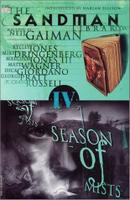
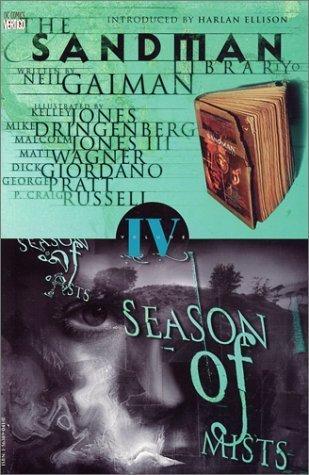
While I’m nowhere near as clued in to SFF writing as Samit baba is, the lack of proper attention/respect being accorded to the genre is a major sour point for me. So more power to Gaiman and Basu and their ilk. (Here, by the way, is some more on Gaiman and Sandman: Nilanjana S Roy on how “the worlds of literature and genre fiction bleed into each other all the time”.)
And here goes the blog column (incidentally, the para breaks problem on the Business Standard website persists - while the column in print form had four longish paras, the one on the website has 11 teensy-weensy ones). Like I warned you, it's very basic:
----------
 The author as blogger
The solitariness of the writing process is an old, romantic cliché (and a largely true one) -- the image of a writer cooping himself up in a little room for weeks on end, restricting himself to the company of his Muse, is almost as old as literature itself. But while this old story hasn’t changed in its essence, the Internet has given it a piquant twist: today, reticent writers have the option of cutting themselves off from the physical world, even as they reach out to their fans online. A large number of published authors have their own websites, online journals or blogs, through which they can make themselves more accessible while guarding their cherished privacy. One of the most popular among these is fantasy writer Neil Gaiman’s personal homepage, which he started as far back as 2001.
A professional writer for more than 20 years, Gaiman has been at the forefront of the revolution that has seen comics/graphic novels gain a measure of literary respectability; his Sandman series is one of the most highly regarded works in the genre. Now his official website has a cult following that rivals his published work – with 400,000 unique visitors per month in 2004, and close to 600,000 per month expected in 2005. His online journal (which forms a section of the website) is syndicated to thousands of blog readers every day, and provides treasured insights into the writer’s inspiration, style, and working method. “As a diehard Gaiman fan I like seeing what he is up to, even if I have to wait a long time before getting my hands on his latest releases,” says Samit Basu, author of the science-fiction/fantasy (SFF) novel The Simoqin Prophecies and one of an ever-burgeoning group of Sandman addicts in India, where the comics are finally getting wide availability.
So what form does a blog run by a popular author like Gaiman take? Well, for starters he doesn’t have “Comments” enabled on his site – which is understandable, given the size of his web traffic. But he does showcase reader emails that he finds interesting, and responds to them in the form of posts on the blog. He talks about fellow artists and writers in his field, directs his readers to articles of interest and engages in online discussions on new literary trends – like the eBay auctions where people can bid to have a character in a novel named after them. There are also updates on his novels/comics, their release dates and availability.
Gaiman’s journal isn’t particularly neat in its design – the posts are unformatted and scattered, which adds to the image of the artist as a disorganized young man who uses the medium for convenience sake, not to make an aesthetic statement. But his fans won’t mind any of that. As Basu points out, this blog is an excellent resource for current work in a particular literary spectrum. “It’s very relevant for fans of SFF in India, because proper discussion on these genres of literature – which are not taken very seriously here – is practically non-existent.”
While I’m nowhere near as clued in to SFF writing as Samit baba is, the lack of proper attention/respect being accorded to the genre is a major sour point for me. So more power to Gaiman and Basu and their ilk. (Here, by the way, is some more on Gaiman and Sandman: Nilanjana S Roy on how “the worlds of literature and genre fiction bleed into each other all the time”.)
And here goes the blog column (incidentally, the para breaks problem on the Business Standard website persists - while the column in print form had four longish paras, the one on the website has 11 teensy-weensy ones). Like I warned you, it's very basic:
----------
 The author as blogger
The solitariness of the writing process is an old, romantic cliché (and a largely true one) -- the image of a writer cooping himself up in a little room for weeks on end, restricting himself to the company of his Muse, is almost as old as literature itself. But while this old story hasn’t changed in its essence, the Internet has given it a piquant twist: today, reticent writers have the option of cutting themselves off from the physical world, even as they reach out to their fans online. A large number of published authors have their own websites, online journals or blogs, through which they can make themselves more accessible while guarding their cherished privacy. One of the most popular among these is fantasy writer Neil Gaiman’s personal homepage, which he started as far back as 2001.
A professional writer for more than 20 years, Gaiman has been at the forefront of the revolution that has seen comics/graphic novels gain a measure of literary respectability; his Sandman series is one of the most highly regarded works in the genre. Now his official website has a cult following that rivals his published work – with 400,000 unique visitors per month in 2004, and close to 600,000 per month expected in 2005. His online journal (which forms a section of the website) is syndicated to thousands of blog readers every day, and provides treasured insights into the writer’s inspiration, style, and working method. “As a diehard Gaiman fan I like seeing what he is up to, even if I have to wait a long time before getting my hands on his latest releases,” says Samit Basu, author of the science-fiction/fantasy (SFF) novel The Simoqin Prophecies and one of an ever-burgeoning group of Sandman addicts in India, where the comics are finally getting wide availability.
So what form does a blog run by a popular author like Gaiman take? Well, for starters he doesn’t have “Comments” enabled on his site – which is understandable, given the size of his web traffic. But he does showcase reader emails that he finds interesting, and responds to them in the form of posts on the blog. He talks about fellow artists and writers in his field, directs his readers to articles of interest and engages in online discussions on new literary trends – like the eBay auctions where people can bid to have a character in a novel named after them. There are also updates on his novels/comics, their release dates and availability.
Gaiman’s journal isn’t particularly neat in its design – the posts are unformatted and scattered, which adds to the image of the artist as a disorganized young man who uses the medium for convenience sake, not to make an aesthetic statement. But his fans won’t mind any of that. As Basu points out, this blog is an excellent resource for current work in a particular literary spectrum. “It’s very relevant for fans of SFF in India, because proper discussion on these genres of literature – which are not taken very seriously here – is practically non-existent.”
Friday, August 26, 2005
Unlock kar diya jaaye
Surfing TV channels, I spent a few minutes on KBC 2 (or KBC: the Sequel, or whatever they’re calling it now). Always intriguing to see how contestants start by being overwhelmed by emotion merely at the Big B’s presence (“aapke darshan ho gaye, yehi bahut hai”, etc), but then, as they win increasing sums of money, they get all atavistic and start behaving like ape-men (from an era, ironically, where there was no money in the first place, and all you had to do to get something you wanted was to bop the next guy with a sturdy tree-branch).
Anyway, I noticed that the show got it wrong on one tennis-related question:
What is the minimum number of serves you need to make to win a game?
The options given were 3, 4, 5 and 6. The ape in the hot seat said 5 and crashed out; the correct answer, “computer-ji” told us, was 4 (with AB counting off 15-0, 30-0, 40-0 and Game on his fingers).
Tut tut. The correct answer is really “Zero”, since you can of course win a game on the other guy’s serve - the show’s assumption that the game had to be won by the player who was serving wasn’t reflected in the question. Maybe the ape should sue.
P.S. While on KBC, I still haven’t stopped giggling inwardly at one of the questions from last week, “Which author has compiled a jokebook?” which had Arundhati Roy as one of the options. Yes, that would be a good joke to start the book with. (Suggestions please for any others such a book might contain. I’ve only been able to think of this one so far: “The US of A is Good.”)
Anyway, I noticed that the show got it wrong on one tennis-related question:
What is the minimum number of serves you need to make to win a game?
The options given were 3, 4, 5 and 6. The ape in the hot seat said 5 and crashed out; the correct answer, “computer-ji” told us, was 4 (with AB counting off 15-0, 30-0, 40-0 and Game on his fingers).
Tut tut. The correct answer is really “Zero”, since you can of course win a game on the other guy’s serve - the show’s assumption that the game had to be won by the player who was serving wasn’t reflected in the question. Maybe the ape should sue.
P.S. While on KBC, I still haven’t stopped giggling inwardly at one of the questions from last week, “Which author has compiled a jokebook?” which had Arundhati Roy as one of the options. Yes, that would be a good joke to start the book with. (Suggestions please for any others such a book might contain. I’ve only been able to think of this one so far: “The US of A is Good.”)
Wednesday, August 24, 2005
Got Firefox!
Have finally taken the advice of my many technologically advantaged friends and downloaded Mozilla. This sounds like something that belongs on a pizza but it’s actually a much more useful web browser than Internet Explorer – so I’m told by everyone who’s used it. I’m willing to believe this after my recent experiences with blasted Windows XP.
I have the standard version of Mozilla Firefox, not the customised one, since I don’t plan to do anything fancy with it yet. So far it doesn’t feel all that different from IE, except for the undeniable advantage that you can open several sites within the same window. Will learn about other features over time. No major unfamiliarity problem (which, apparently, is one of the reasons many people are loath to abandon IE – interesting how the Microsoft monopoly snowballs because of such silly little reasons). And I’m told it has a built-in anti-virus/firewall/whatever. All good.
(And yes, this is my first post from the new browser.)
Also, read this.
I have the standard version of Mozilla Firefox, not the customised one, since I don’t plan to do anything fancy with it yet. So far it doesn’t feel all that different from IE, except for the undeniable advantage that you can open several sites within the same window. Will learn about other features over time. No major unfamiliarity problem (which, apparently, is one of the reasons many people are loath to abandon IE – interesting how the Microsoft monopoly snowballs because of such silly little reasons). And I’m told it has a built-in anti-virus/firewall/whatever. All good.
(And yes, this is my first post from the new browser.)
Also, read this.
Monday, August 22, 2005
Speaking of Films - review
Did this for Business Standard - it appeared in today’s edition.
---------
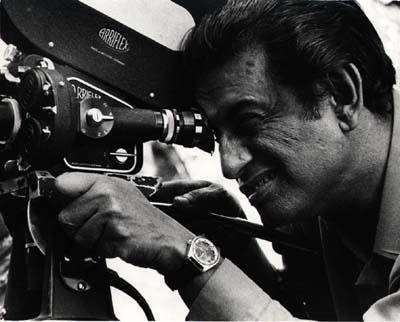
 The late Satyajit Ray often expressed regret about the lack of quality writing on cinema by its own practitioners. "Filmmaking is such a demanding process that directors – especially those who keep up a steady output – rarely have time to assemble their thoughts," he said. Time constraints aren’t the only factor; many leading directors tend to be reluctant to discuss their own work at length, much less expound on cinema in general. But Ray himself is one of the exceptions. Non-Bengali readers might be familiar with his earlier work, Our Films, Their Films, a collection of essays that was first published in 1976. Now we have Speaking of Films, a translation of a collection known in Bengal as Bishay Chalachitra.
It’s taken a puzzlingly long time for the first English version of Bishay Chalachitra to appear, but it was worth the wait: Gopa Majumdar’s translation is impeccable, retaining all the qualities we associate with the director - gentle yet firm, avuncular, instructive but conversational. In the 18 essays collected here, Ray covers topics ranging from the history of Bengali cinema to the importance of background music in a film ("in India the problem a composer must face is not one of paucity but of abundance"). There are reflections on great directors of the past, personal glimpses into the vicissitudes of the filmmaking process, and anecdotes, like the amusingly incongruous one about Kanu Banerjee - Pather Panchali’s Harihar - ruining a shot by repeatedly saying "mohanbagan" (the football club) instead of "mohanbhog" (the sweet). Ray also uses the scenarios of some of his movies to illuminate the problems in translation from page to screen. And there are moving personal profiles, based on his experiences with the blind painter Benode Bihari and with the extraordinary Chunnibala Devi, whose performance as the old pishi in Pather Panchali was one of the miracles of screen acting (and of serendipitous casting).
The master director discusses, at some length, the synthesis between form and content: the two qualities must ideally work in unison, he says, but it is possible for some films to aspire to high artistic achievement even with an abundance of one quality relative to the other; the austerity of the Japanese director Ozu (who refused to employ even widely accepted cinematic devices like the dissolve and the pan) can coexist with the joyful experimentation of Nouvelle Wave enfant terribles like Truffaut and Godard. At the same time, however, Ray sounds a cautionary warning to those who would seek to break established cinematic norms without a clear understanding of them, "for the creation of new rules requires a thorough knowledge of the old ones". This essay, written in the late 1960s, has a strong contemporary resonance, given the dilettantism and the "anything goes" attitude we see so much of today.
Even Ray’s biggest fans sometimes feel alienated by the levels of perfection the man reached (hence the frequently voiced preference for the erratic brilliance of Ritwik Ghatak over the polished finesse of Ray’s best films). This extended to his personal conduct too; he never came across as the sort who would, for instance, deign to participate in a messy verbal scuffle. In that context it’s fun to see him take on critics who wrote uncharitable things about Apur Sansar and Charulata. The occasional traces of peevishness in Ray’s tone here ("I do not know if Mr Rudra understands anything of literature. Of films he understands nothing, but it is not just that. He doesn’t understand even when things are explained to him.") are more engaging than his counterarguments (which are brilliantly made anyway).
But these little glimpses of petulance notwithstanding, almost everything Ray did was marked by empathy. His ability to see various sides of a debate (mirrored in the boundless grace of his movies, where even in situations of extreme conflict and turmoil, one can relate to the predicaments of several different characters) brings richness and depth to his writing. Rarely has a major director been so generous in articulating his thoughts, not only about his own films and the cinema of his country, but also about the history of the medium and how it has been influenced by societal backdrops in different regions. For all this, and for the lucidity and perceptiveness with which he did it, we can continue to be grateful.
---------
 The late Satyajit Ray often expressed regret about the lack of quality writing on cinema by its own practitioners. "Filmmaking is such a demanding process that directors – especially those who keep up a steady output – rarely have time to assemble their thoughts," he said. Time constraints aren’t the only factor; many leading directors tend to be reluctant to discuss their own work at length, much less expound on cinema in general. But Ray himself is one of the exceptions. Non-Bengali readers might be familiar with his earlier work, Our Films, Their Films, a collection of essays that was first published in 1976. Now we have Speaking of Films, a translation of a collection known in Bengal as Bishay Chalachitra.
It’s taken a puzzlingly long time for the first English version of Bishay Chalachitra to appear, but it was worth the wait: Gopa Majumdar’s translation is impeccable, retaining all the qualities we associate with the director - gentle yet firm, avuncular, instructive but conversational. In the 18 essays collected here, Ray covers topics ranging from the history of Bengali cinema to the importance of background music in a film ("in India the problem a composer must face is not one of paucity but of abundance"). There are reflections on great directors of the past, personal glimpses into the vicissitudes of the filmmaking process, and anecdotes, like the amusingly incongruous one about Kanu Banerjee - Pather Panchali’s Harihar - ruining a shot by repeatedly saying "mohanbagan" (the football club) instead of "mohanbhog" (the sweet). Ray also uses the scenarios of some of his movies to illuminate the problems in translation from page to screen. And there are moving personal profiles, based on his experiences with the blind painter Benode Bihari and with the extraordinary Chunnibala Devi, whose performance as the old pishi in Pather Panchali was one of the miracles of screen acting (and of serendipitous casting).
The master director discusses, at some length, the synthesis between form and content: the two qualities must ideally work in unison, he says, but it is possible for some films to aspire to high artistic achievement even with an abundance of one quality relative to the other; the austerity of the Japanese director Ozu (who refused to employ even widely accepted cinematic devices like the dissolve and the pan) can coexist with the joyful experimentation of Nouvelle Wave enfant terribles like Truffaut and Godard. At the same time, however, Ray sounds a cautionary warning to those who would seek to break established cinematic norms without a clear understanding of them, "for the creation of new rules requires a thorough knowledge of the old ones". This essay, written in the late 1960s, has a strong contemporary resonance, given the dilettantism and the "anything goes" attitude we see so much of today.
Even Ray’s biggest fans sometimes feel alienated by the levels of perfection the man reached (hence the frequently voiced preference for the erratic brilliance of Ritwik Ghatak over the polished finesse of Ray’s best films). This extended to his personal conduct too; he never came across as the sort who would, for instance, deign to participate in a messy verbal scuffle. In that context it’s fun to see him take on critics who wrote uncharitable things about Apur Sansar and Charulata. The occasional traces of peevishness in Ray’s tone here ("I do not know if Mr Rudra understands anything of literature. Of films he understands nothing, but it is not just that. He doesn’t understand even when things are explained to him.") are more engaging than his counterarguments (which are brilliantly made anyway).
But these little glimpses of petulance notwithstanding, almost everything Ray did was marked by empathy. His ability to see various sides of a debate (mirrored in the boundless grace of his movies, where even in situations of extreme conflict and turmoil, one can relate to the predicaments of several different characters) brings richness and depth to his writing. Rarely has a major director been so generous in articulating his thoughts, not only about his own films and the cinema of his country, but also about the history of the medium and how it has been influenced by societal backdrops in different regions. For all this, and for the lucidity and perceptiveness with which he did it, we can continue to be grateful.
Sabbatical, and tech guys
Am dropping off the blogging circuit for a little while - at least in terms of original posts (will continue putting up published work on and off). Life is more complicated than usual, there’s too much to deal with on too many other fronts and will have to spend a few days getting things in order.
Also, have serious laptop problems. To keep it brief: the installation of a new anti-virus software screwed up some settings on Windows XP/Internet Explorer, and I’ve had to get the whole thing rebooted. Very headache-inducing, especially since it happened during what was supposed to be my Week of Relaxation. The bug is still not conclusively fixed, hopefully will be soon. Meanwhile, I’ve had to spend long hours in the company of tech guys, with all their patented, deeply annoying idiosyncracies - they walk in with smug look on face ("problem will be fixed in a minute, sir") and then, after three hours of doing sundry pointless things that even I (tech-ignoramus that I am) could have told them weren’t going to be of much help, they swivel around and accuse me of having downloaded some loathsome virus.
Lots more to say about tech guys but Mad magazine has covered most of the territory already. Will only mention here that when one of the creatures couldn’t figure out why some buttons on a few websites (e.g. "Compose" and "Delete" on Yahoo Mail) weren’t working, he actually tried to Google the solution - and was promptly directed to a smutty technology blog where computer geeks alternated between talking shop and discussing chest sizes of women colleagues. My tech guy surfed, giggled, surfed some more, then gave up. So now I’m back to using office comps.
Also, have serious laptop problems. To keep it brief: the installation of a new anti-virus software screwed up some settings on Windows XP/Internet Explorer, and I’ve had to get the whole thing rebooted. Very headache-inducing, especially since it happened during what was supposed to be my Week of Relaxation. The bug is still not conclusively fixed, hopefully will be soon. Meanwhile, I’ve had to spend long hours in the company of tech guys, with all their patented, deeply annoying idiosyncracies - they walk in with smug look on face ("problem will be fixed in a minute, sir") and then, after three hours of doing sundry pointless things that even I (tech-ignoramus that I am) could have told them weren’t going to be of much help, they swivel around and accuse me of having downloaded some loathsome virus.
Lots more to say about tech guys but Mad magazine has covered most of the territory already. Will only mention here that when one of the creatures couldn’t figure out why some buttons on a few websites (e.g. "Compose" and "Delete" on Yahoo Mail) weren’t working, he actually tried to Google the solution - and was promptly directed to a smutty technology blog where computer geeks alternated between talking shop and discussing chest sizes of women colleagues. My tech guy surfed, giggled, surfed some more, then gave up. So now I’m back to using office comps.
Thursday, August 18, 2005
Capsule reading: pocket books
 I haven’t traditionally been a fan of pocket books– especially the kind that take an extract out of a novel and print it in a 50-75-page mini-book format, as a "sampler" of the author’s work. The way I see it, if I really want to read the thing I’ll end up buying the whole book anyway, in which case it would be pointless having a condensed version as well. And if it’s something I don’t like, reading the extract in the first place will have been a waste of time.
When two or three short stories/essays are collected in a pocket book it seems a little more purposeful – but even here, given the option, I’d prefer to have the complete stories of a favourite author in just one or two volumes. Far more convenient than for them to be spread over many little collections, some of which are bound to overlap.
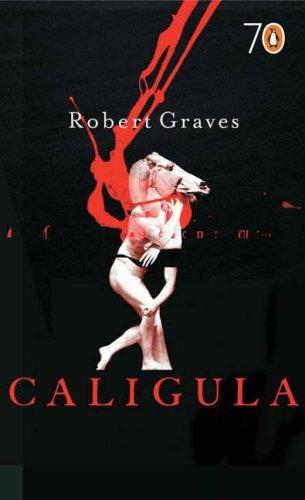
But contemplating the 70 titles in Penguin’s recently published box set (to celebrate the 70th anniversary of the company’s founding), I begin to see the merit of this format. It started when I randomly picked up one of the booklets – the one with the "Caligula" section from Robert Graves’ great historical novel I, Claudius (which is one of my all-time favourite books). I thought I’d just flip through the booklet; instead, I ended up reading it all the way through, and it took only 20 minutes. Now the point is, much as I would love to revisit the Graves novel in its entirety, I don’t think I’ll get around to it anytime soon: dealing with the whole book at once would be much too prepossessing a task, especially since new reading material is coming in all the time. But the pocket book had the effect of extracting a reasonably self-contained portion of the novel and presenting it to me for easy consumption; it allowed me to re-experience one of my favourite passages (Graves’ Caligula is one of the great morbidly comic literary creations) without having to read the whole book again.
I’m more-or-less much converted now. These booklets are a delight to behold – nicely produced, feather-light (halfway between peacock and sparrow) and very easy on the eye. Their very size (between 50 and 60 pages each) makes them easy to get through. Usually, at the end of a busy and tiring day, it’s an achievement if I finish more than 60-70 pages of a regular-sized book over a night-reading session. But the night before last, moving from one pocket book to the next at whim, I breezed through:
- Graves’ Caligula, as mentioned
- Two of Wodehouse’s Jeeves short stories (almost a fresh experience, since I’ve always preferred the Blandings Castle stories to the Wooster-Jeeves ones, and barely remembered the latter)
- Five of Nabokov’s short stories collected in Cloud, Castle, Lake
- Steven Pinker’s Hotheads, about the contradictions inherent in the pursuit of happiness; extracted from How the Mind Works
- Some of Anais Nin’s erotic writings, from Artists and Models
- The first two chapters of Primo Levi’s Iron Potassium Nickel, taken from The Periodic Table
And I could have gone on. I tell you, the size makes a big psychological difference; maybe I should chop up all the fat books I have to tackle and then put them back together afterwards?
(Next on my list: George Orwell’s In Defence of English Cooking (which is only one small essay in a collection of four). John Updike’s Three Trips. Borges’ The Mirror of Ink. Richard Dawkins’ The View From Mount Improbable. Hunter S Thompson’s Happy Birthday, Jack Nicholson. And, er, 59 other titles.)
Another advantage is that, working as I now am on the books beat, it’s important to be informed about the work of a wide range of authors. As a casual reader, I got into the habit of sticking with one fancied author for weeks on end. Can’t afford to do that now and though I’m still, in principle, against the idea of "tasters", they have become increasingly useful as a way of familiarizing myself with an author’s work.
P.S. There’s been some controversy about how there are hardly any non-white authors in Penguin’s Pocket 70. Be that as it may, any list is bound to be controversial; even if this had been a list of 700 titles rather than 70, there would have been errors of omission, for whatever reason. So take it or leave it. I’m taking it. (That said, I’m bemused by some of the names here. Gervase Phinn - who he? Antony Beevor and India Knight, sharing space with Homer, Flaubert and Freud? Oh well, guess that sort of thing will happen when you have such a huge catalogue of titles to choose from.)
P.P.S. Conversation with Hurree Babu last night, where he offhandedly mentioned he had finished 42 of the titles in the same time it had taken me to read 5, has dampened self-confidence about reading-speed.
Tuesday, August 16, 2005
Roger Manvell’s Film: on screen acting
Have made my debut on The Middle Stage with this post - which went on for much longer than I’d intended. (Maybe that's why it took so long to publish?)
Sunday, August 14, 2005
Weekend update, and thoughts on blog meets
Amit Varma has kindly invited me to join him and Chandrahas Choudhury on The Middle Stage. Don’t know if I’ll be posting there anytime soon (hell, don’t know if I’ll be blogging on my own site anytime soon – uh, waitaminute, what am I doing now? Foiled again!) but I look forward to it. Will keep you (cross) posted.
Meanwhile, young Chandrahas is in town, a freelancer just like myself (except a freelancer most unlike myself, since he spends his time languidly writing stories for his own pleasure while I draw up ‘to-do’ lists for the five or more deadlines I have to meet each day); and this morning we participated in a bloggers’ meet that, though still not anywhere near the scale of the gargantuan things they hold in Mumbai, was still the largest such meet I’ve been to so far. Six whole people. Self. Chandrahas. Aishwarya Subramaniam and Annie Zaidi, both of whom I’d met before. Janaki Ghatpande, who I hadn't, though she’s one of my oldest blog acquaintances, going back nearly a year. And that noble gentleman from Sri Lanka, Sanjaya alias Morquendi.
A word on blog meets. For the umpteenth time - and despite the scepticism of certain Ducks Who Shall Remain Unnamed who accuse me of being a more social blogger than I claim to be - I’m not the high priest of these gatherings. Yes, I have been in a large number of one-on-one meetings with blogger acquaintances, but (and I’m not saying this to be precious, or to make a point, or to seem anti-social for the romance of it; it’s just a statement of fact) each of those meetings was initiated by the other person. When I respond to such invites, it’s A) partly out of politeness – in my book, being unsociable doesn’t translate into being unnecessarily rude; B) partly because there’s something in the other person’s blog that I find interesting; and C) partly the head-swell factor – if someone calls/mails saying they enjoy reading my posts and would like to meet, well, I’m certainly not immune to that sort of ego massaging.
At this morning’s meet, point B was the determining factor - mainly, wanting to meet Sanjaya, for two starkly different reasons. One, his blog title comes from Tolkien’s Silmarilion, one of my favourite books; and two, the work he did along the Sri Lankan coast when the tsunami struck, tirelessly helping in relief operations while regularly sending SMSes to the Tsunami Help blogmeisters in Mumbai, which were put up on the site as posts.
Didn’t get to discuss any of this, but the get-together was fun and relaxed. Despite the fact that we were a very motley bunch, there were none of those awkward lulls in conversation, no forced raising of topics. We talked about the State of Journalism, cocked the usual snooks at TOI, bemoaned the standards of Café Coffee Day’s service. Morquendi told hilarious stories like the one about two gangs from rival villages in Jaffna facing off in an armed street battle in Toronto (Canada, Canada, the stage for the playing out of the rest of the world’s personal animosities, alas). Also how NDTV has decided to hold him up as the repository of information on all things Sri Lankan, for no better reason than that he is.
I suppose the mark of a successful blog meet is that even when it’s a busy Sunday and you have to get up to leave because there are a lot of other things to do, you feel like this should have gone on for some time more. Today was like that. But I’m going back into my cave now.
Meanwhile, young Chandrahas is in town, a freelancer just like myself (except a freelancer most unlike myself, since he spends his time languidly writing stories for his own pleasure while I draw up ‘to-do’ lists for the five or more deadlines I have to meet each day); and this morning we participated in a bloggers’ meet that, though still not anywhere near the scale of the gargantuan things they hold in Mumbai, was still the largest such meet I’ve been to so far. Six whole people. Self. Chandrahas. Aishwarya Subramaniam and Annie Zaidi, both of whom I’d met before. Janaki Ghatpande, who I hadn't, though she’s one of my oldest blog acquaintances, going back nearly a year. And that noble gentleman from Sri Lanka, Sanjaya alias Morquendi.
A word on blog meets. For the umpteenth time - and despite the scepticism of certain Ducks Who Shall Remain Unnamed who accuse me of being a more social blogger than I claim to be - I’m not the high priest of these gatherings. Yes, I have been in a large number of one-on-one meetings with blogger acquaintances, but (and I’m not saying this to be precious, or to make a point, or to seem anti-social for the romance of it; it’s just a statement of fact) each of those meetings was initiated by the other person. When I respond to such invites, it’s A) partly out of politeness – in my book, being unsociable doesn’t translate into being unnecessarily rude; B) partly because there’s something in the other person’s blog that I find interesting; and C) partly the head-swell factor – if someone calls/mails saying they enjoy reading my posts and would like to meet, well, I’m certainly not immune to that sort of ego massaging.
At this morning’s meet, point B was the determining factor - mainly, wanting to meet Sanjaya, for two starkly different reasons. One, his blog title comes from Tolkien’s Silmarilion, one of my favourite books; and two, the work he did along the Sri Lankan coast when the tsunami struck, tirelessly helping in relief operations while regularly sending SMSes to the Tsunami Help blogmeisters in Mumbai, which were put up on the site as posts.
Didn’t get to discuss any of this, but the get-together was fun and relaxed. Despite the fact that we were a very motley bunch, there were none of those awkward lulls in conversation, no forced raising of topics. We talked about the State of Journalism, cocked the usual snooks at TOI, bemoaned the standards of Café Coffee Day’s service. Morquendi told hilarious stories like the one about two gangs from rival villages in Jaffna facing off in an armed street battle in Toronto (Canada, Canada, the stage for the playing out of the rest of the world’s personal animosities, alas). Also how NDTV has decided to hold him up as the repository of information on all things Sri Lankan, for no better reason than that he is.
I suppose the mark of a successful blog meet is that even when it’s a busy Sunday and you have to get up to leave because there are a lot of other things to do, you feel like this should have gone on for some time more. Today was like that. But I’m going back into my cave now.
Saturday, August 13, 2005
Booker longlist, Never Let Me Go review
The 2005 Booker longlist is out, as most of you litter-ary types will already know. Much excitement in the blogosphere about what a good year it’s been for fiction, with a number of heavyweights publishing new novels. And this blog has even invited contributors to write reviews of the longlisted novels, a very nice idea I think. (Wish I could sign up but too busy this week to even meet my office deadlines!)
I’ve read five of the longlisted books but have written only one official review so far, of Kazuo Ishiguro’s Never Let Me Go, for Biblio magazine early this year. Wasn’t too happy with it; I was asked to do 1600 words and I think the review rambled on for much longer than it had to. (While I don’t care for those 200-300 word "short reviews" we in the profession are often asked to do, I’m not a big endorser of the overlong, thesis-like book review either; the optimum length as far as I’m concerned should be 800-900 words.)
Here’s the Never Let Me Go review.
-----------------------
"My name is Kathy H, I’m thirty-one years old" begins the narrator of Kazuo Ishiguro’s latest novel, who then proceeds, in the mannered, hesitating style typical of this writer’s protagonists, to tell us a little more about herself. Kathy is a "carer", the word itself instantly creating a disconnect (why not just say "caretaker"?) that suggests this isn’t going to be a conventional narrative. She speaks of her job looking after "donors" and how tiring it can get, in terms of both physical travel and emotional stress. And then she does what every Ishiguro narrator does: she sifts through her memories.
In Kathy’s case, these memories centre on Hailsham, the school she grew up in, and the trajectory of her friendships with two other students, Ruth and Tommy. Many of her recollections initially seem no different in tone and flavour from any of our own memories of growing up, making and losing friends. But reading on, a sense of unease gradually begins to develop. It soon becomes apparent that there’s something out of the ordinary about Hailsham and its students. There is no mention of parents. The guardians say cryptic things and are unnaturally strict in some matters. Sherlock Holmes books are banned from the library because of smoking references. A mysterious woman known as "Madame" makes occasional visits to the school and there are rumours of a "Gallery", where the best artwork produced by the children is sent. An abnormal emphasis is placed on the need to be creative.
Though the central premise of the plot isn’t a big secret (it’s revealed only around 70 pages into the book and isn’t exactly crucial to the larger themes), I’m still a bit uneasy about disclosing it here. But not doing so would make this review vague and self-defeating. So here goes: we soon learn that the children of Hailsham are genetically created clones, being prepared for a lifetime of donating their vital organs. "Your lives are set out for you," blurts out a well-meaning teacher who can’t bear to see the students dreaming about becoming film stars. "You were brought into this world for a purpose and your futures, all of them, have been decided."
Read those words outside their context, however, and one senses that Ishiguro’s real concerns lie beyond his ostensible set-up. Never Let Me Go is really about how our lives are pre-designed for us, how the paths we take are predetermined by a number of factors beyond our control, and that for most people the concept of free will is a cruel illusion. It’s also in a very particular sense about formal education and the role educational institutions play in inuring us to the horrors, the unpredictabilities of life -- about how, going to school every day as children, we never get an actual sense of how whimsical, random, even pointless, life might turn out to be. A key passage from the final section, the words of a former schoolteacher, reads:
These are universal concerns and make it clear that the science-fiction aspect of the story is little more than a red herring. Contrary to what some reviewers have suggested, the author never appears to be making any strong cautionary statements about genetic engineering or cloning; nor is he much bothered with the particulars of his alternate society. Even in the climax, when a character laments the replacing of an old, kind world by a more efficient, scientific (but also crueler and harsher) new one, it can be read equally as a reference to the passing of childhood’s idealism and its substitution by adulthood’s cynicism.
This is Kazuo Ishiguro’s sixth novel in 23 years and it has most of his trademarks. These include, first of all, reticent narrators who seem to know less about themselves than we, the readers, do; these are emotionally repressed people who betray their lack of self awareness even as they try to impress their convictions on us. The self-deception persists till the end -- the books invariably wrap up on a bittersweet note, with the seeming cheeriness of the protagonists unable to camouflage an aching sense of loss. Themes recur too, some of which will be obvious even to the casual reader who isn’t especially interested in the author’s oeuvre: there are complex parent-child relationships that perpetuate a cycle of disappointment from which the characters can never escape. Sometimes, as in When We Were Orphans (2001) and The Unconsoled (1995), the parent is missing and there’s an increasingly desperate search (this motif finds an atypical treatment in the new book, with the futile hunt for "possibles" -- the people from whom the students might have been cloned). There is also the elegy for the passing of an old world, as in The Remains of the Day (1989) and An Artist of the Floating World (1986), a world that the narrator cherishes and grieves for, though the reader knows better. There is the stench of unnecesarily sacrificed lives, of people giving up the things that really count -- relationships -- in pursuit of ideals that often turn out to be hollow and illusionary.
These signposts of Ishiguro’s writing can be listed without much trouble. What cannot be conveyed quite so easily is the wealth of detail, the astonishing minutiae to be found in the recollections of his characters, the way they search for meaning in the most intricately connected memories and how very specific experiences turn into something anyone can relate to. "I’m sure somewhere in your childhood you too had an experience like ours that day," says Kathy at one point. "Similar if not in the actual details then inside, in the feelings." She could be speaking for any of Ishiguro’s narrators.
Never Let Me Go has all these elements in varying degrees; like all of its author’s past works, it draws you into a very particular world and holds you there. But it’s flawed in some unexpected ways. The use of the alternate-society device may be an interesting change of pace for the author, but it also draws attention to a possible shortcoming. One might ask if Ishiguro has become overly preoccupied with the same set of themes, so that he has to use a new framing structure for each new book to couch the fact that it’s about the same things all over again.
In an illuminating interview to January Magazine a few years ago, Ishiguro said: "In a way I've started to care less and less about what's happening out there, in some kind of supposed real world. I've become more and more interested in what's happening inside somebody's head."
It’s an approach that has already yielded powerful dividends -- especially in the underappreciated The Unconsoled, one of the most singular works of literature in recent memory and one that expanded the boundaries of surrealistic writing. But when an author reaches the point where entire sentences recur from one work to the next (the "Cottages" section of Never Let Me Go carries strong echoes of a short story, "The Village", that Ishiguro wrote for the New Yorker a few years ago), it’s possible to wonder whether he’s in danger of carrying the self-indulgence too far.
The other problem rests with the climax. All of Ishiguro’s books -- even The Unconsoled, that most oblique of narratives -- contain moments moments that cut to the heart of the story. But true to the author’s style these are most effective when they are handled subtly -- as in The Remains of the Day, when the butler Stevens acknowledges that he threw away his opportunity for a happy life, with an almost offhand "why not admit it, at that moment my heart was breaking" - the most explicit admission of grief in the book. But in Never Let Me Go, the epiphany comes in the form of a "let’s sit down and explain things" climax. The over-exposition is disappointing because Ishiguro’s great strength is allusion. And besides, we never really learn anything we hadn’t already guessed at.
But even when Ishiguro is working at less than full steam -- even when the broad structure of his novels is less than satisfying -- few other writers can equal him in conveying desolation and loss, and in the most elegant, beautiful prose. When, in the climax of Never Let Me Go, two people are told, "you poor creatures...now you’re by yourselves" and when the book ends with the narrator impassively contemplating "everything I’d ever lost since my childhood", at those moments all the minor flaws and irritants, and even the unresolved science fiction, cease to matter. All that counts then is this writer’s almost unparalleled ability to draw us into wasted lives, to make us sympathize and care.
I’ve read five of the longlisted books but have written only one official review so far, of Kazuo Ishiguro’s Never Let Me Go, for Biblio magazine early this year. Wasn’t too happy with it; I was asked to do 1600 words and I think the review rambled on for much longer than it had to. (While I don’t care for those 200-300 word "short reviews" we in the profession are often asked to do, I’m not a big endorser of the overlong, thesis-like book review either; the optimum length as far as I’m concerned should be 800-900 words.)
Here’s the Never Let Me Go review.
-----------------------
"My name is Kathy H, I’m thirty-one years old" begins the narrator of Kazuo Ishiguro’s latest novel, who then proceeds, in the mannered, hesitating style typical of this writer’s protagonists, to tell us a little more about herself. Kathy is a "carer", the word itself instantly creating a disconnect (why not just say "caretaker"?) that suggests this isn’t going to be a conventional narrative. She speaks of her job looking after "donors" and how tiring it can get, in terms of both physical travel and emotional stress. And then she does what every Ishiguro narrator does: she sifts through her memories.
In Kathy’s case, these memories centre on Hailsham, the school she grew up in, and the trajectory of her friendships with two other students, Ruth and Tommy. Many of her recollections initially seem no different in tone and flavour from any of our own memories of growing up, making and losing friends. But reading on, a sense of unease gradually begins to develop. It soon becomes apparent that there’s something out of the ordinary about Hailsham and its students. There is no mention of parents. The guardians say cryptic things and are unnaturally strict in some matters. Sherlock Holmes books are banned from the library because of smoking references. A mysterious woman known as "Madame" makes occasional visits to the school and there are rumours of a "Gallery", where the best artwork produced by the children is sent. An abnormal emphasis is placed on the need to be creative.
Though the central premise of the plot isn’t a big secret (it’s revealed only around 70 pages into the book and isn’t exactly crucial to the larger themes), I’m still a bit uneasy about disclosing it here. But not doing so would make this review vague and self-defeating. So here goes: we soon learn that the children of Hailsham are genetically created clones, being prepared for a lifetime of donating their vital organs. "Your lives are set out for you," blurts out a well-meaning teacher who can’t bear to see the students dreaming about becoming film stars. "You were brought into this world for a purpose and your futures, all of them, have been decided."
Read those words outside their context, however, and one senses that Ishiguro’s real concerns lie beyond his ostensible set-up. Never Let Me Go is really about how our lives are pre-designed for us, how the paths we take are predetermined by a number of factors beyond our control, and that for most people the concept of free will is a cruel illusion. It’s also in a very particular sense about formal education and the role educational institutions play in inuring us to the horrors, the unpredictabilities of life -- about how, going to school every day as children, we never get an actual sense of how whimsical, random, even pointless, life might turn out to be. A key passage from the final section, the words of a former schoolteacher, reads:
"Sometimes we kept things from you, lied to you. Yes, in many ways we even fooled you. I suppose you could even call it that. But we sheltered you during those years, and we gave you your childhoods...Look at you both now! I’m so proud to see you both. You built your lives on what we gave you. You wouldn’t be who you are today if we’d not protected you. You wouldn’t have become absorbed in your lessons, you wouldn’t have lost yourselves in your art and your writing. Why should you have done, knowing what lay in store for each of you? You would have told us it was all pointless, and how could we have argued with you?"
These are universal concerns and make it clear that the science-fiction aspect of the story is little more than a red herring. Contrary to what some reviewers have suggested, the author never appears to be making any strong cautionary statements about genetic engineering or cloning; nor is he much bothered with the particulars of his alternate society. Even in the climax, when a character laments the replacing of an old, kind world by a more efficient, scientific (but also crueler and harsher) new one, it can be read equally as a reference to the passing of childhood’s idealism and its substitution by adulthood’s cynicism.
This is Kazuo Ishiguro’s sixth novel in 23 years and it has most of his trademarks. These include, first of all, reticent narrators who seem to know less about themselves than we, the readers, do; these are emotionally repressed people who betray their lack of self awareness even as they try to impress their convictions on us. The self-deception persists till the end -- the books invariably wrap up on a bittersweet note, with the seeming cheeriness of the protagonists unable to camouflage an aching sense of loss. Themes recur too, some of which will be obvious even to the casual reader who isn’t especially interested in the author’s oeuvre: there are complex parent-child relationships that perpetuate a cycle of disappointment from which the characters can never escape. Sometimes, as in When We Were Orphans (2001) and The Unconsoled (1995), the parent is missing and there’s an increasingly desperate search (this motif finds an atypical treatment in the new book, with the futile hunt for "possibles" -- the people from whom the students might have been cloned). There is also the elegy for the passing of an old world, as in The Remains of the Day (1989) and An Artist of the Floating World (1986), a world that the narrator cherishes and grieves for, though the reader knows better. There is the stench of unnecesarily sacrificed lives, of people giving up the things that really count -- relationships -- in pursuit of ideals that often turn out to be hollow and illusionary.
These signposts of Ishiguro’s writing can be listed without much trouble. What cannot be conveyed quite so easily is the wealth of detail, the astonishing minutiae to be found in the recollections of his characters, the way they search for meaning in the most intricately connected memories and how very specific experiences turn into something anyone can relate to. "I’m sure somewhere in your childhood you too had an experience like ours that day," says Kathy at one point. "Similar if not in the actual details then inside, in the feelings." She could be speaking for any of Ishiguro’s narrators.
Never Let Me Go has all these elements in varying degrees; like all of its author’s past works, it draws you into a very particular world and holds you there. But it’s flawed in some unexpected ways. The use of the alternate-society device may be an interesting change of pace for the author, but it also draws attention to a possible shortcoming. One might ask if Ishiguro has become overly preoccupied with the same set of themes, so that he has to use a new framing structure for each new book to couch the fact that it’s about the same things all over again.
In an illuminating interview to January Magazine a few years ago, Ishiguro said: "In a way I've started to care less and less about what's happening out there, in some kind of supposed real world. I've become more and more interested in what's happening inside somebody's head."
It’s an approach that has already yielded powerful dividends -- especially in the underappreciated The Unconsoled, one of the most singular works of literature in recent memory and one that expanded the boundaries of surrealistic writing. But when an author reaches the point where entire sentences recur from one work to the next (the "Cottages" section of Never Let Me Go carries strong echoes of a short story, "The Village", that Ishiguro wrote for the New Yorker a few years ago), it’s possible to wonder whether he’s in danger of carrying the self-indulgence too far.
The other problem rests with the climax. All of Ishiguro’s books -- even The Unconsoled, that most oblique of narratives -- contain moments moments that cut to the heart of the story. But true to the author’s style these are most effective when they are handled subtly -- as in The Remains of the Day, when the butler Stevens acknowledges that he threw away his opportunity for a happy life, with an almost offhand "why not admit it, at that moment my heart was breaking" - the most explicit admission of grief in the book. But in Never Let Me Go, the epiphany comes in the form of a "let’s sit down and explain things" climax. The over-exposition is disappointing because Ishiguro’s great strength is allusion. And besides, we never really learn anything we hadn’t already guessed at.
But even when Ishiguro is working at less than full steam -- even when the broad structure of his novels is less than satisfying -- few other writers can equal him in conveying desolation and loss, and in the most elegant, beautiful prose. When, in the climax of Never Let Me Go, two people are told, "you poor creatures...now you’re by yourselves" and when the book ends with the narrator impassively contemplating "everything I’d ever lost since my childhood", at those moments all the minor flaws and irritants, and even the unresolved science fiction, cease to matter. All that counts then is this writer’s almost unparalleled ability to draw us into wasted lives, to make us sympathize and care.
City supplement blooper of the day
Today’s HT City inadvertently re-casts Nicole Kidman as Hannibal Lecter, with this line from “Take 5 - Hollywood stars seen on stage”:
“Her skin-bearing performance in The Blue Room in London in 1998 had critics gasping over her body.”
I’ll be good and refrain from commenting on the ‘critics gasping over her body’ imagery.
(Yes, that’s how jobless I am now, doing typo checks on daily tabloids.)
“Her skin-bearing performance in The Blue Room in London in 1998 had critics gasping over her body.”
I’ll be good and refrain from commenting on the ‘critics gasping over her body’ imagery.
(Yes, that’s how jobless I am now, doing typo checks on daily tabloids.)
Wednesday, August 10, 2005
Review-in-progress: The Geographer’s Library
 Since I often get asked for recommendations of books roughly in the same sub-genre as that one, here’s yet another: Jon Fasman’s The Geographer’s Library, which I’m halfway through (as I seem to be with any book I read these days!). Fasman’s book is about a reporter in a sleepy Connecticut town, who starts following leads on the (possibly suspicious) death of an Estonian history professor; this modern-day story is intercut with chapters on the provenance and tortuous history of 15 objects (ranging from an alembic to a pair of flutes to an ivory box) used in the process of alchemy, all of which are presumably linked to the dead man in some way. So add "geographer" and "library" to the list of words that can, in various combinations, be used to make up the titles for the historical thrillers so popular these days (other words include "history", "secret", "sect", "league" - and, of course, "code").
The thing about books in this genre, apart from their exotic appeal (you’ll find here a preponderance of terms like "gnostic sect", "sinister Albanian", "brooding cabal", "Ethiopian iconography", "royal herbalist" and even "Novgorodian merchants"), is that they provide casual readers with some form of erudition (or at least delusions of erudition) on subjects they wouldn’t ordinarily read about, while at the same time operating within an easy-to-read thriller format. Of course, it isn’t always that simple: some of the better ones (like The Historian, which I wrote about recently) are solid, thoughtful reads with a lot of merit outside the exotic framework. But it’ll be interesting to see how long this sub-genre can sustain itself.
Am undecided on The Geographer’s Library so far. It’s mostly well-written, with some amusing descriptions (when the protagonist swallows an oyster, it "travelled down my gullet like a refrigerated and reversed sneeze"), but some of the conversations are trite, over-explaining the characters and their motivations, in the manner of high-school dramas. Will wait to finish it before passing definite judgement. But what I’ve read so far is intriguing, and if you enjoyed The Rule of Four make this your next stop.
P.S. learnt a new word, "caduceus", which is: a) a winged staff with two serpents twined around it, carried by Hermes (Greek mythology); or b) An insignia modeled on Hermes's staff and used as the symbol of the medical profession. (You can see it on the book cover.)
Am going to use it to freak people out: "Hey, anyone seen my caduceus?"
Tuesday, August 09, 2005
Last clarifications on freelancing
My days in “self-employed” category have officially begun. I thought I had blogged enough about the nature of my freelancing arrangement, but clearly not, for people still mail/come up to me with reactions ranging from:
(portentously) “Be careful boss, it’s a big bad world out there; you’ll spend half your time running after cheques, and eventually starve to death”
to
(tee hee hee-ly) “Ooh, you’re so lucky, you’ll have so much free time now!”
So:
Clarification 1: This isn’t one of those cases where “freelancing” equals “financial uncertainty”. The bulk of my work will still be for Business Standard: I have a contract that specifies what I’ll be doing for them on a monthly basis, in exchange for a salary that more than covers what I was getting from them as a regular employee. So I’m more than secure on that front. Whatever I make from other freelancing assignments can be treated as a bonus, at least in the initial months (after which greed and ambition will set in, and I’ll take on more and more assignments just for the money, and the quality of my work will nosedive, and I’ll become the Times of India).
Clarification 2: I’m lucky alright, but not because I’ll have more free time - quite the contrary, I’m now going to be doing a greater quantity of work than I was earlier; that’s something implicit to this arrangement. The good thing about it is, I’ll largely be able to manage my time the way it suits me to. Won’t be tied any more to a depressing daily routine where I have to spend a certain amount of time parked in front of the computer in office, regardless of whether I’m feeling productive during those hours (and as anyone knows, much of that time is spent chatting/putting up with colleagues/removing ant carcasses from the vending-machine tea anyway).
Clarification 3 (in response to the most ridiculous statement that has come my way – “your life is going to be so relaxed now!”): If you think self-discipline is “relaxed” and “easy”, try it for yourself. To be honest, I’m pretty scared about some aspects of this thing, including the solitariness involved in being cooped up at home for long stretches, with a lugubrious Pomeranian howling ballads in the next room. So the knowledge that my computer in office stays in place, and I’ll be able to come in whenever I want to, is a big security blanket. Should help preserve sanity.
Clarification 4: No, this won’t give me more time for blogging, exactly the opposite. A lot of my blog-writing in the past has been done during those long, vacant hours in office between assignments/page-making. The extra time I get with this new arrangement will probably be spent in reading/watching films/meeting people. So the blog will increasingly become a storehouse for my published work, with fewer original posts than before. (Or at least that’s what I’m claiming now, don’t know if I’ll be able to de-addict so easily!)
(portentously) “Be careful boss, it’s a big bad world out there; you’ll spend half your time running after cheques, and eventually starve to death”
to
(tee hee hee-ly) “Ooh, you’re so lucky, you’ll have so much free time now!”
So:
Clarification 1: This isn’t one of those cases where “freelancing” equals “financial uncertainty”. The bulk of my work will still be for Business Standard: I have a contract that specifies what I’ll be doing for them on a monthly basis, in exchange for a salary that more than covers what I was getting from them as a regular employee. So I’m more than secure on that front. Whatever I make from other freelancing assignments can be treated as a bonus, at least in the initial months (after which greed and ambition will set in, and I’ll take on more and more assignments just for the money, and the quality of my work will nosedive, and I’ll become the Times of India).
Clarification 2: I’m lucky alright, but not because I’ll have more free time - quite the contrary, I’m now going to be doing a greater quantity of work than I was earlier; that’s something implicit to this arrangement. The good thing about it is, I’ll largely be able to manage my time the way it suits me to. Won’t be tied any more to a depressing daily routine where I have to spend a certain amount of time parked in front of the computer in office, regardless of whether I’m feeling productive during those hours (and as anyone knows, much of that time is spent chatting/putting up with colleagues/removing ant carcasses from the vending-machine tea anyway).
Clarification 3 (in response to the most ridiculous statement that has come my way – “your life is going to be so relaxed now!”): If you think self-discipline is “relaxed” and “easy”, try it for yourself. To be honest, I’m pretty scared about some aspects of this thing, including the solitariness involved in being cooped up at home for long stretches, with a lugubrious Pomeranian howling ballads in the next room. So the knowledge that my computer in office stays in place, and I’ll be able to come in whenever I want to, is a big security blanket. Should help preserve sanity.
Clarification 4: No, this won’t give me more time for blogging, exactly the opposite. A lot of my blog-writing in the past has been done during those long, vacant hours in office between assignments/page-making. The extra time I get with this new arrangement will probably be spent in reading/watching films/meeting people. So the blog will increasingly become a storehouse for my published work, with fewer original posts than before. (Or at least that’s what I’m claiming now, don’t know if I’ll be able to de-addict so easily!)
Sunday, August 07, 2005
Yojimbo, and the Mifune walk
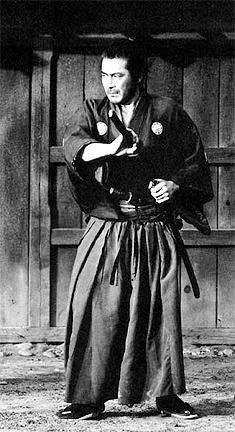 Have been down with viral the last 2-3 days. My nose runneth over. (Zen wisdom: if you have a bad cold, it is inadvisable to sleep on your stomach.) When a nose dies, all that remains is its name. Stat nosa pristine nominee, nomina nuda tenemus. Am writing this through an antibiotic haze. (And hey, what’s all this ‘feed a fever, starve a cold’ nonsense? I usually have both at the same time.)
Wasn’t planning to blog for a few days but then read something JAP wrote about Amitabh’s famous walk in films like Deewaar being inspired by Clint Eastwood’s in Dirty Harry. Well okay, but I prefer the copy to the original. Anyway, this got me thinking about the great walkers (no, Adam Gilchrist doesn’t feature here) and I reached, even in my enfeebled state, for my DVD of Kurosawa’s Yojimbo.
If Yojimbo had never be made, the word “swagger” could comfortably have been pulled out of all dictionaries by now. The incomparable swaggerer here is, of course, Toshiro Mifune, whose performance as the nameless samurai in this film (and its sequel Sanjuro) created the palimpsest for Eastwood’s Man With No Name in Leone’s spaghetti westerns. The opening scene is an exercise in style. The samurai comes into the frame from the right (we don’t see his face), scratches the back of his neck in a coarse, throwaway manner, and begins walking forward magisterially, as the camera follows behind him at a respectful distance. And all this while the titles are still rolling (atypical for Kurosawa, who usually preferred to get the opening credits out of the way before the film began). This great tracking shot ends with the samurai reaching a break in the road, where two lanes lead in different directions. He throws a branch into the air and unhesitatingly walks down the path it indicates. Thus, with utmost economy, Kurosawa establishes that the protagonist is a wanderer with no ties, while also making a nod to the arbitrariness that governs so many human decisions.
The town that the path leads to is caught between two feuding groups, each of which wants absolute control, and the focus of the story is how the amoral samurai sets about playing one side against the other until both groups have self-destructed. “The idea was about rivalry on both sides, and both sides are equally bad,” said Kurosawa, “Here we are, weakly caught in the middle, and it is impossible to choose between evils.” This can easily be related to the larger subtext surrounding the film – that it was made by a Japanese director at a time (1961) when the Cold War was at its peak, two superpowers holding a reluctant world hostage. Nowhere does this come across more strongly than in the superbly composed scene where the samurai, having professed his allegiance to one gang, brings the two groups face to face for a battle and then abdicates. He takes up a vantage point between the gangs and amusedly watches the cowardice hidden beneath all their bravado – they mostly stay where they are, shaking their weapons at each other pathetically, making ape sounds, advancing and retreating for quite some time before they actually get anywhere near each other.
Yojimbo is one of my favourite Kurosawas, an enormously stylish, irreverent black comedy and – this isn’t noted often enough – a great musical too in its own way (in his book on the director, Donald Richie notes how ballet-like the film is and how the characters’ movements all seem to be choreographed). One memorable scenes follows another and even the briefest shots impress themselves into your mind: the cheerful-looking doggie trotting along, a human hand in its mouth, and the expression on Mifune’s face as he watches this; the coffin-maker who wants there to be more bloodshed so that his business improves – but then says ruefully at the end “When a battle gets too big, no one needs coffins anymore”.
Dominating it all though is the Mifune walk, which is where this post began. Hungry tigers would flee, caterwauling, at his approach. Think it’s time to start a series on some of the great screen walks. Calling Henry Fonda next.
Wednesday, August 03, 2005
Decelerate, Sir Raleigh
I don’t normally blog about unintentionally funny signboards (because where does one stop?) but had to mention this one. While waiting at a red light near ITO today, I descried the following sign, put up by the Traffic Police:
“Driving fast is not bravery,
it is false chivalry”
(Well but of course it’s false if, instead of stopping and spreading out a jacket for a lady to cross the road, you accelerate and run her over instead. Very bad chivalry.)
Incidentally ‘chivalry’ reminded me of another time on the road when I overtook a car from the left (we Delhi drivers do that a lot) and behind the wheel was this atrabilious aunty who caught up with me at the traffic light and bellowed, “You think you can take advantage because I am a mare-woman?” (I’m sure she meant “mere”.) Delhi’s roads, sigh. They supply so much material for blogs. And I’m going to miss it all, now that I’m no longer doing the daily home-to-office-and-back grind.
“Driving fast is not bravery,
it is false chivalry”
(Well but of course it’s false if, instead of stopping and spreading out a jacket for a lady to cross the road, you accelerate and run her over instead. Very bad chivalry.)
Incidentally ‘chivalry’ reminded me of another time on the road when I overtook a car from the left (we Delhi drivers do that a lot) and behind the wheel was this atrabilious aunty who caught up with me at the traffic light and bellowed, “You think you can take advantage because I am a mare-woman?” (I’m sure she meant “mere”.) Delhi’s roads, sigh. They supply so much material for blogs. And I’m going to miss it all, now that I’m no longer doing the daily home-to-office-and-back grind.
Tuesday, August 02, 2005
Amartya Sen’s The Argumentative Indian
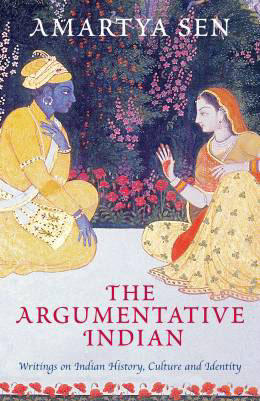 I often struggle with non-fiction, or worse, have a mental block against it at times (though this doesn’t extend to subjects that are of special interest to me - books on cricket or cinema/biographies of cricketers, directors or actors). So it was very strange to find myself so hooked by Amartya Sen’s The Argumentative Indian that I spent most of Sunday reading it. (It was the most relaxed Sunday I’ve had in months, btw, and I tackled Sen in between finishing Terry Pratchett’s superb The Fifth Elephant and watching Amitabh and Zeenie Baby wrestle in Don on Set Max. Ah, bliss.)
I’m halfway through The Argumentative Indian and plan to get through the rest before the week is out. It’s written in precise, clear language and never ascends into the kind of top-heavy Academia that scares away readers (like me) who haven’t had experience tackling heavy theses or essays as students. But even so, I needed an entry point in terms of subject matter that would draw me into the book. That came very early on, when Sen treats the Bhagavad Gita not so much as a Gospel handed down by a divine being to a mortal one but as a record of two arguments, each of which have their merits. "Arjuna’s contrary arguments are not really vanquished, no matter what the ‘message’ of the Bhagavad Gita is meant to be," he writes. "These arguments remain thoroughly relevant in the contemporary world."
This struck a chord. It’s always been a sour point with me that the Gita, with its unequivocal "message", should form a crucial part of something as infinitely complex as the Mahabharata - a work that, perhaps more than any other in literature, allows for the presentation of contrarian positions and perspectives, and for moral ambiguity (it’s no coincidence that we have literary works that present the events of the Mahabharata as depicted through the eyes of individual characters: Draupadi, Duryodhana, Karna, Bheema, Ashwatthama...and now apparently a forthcoming one on the inconsequential Sahadeva). I was enthralled by the Mahabharata at a very young age, and even as a child resisted attempts (by orthodox grandparents and other elders) to paint it as a simple story about good vanquishing evil. And I was always bemused by the presence, in this profound human drama, of something as grand and preachy as the Gita. Consequently, Sen’s words that "the univocal ‘message of the Gita’ requires supplementation by the broader argumentative wisdom of the Mahabharata, of which the Gita is only one small part" made a lot of sense.
But of course, Sen’s presentation of the Mahabharata (and the Ramayana, and the Vedas) as being more complex and ambiguous than they are sometimes made out to be, is only one small part of this collection of illuminating essays, the central thesis of which is that India has had a long tradition of heterodoxy and pluralism, and that the reason for this is the country’s history of constructive argumentation and disputation. Sen discusses too many aspects of Indian history to recount here, but they include: the role played by emperors like Ashoka and Akbar in encouraging pluralistic discourse; the harm done by the encouragement of a myopic view of Hinduism by the Hindutva brigade; the fact that the primary condition (ie a tradition of public discussion) for democracy existed in India long before it came under British rule; and the dangers inherent in seeing India’s history in terms of an essentially ‘Hindu civilisation’, when history by its very nature disallows easy classification of people and cultures.
I’ve read only nine of the 16 essays so far but one of the most interesting is the one on Rabindranath Tagore, which suggests that the reason for the West’s declining interest in Tagore’s work is that, with his radical views, he eventually failed to fit the stereotype of the mystical poet from the east. Some excellent stuff here, especially about the contrasts in the thinking of Tagore and Gandhi, and the former’s criticism of patriotism (again, a subject that I’m particularly interested in).
There’s much more in The Argumentative Indian, and I strongly recommend you read it for yourself. Also, check these two related links: on Akhond of Swat, from Nilanjana’s weekly column for Business Standard, and on The Middle Stage, Chandrahas’s take on the book.
P.S. Attended Sen’s reading at IHC last evening. It wasn't too good. Most of what he read I’d come across in the book already, and the question-and-answer session was a joke, the questioners more or less equally divided between those who tried, pathetically, to be facetious ("Who would you say is more argumentative, the Indian man or the Indian woman?") and those whose questions were built on a misunderstanding of the word "argumentative" (I think there were a few people who had come for the reading with no prior idea of what the book was about, and had assumed it was critical of "Indians who argue"). All told, waste of time. Strengthens my resolve to stay at home with books and never meet anyone.
Monday, August 01, 2005
Rule of Four review
Am posting (and back-dating) this review I wrote a couple of years ago, so I can link it to a new post on The Geographer’s Library.
----------------
One of the best things about the The Rule of Four, the latest "intellectual thriller" to capture the imagination of Western publishers and readers, is how it manages to retain interest despite being occasionally ponderous, and despite not having a major cliffhanger in any conventional sense of the word. These two things set it apart from Dan Brown’s phenomenally successful The Da Vinci Code, to which it has inevitably been compared. Much of the success of this book will, in fact, rest on the increasing popularity of the "break the code" sub-genre, which the Brown thriller has given new life. But the comparison is a superficial one. The Rule of Four is a weightier, more demanding read, concerned less with breathless expositions than with reflections on time and relationships, and on how one affects the other.
Both books have a strong Renaissance connection, this one more so. In The Da Vinci Code, hidden meanings in Leonardo Da Vinci’s paintings helped facilitate extrapolations on the life of Christ. Here, the whole point is the Renaissance period, when "the greatest cultural heroes in all of Western history lived together, in the same small city, at the same time". The plot-mover in The Rule of Four is a real book -- the Hypnerotomachia Poliphilii -- which was written in seven different languages and published under mysterious circumstances in Florence in 1499. Seven men -- across two generations -- find themselves drawn into the labyrinth of this enigmatic treatise. The narrator, Tom, is a Princeton undergraduate who has had a troubled relationship with the book -- little wonder since Tom’s late father was among those obsessed with unravelling its secrets, and had died in a car crash shortly after one of his theses was roundly dismissed.
Cut to the present, and Tom finds himself reluctantly drawn back into the Hyperotomachia’s hypnotic fold thanks to his friend Paul, who has set himself single-mindedly to cracking the book’s codes. (Paul is obsessed all right. A sample of messages taped to his room walls: "Phineus son of Belus wasn’t Phineus king of Salmydessus, says one. Check Hesiod: Hesperethousa or Hesperia and Arethousa?, says another. Buy more crackers, says a third.")
"There are so few times in a person’s life when a single great friend comes around, that it almost seems unnatural when three come around all at once," muses Tom. The other two friends are Charlie and Gil - nicely fleshed out characters, but for the purpose of the plot little more than Hardy Boy sidekicks. The main focus of the story is on Paul and Tom, along with Richard Curry and Vincent Taft, one-time friends of Tom’s deceased father, who still have issues pending with the Hyperotomachia.
The first 100 pages establish the mood and setting, with a nicely etched picture of life at the university; but this part is also likely to be the hardest to get through if what you’re looking for a racy ride. The action -- read analyses, interpretations and riddles -- takes some time to begin, and occupies the middle section of the story. However, first-time authors Ian Caldwell and Dustin Thomason make it obvious that suspense isn’t their priority, by making all the major revelations less than three-fourths of the way through.
As mentioned, you won’t find a conventional cliffhanger here; no sinister villains stepping out of the shadows, pistol in hand. In fact, towards the end it’s almost too muted, as if the authors eventually decided to underplay the thriller elements in favour of a more introspective narrative. And though the book ends on an -- almost incongruously -- upbeat note (expect a sequel), it’s the penultimate chapter, with its sorrowful, bleak tone, that leaves the lasting impression.
If one has to nitpick, one might say that too little time is spent on the deciphering of the book’s codes; and besides, since the average reader is unlikely to have even heard of the thing, we have to take almost everything the authors say at face value: there’s little scope for active reader participation. But then the Hyperotomachia can also be considered a red herring of sorts. The real point here is not so much the book itself - though the central secret would be of undoubted interest to Renaissance and/or art buffs - but the different ways in which it affects people and their relationships. There’s Tom and his agonised memories of his father, there’s his strained relationship with his girlfriend Katie - who sees the book as a rival - and there’s the underlying tension between Tom and Paul (and between Paul and everyone else, for that matter).
This book is better written than the Dan Brown thriller -- so much so in fact that the writing draws attention to itself at times; and while that is usually self-defeating, it manages not to be a serious limitation in this case. Paul’s intensity is mirrored by the meticulous attention to detail of the authors. Their phrasing is often very striking -- nothing is given a casual go-by, there are painstaking observations on almost everything -- but crucially it doesn’t ever become turgid. The authors never trade substance for style, managing to keep their feet on the ground for the most part.
The Rule of Four isn’t quite a page-turner, but stick with it; the payoff may not be as big as that of the Hyperotomachia but for the patient reader there’s much here to cherish and -- unusually for this genre -- to reread.
----------------
One of the best things about the The Rule of Four, the latest "intellectual thriller" to capture the imagination of Western publishers and readers, is how it manages to retain interest despite being occasionally ponderous, and despite not having a major cliffhanger in any conventional sense of the word. These two things set it apart from Dan Brown’s phenomenally successful The Da Vinci Code, to which it has inevitably been compared. Much of the success of this book will, in fact, rest on the increasing popularity of the "break the code" sub-genre, which the Brown thriller has given new life. But the comparison is a superficial one. The Rule of Four is a weightier, more demanding read, concerned less with breathless expositions than with reflections on time and relationships, and on how one affects the other.
Both books have a strong Renaissance connection, this one more so. In The Da Vinci Code, hidden meanings in Leonardo Da Vinci’s paintings helped facilitate extrapolations on the life of Christ. Here, the whole point is the Renaissance period, when "the greatest cultural heroes in all of Western history lived together, in the same small city, at the same time". The plot-mover in The Rule of Four is a real book -- the Hypnerotomachia Poliphilii -- which was written in seven different languages and published under mysterious circumstances in Florence in 1499. Seven men -- across two generations -- find themselves drawn into the labyrinth of this enigmatic treatise. The narrator, Tom, is a Princeton undergraduate who has had a troubled relationship with the book -- little wonder since Tom’s late father was among those obsessed with unravelling its secrets, and had died in a car crash shortly after one of his theses was roundly dismissed.
Cut to the present, and Tom finds himself reluctantly drawn back into the Hyperotomachia’s hypnotic fold thanks to his friend Paul, who has set himself single-mindedly to cracking the book’s codes. (Paul is obsessed all right. A sample of messages taped to his room walls: "Phineus son of Belus wasn’t Phineus king of Salmydessus, says one. Check Hesiod: Hesperethousa or Hesperia and Arethousa?, says another. Buy more crackers, says a third.")
"There are so few times in a person’s life when a single great friend comes around, that it almost seems unnatural when three come around all at once," muses Tom. The other two friends are Charlie and Gil - nicely fleshed out characters, but for the purpose of the plot little more than Hardy Boy sidekicks. The main focus of the story is on Paul and Tom, along with Richard Curry and Vincent Taft, one-time friends of Tom’s deceased father, who still have issues pending with the Hyperotomachia.
The first 100 pages establish the mood and setting, with a nicely etched picture of life at the university; but this part is also likely to be the hardest to get through if what you’re looking for a racy ride. The action -- read analyses, interpretations and riddles -- takes some time to begin, and occupies the middle section of the story. However, first-time authors Ian Caldwell and Dustin Thomason make it obvious that suspense isn’t their priority, by making all the major revelations less than three-fourths of the way through.
As mentioned, you won’t find a conventional cliffhanger here; no sinister villains stepping out of the shadows, pistol in hand. In fact, towards the end it’s almost too muted, as if the authors eventually decided to underplay the thriller elements in favour of a more introspective narrative. And though the book ends on an -- almost incongruously -- upbeat note (expect a sequel), it’s the penultimate chapter, with its sorrowful, bleak tone, that leaves the lasting impression.
If one has to nitpick, one might say that too little time is spent on the deciphering of the book’s codes; and besides, since the average reader is unlikely to have even heard of the thing, we have to take almost everything the authors say at face value: there’s little scope for active reader participation. But then the Hyperotomachia can also be considered a red herring of sorts. The real point here is not so much the book itself - though the central secret would be of undoubted interest to Renaissance and/or art buffs - but the different ways in which it affects people and their relationships. There’s Tom and his agonised memories of his father, there’s his strained relationship with his girlfriend Katie - who sees the book as a rival - and there’s the underlying tension between Tom and Paul (and between Paul and everyone else, for that matter).
This book is better written than the Dan Brown thriller -- so much so in fact that the writing draws attention to itself at times; and while that is usually self-defeating, it manages not to be a serious limitation in this case. Paul’s intensity is mirrored by the meticulous attention to detail of the authors. Their phrasing is often very striking -- nothing is given a casual go-by, there are painstaking observations on almost everything -- but crucially it doesn’t ever become turgid. The authors never trade substance for style, managing to keep their feet on the ground for the most part.
The Rule of Four isn’t quite a page-turner, but stick with it; the payoff may not be as big as that of the Hyperotomachia but for the patient reader there’s much here to cherish and -- unusually for this genre -- to reread.
A couple of links: Hitchcock, Dan Clowes
Senses of Cinema has finally included a Hitchcock profile in its Great Directors database. Given that Hitch has been heading the director votes on the site for years now (and that Vertigo recently displaced Citizen Kane on the aggregate of reader’s favourite-movie lists), it’s puzzling that it has taken this long for an essay on the Master to be included. One explanation could be that so much has already been written about Hitchcock (to the point of over-analysis - though being a devotee of the man’s work I personally lap it all up) that they couldn’t find a contributor brave enough to take on the task.
The essay itself is long but interesting if you’re Hitch-crazy. Mercifully, it doesn’t attempt to be all-inclusive: it focuses largely on the influence of Wilde’s Picture of Dorian Gray on Hitchcock’s career, and has a separate section on The Trouble With Harry, one of his most overlooked films.
Also, here’s a profile by the Guardian of Daniel Clowes, reticent creator of the Ghost World comic book (which was made into a wonderful film by Terry Zwigoff a few years ago).
The essay itself is long but interesting if you’re Hitch-crazy. Mercifully, it doesn’t attempt to be all-inclusive: it focuses largely on the influence of Wilde’s Picture of Dorian Gray on Hitchcock’s career, and has a separate section on The Trouble With Harry, one of his most overlooked films.
Also, here’s a profile by the Guardian of Daniel Clowes, reticent creator of the Ghost World comic book (which was made into a wonderful film by Terry Zwigoff a few years ago).
Subscribe to:
Posts (Atom)