At last, a blog tag that didn't take me more than a couple of minutes. eM says: delve into your blog archive, find your 23rd post (or closest to), find the fifth sentence (or closest to) and post the text online.
My 23rd post was the text of a review I’d done officially, and that felt like cheating. But the fifth and sixth sentences from the post immediately after that one are:
"Together with your splendid fantasy you are zooming fast on a bike, enjoying the gentle wind, indulging in the pleasures of your drive. Suddenly your rocketing gizmo gives a hiccup."
Alas no, those aren’t my own musings, they’re from a press release I’d quoted in the post (which is here).
(And no, I won’t do the 55-word story. I can’t write stories.)
Friday, September 30, 2005


Thursday, September 29, 2005
On Beauty review
My review of Zadie Smith’s On Beauty; appeared in today’s BS. Back when there were fewer time constraints, I used to enjoy writing an informal, rough-sketch version for the blog first, and smoothen it out later for the published review. Unfortunately, haven’t had the time/energy for that in recent weeks.
----------------
Zadie Smith’s third novel, her first to make it to the Man Booker shortlist, begins uncertainly but grows in stature as it goes along -- until, almost without the reader realising it, it’s developed into an expansive, moving work. On Beauty is equal parts family drama, entertaining campus novel, nuanced character study and a quietly powerful account of clashing ideologies. Occupying the centre of its stage is the Belsey clan, who live in Wellington, a small American college town. Howard, 57, an academic with a perpetually pending book on Rembrandt, is a white Englishman, but his wife Kiki is African-American; a typical family conversation might include Howard making "a series of excruciating hand gestures and poses" in a mock-attempt to convince his three children that he can be as "street" and as "brother" as any of them. The Belsey family is already under considerable strain, Kiki having recently discovered that Howard had an extramarital affair with one of their friends. But things promise to come to a boil with the arrival in the university campus of Montgomerie Kipps – a right-winger with whom Howard has had a long-running academic feud – and his family.
Relationships soon intersect in a variety of combinations. The Belseys’ daughter Zora barnstorms her way into the poetry class taught by Claire Malcolm, Howard’s ex-lover. Their younger son Levi, after a half-hearted attempt at staging a protest at the department store he works in, gets involved with Haitian immigrants and becomes interested in the politics of injustice. Howard finds himself teaching Monty Kipps’ sexy daughter Victoria, with whom his older son has already had an ill-fated affair. And in the novel’s most ephemeral but also most significant relationship, Kiki develops a bond with Kipps’ convalescing wife. Theirs is partly a story of two women finding shared humanity while their men rage about the Big Issues, but it is also a relationship founded on loneliness and mutual empathy – and a direct echo of a similar relationship between two women in a book Smith repeatedly references: E M Forster’s Howards End, about class conflicts in a very different time.
If this sounds like so much soap opera, it doesn’t begin to convey the many little vignettes that add up to make this book. A magical chance meeting between the three Belsey siblings that could easily have been ruined by a lesser writer, but which Smith pulls off with conviction. Howard’s repeatedly having to run out of solemn ceremonies – once because he’s on the brink of tears, another time because he’s choking with laughter. The poignance of his meeting with his estranged father - aging, lonely, but still hopelessly racist. Kiki’s explosive tirade: "Everywhere we go, I’m alone in this…this sea of white. My whole life is white. I don’t see any black folk unless they be cleaning under my feet in the café in your college." A chuckle-inducing description of a mother and daughter running towards each other, "each with her rich, strange news" (the "news" in one case being that the father has been unfaithful yet again).
Little cracks do show up too. The beginning (with sentences like "It was an offer to kick open a door in the mansion of their marriage leading on to an ante-chamber of misery") is awkward and it takes time for the narrative to settle down. The Kipps family seem like caricatures in an important scene where a will is being discussed. And one sometimes gets the sense that the book was intended to be lengthier: that portions were lopped off, and entire characters with them. (There is an extended scene with Monty’s son Michael early on, but we barely see him again; there is at least one character whose very appearance in this final draft is perplexing; and we don’t get up close with Monty Kipps – whose beliefs are crucial to the story – until very late in the proceedings).
Though this stop-start effect persists throughout, it never becomes a serious impediment. This is a book that quietly creeps up on you. Close to the halfway mark, I wasn’t even sure what I thought of it; by the time I’d finished I wanted to read it a second time, even wished it was slightly longer so one got more time with the characters. In this age of tiresomely thick novels by precocious young writers jostling for your attention, that’s quite an achievement.
----------------
Zadie Smith’s third novel, her first to make it to the Man Booker shortlist, begins uncertainly but grows in stature as it goes along -- until, almost without the reader realising it, it’s developed into an expansive, moving work. On Beauty is equal parts family drama, entertaining campus novel, nuanced character study and a quietly powerful account of clashing ideologies. Occupying the centre of its stage is the Belsey clan, who live in Wellington, a small American college town. Howard, 57, an academic with a perpetually pending book on Rembrandt, is a white Englishman, but his wife Kiki is African-American; a typical family conversation might include Howard making "a series of excruciating hand gestures and poses" in a mock-attempt to convince his three children that he can be as "street" and as "brother" as any of them. The Belsey family is already under considerable strain, Kiki having recently discovered that Howard had an extramarital affair with one of their friends. But things promise to come to a boil with the arrival in the university campus of Montgomerie Kipps – a right-winger with whom Howard has had a long-running academic feud – and his family.
Relationships soon intersect in a variety of combinations. The Belseys’ daughter Zora barnstorms her way into the poetry class taught by Claire Malcolm, Howard’s ex-lover. Their younger son Levi, after a half-hearted attempt at staging a protest at the department store he works in, gets involved with Haitian immigrants and becomes interested in the politics of injustice. Howard finds himself teaching Monty Kipps’ sexy daughter Victoria, with whom his older son has already had an ill-fated affair. And in the novel’s most ephemeral but also most significant relationship, Kiki develops a bond with Kipps’ convalescing wife. Theirs is partly a story of two women finding shared humanity while their men rage about the Big Issues, but it is also a relationship founded on loneliness and mutual empathy – and a direct echo of a similar relationship between two women in a book Smith repeatedly references: E M Forster’s Howards End, about class conflicts in a very different time.
If this sounds like so much soap opera, it doesn’t begin to convey the many little vignettes that add up to make this book. A magical chance meeting between the three Belsey siblings that could easily have been ruined by a lesser writer, but which Smith pulls off with conviction. Howard’s repeatedly having to run out of solemn ceremonies – once because he’s on the brink of tears, another time because he’s choking with laughter. The poignance of his meeting with his estranged father - aging, lonely, but still hopelessly racist. Kiki’s explosive tirade: "Everywhere we go, I’m alone in this…this sea of white. My whole life is white. I don’t see any black folk unless they be cleaning under my feet in the café in your college." A chuckle-inducing description of a mother and daughter running towards each other, "each with her rich, strange news" (the "news" in one case being that the father has been unfaithful yet again).
Little cracks do show up too. The beginning (with sentences like "It was an offer to kick open a door in the mansion of their marriage leading on to an ante-chamber of misery") is awkward and it takes time for the narrative to settle down. The Kipps family seem like caricatures in an important scene where a will is being discussed. And one sometimes gets the sense that the book was intended to be lengthier: that portions were lopped off, and entire characters with them. (There is an extended scene with Monty’s son Michael early on, but we barely see him again; there is at least one character whose very appearance in this final draft is perplexing; and we don’t get up close with Monty Kipps – whose beliefs are crucial to the story – until very late in the proceedings).
Though this stop-start effect persists throughout, it never becomes a serious impediment. This is a book that quietly creeps up on you. Close to the halfway mark, I wasn’t even sure what I thought of it; by the time I’d finished I wanted to read it a second time, even wished it was slightly longer so one got more time with the characters. In this age of tiresomely thick novels by precocious young writers jostling for your attention, that’s quite an achievement.
Wednesday, September 28, 2005
Local: a book reading
Had that rarest of experiences today, a book reading/discussion that was actually enjoyable - as compared to the usual incestuous, self-congratulatory, littered-with-literati, look-at-us-we’re-the-Few-Who-Read affairs (yes, yes, I know I have three fingers firmly pointed back at myself, but I’ll still rant self-righteously). The occasion was a relatively modest one, nary a fancy toothpick in sight, and the centre of attention was Jaideep Varma (who I mentioned here, in another context) and his book Local, about an advertising executive who deals with the madness of life and travel in Mumbai by spending his nights in the local trains.
As the careful reader might have gathered by now, I’m not a fan of book readings. They usually bore the living daylights out of me; through long and painful experience, I’ve learnt that I lack the fine sensibilities required to appreciate an author’s eloquence in bringing his characters to life for an audience. So this pleasantly informal little event (held in an area that couldn’t have been more than 10 ft by 8 ft) was a nice surprise. Very spontaneous, nothing that resembled a rehearsed speech. One of the things Jaideep got right was to read out six or seven short, punchy excerpts from his book, rather than a single l-o-o-n-n-g, eye-glazing, soul-deadening passage. I have a low attention span and this sort of thing works for me; at a reading a few months ago, where Salman Rushdie read out a complete short story he’d written, I failed to register anything beyond the first few sentences. (And just so as not to confuse issues, yes I still am a Rushdie fan.)
But enough about all my flaws. I haven’t read Local yet so this isn’t a plug, but I found the premise interesting based on those few passages I heard. (Blogger Nikhil Pahwa, who I met at the event and who has spent much time traveling on Mumbai’s trains, knew a lot more about the book’s subject matter than I did.) Will get around to it soon.
Oh by the way the debate that followed the reading was interesting too, though it focused mainly on topics that are far too complex for a short discussion: the fact that there isn’t enough good writing on contemporary life being published in India, and who is to blame for this –writers, publishers or readers? Or – shudder – the media? (In my insider capacity, I had touched on that aspect with Jaideep before the event began - don’t get me started on some of the A-class morons masquerading as book page editors, and the bizarre notions they have about what is relevant and what isn’t.) Also, the economics of book production, marketing and publication. The spurious distinctions made between pulp and literary fiction. And other things I don’t remember now. Lots of nice banter between Jaideep, the IndiaLog editors and Vijay Nambisan, who was guest of honour. All very cosy and everyone agreed to disagree, which is the best thing to do at book discussions, as in life.
As the careful reader might have gathered by now, I’m not a fan of book readings. They usually bore the living daylights out of me; through long and painful experience, I’ve learnt that I lack the fine sensibilities required to appreciate an author’s eloquence in bringing his characters to life for an audience. So this pleasantly informal little event (held in an area that couldn’t have been more than 10 ft by 8 ft) was a nice surprise. Very spontaneous, nothing that resembled a rehearsed speech. One of the things Jaideep got right was to read out six or seven short, punchy excerpts from his book, rather than a single l-o-o-n-n-g, eye-glazing, soul-deadening passage. I have a low attention span and this sort of thing works for me; at a reading a few months ago, where Salman Rushdie read out a complete short story he’d written, I failed to register anything beyond the first few sentences. (And just so as not to confuse issues, yes I still am a Rushdie fan.)
But enough about all my flaws. I haven’t read Local yet so this isn’t a plug, but I found the premise interesting based on those few passages I heard. (Blogger Nikhil Pahwa, who I met at the event and who has spent much time traveling on Mumbai’s trains, knew a lot more about the book’s subject matter than I did.) Will get around to it soon.
Oh by the way the debate that followed the reading was interesting too, though it focused mainly on topics that are far too complex for a short discussion: the fact that there isn’t enough good writing on contemporary life being published in India, and who is to blame for this –writers, publishers or readers? Or – shudder – the media? (In my insider capacity, I had touched on that aspect with Jaideep before the event began - don’t get me started on some of the A-class morons masquerading as book page editors, and the bizarre notions they have about what is relevant and what isn’t.) Also, the economics of book production, marketing and publication. The spurious distinctions made between pulp and literary fiction. And other things I don’t remember now. Lots of nice banter between Jaideep, the IndiaLog editors and Vijay Nambisan, who was guest of honour. All very cosy and everyone agreed to disagree, which is the best thing to do at book discussions, as in life.
Tuesday, September 27, 2005
Press con
At a press conference yesterday to announce Zee Sports’ tie-up with the All India Football Federation for soccer telecasts, numerous pearls of wit and wisdom were dispensed – especially by Zee Telefilms chairman Subhash Chandra.
Audience member: Sir, will this deal result in the glamorisation of football in India?
Chandra: Arre, what more glamorisation do you want? (Indicating, with a sweep of his hand, the mini-skirted Zee mascots generously sprinkled around the hall) Can’t you see all these girls walking around? Heh heh. (Some sports journos – usually the most cynical of the tribe - also look around, leer and go heh heh.)
Later, Chandra mocked the current state of cricket (onfield and off) in the country– a reasonable enough thing to do at this time, but ironic coming from a man who has himself been involved in high-profile channel wars with ESPN and others for cricketing rights. “It pains me to say this,” he said, looking about as pained as Brer Fox halfway through a hard-earned rabbit stew, “but India contributes 90 per cent of the money to world cricket, and now look at what a laughing stock we have become, heh heh. Ranked lower than everyone but Zimbabwe and Bangladesh, and washing all our dirty linen in public. Shameful, heh?”
My first press conference in weeks, and as entertaining as expected. Unfortunately the food (the only real justification for going to one of these things) was bad - which means 4.5 marks out of ten.
Audience member: Sir, will this deal result in the glamorisation of football in India?
Chandra: Arre, what more glamorisation do you want? (Indicating, with a sweep of his hand, the mini-skirted Zee mascots generously sprinkled around the hall) Can’t you see all these girls walking around? Heh heh. (Some sports journos – usually the most cynical of the tribe - also look around, leer and go heh heh.)
Later, Chandra mocked the current state of cricket (onfield and off) in the country– a reasonable enough thing to do at this time, but ironic coming from a man who has himself been involved in high-profile channel wars with ESPN and others for cricketing rights. “It pains me to say this,” he said, looking about as pained as Brer Fox halfway through a hard-earned rabbit stew, “but India contributes 90 per cent of the money to world cricket, and now look at what a laughing stock we have become, heh heh. Ranked lower than everyone but Zimbabwe and Bangladesh, and washing all our dirty linen in public. Shameful, heh?”
My first press conference in weeks, and as entertaining as expected. Unfortunately the food (the only real justification for going to one of these things) was bad - which means 4.5 marks out of ten.
Sunday, September 25, 2005
Hitchcock’s Strangers on a Train
Despite having written so many posts on films, I’ve hardly ever blogged about Hitchcock, and there’s a very good reason why: I’m afraid of getting started - scared of losing control and eventually suffocating on a glut of words and thoughts that run off in every which direction even as a single blog post swells to 5,000, then, 20,000, then 50,000 words and beyond, eventually perhaps using up all the space available on the Internet. There’s too much to say. The man’s work was my entry point into a much wider kind of cinema than I had been watching up to age 13, and he’s still among the 3-4 artists (pretentious term, but what the heck) who have most strongly impacted my life and my approach to reading/watching films. So I don’t want to talk about him at great length. You understand.
There’s another, more practical reason. Hitchcock has already been so over-analysed in print (and on the Net), his films so extensively examined from every conceivable angle, that I’m reluctant to add to the clutter (and also, perhaps, risk unconscious plagiarism – because I’ve devoured so many books on him, where so many of my own feelings about his films have been articulated by much better writers. I’m particularly indebted to Robin Wood, whose careful, passionate, personal studies of the themes that run through Hitchcock’s work are masterpieces of the type of film criticism that has no pretensions of being - what's that sad little word? - “objective”).
 But I will allow myself the luxury of recommending a Hitchcock film that’s among my personal favourites – the 1951 Strangers on a Train, the DVD of which I watched again today. It’s based on Patricia Highsmith’s novel on the idea of the cross-murder: two strangers, each with someone they’d like disposed of, meet by chance and “swap” murders so that neither killer can be linked with his victim, and each person has an alibi for the murder he did have a motive for. Inevitably, Hollywood studio dictates of the time constrained Hitchcock to make alterations and permit a happy ending for the “hero” and his girlfriend. One of his great achievements was to work around this and keep the viewer mindful of the many ambiguities in the story.
Strangers on a Train begins with a lovely cross-cutting sequence. Two men arrive at a railway station in different cars, we see only their feet to begin with, and their shoes and walking styles telling us something about them even before we get to know them better. The dandyish Bruno Anthony is the wastrel who doesn’t see why he should be expected to work his way through life despite having a rich father; he hates his overbearing dad and wants him out of his way. Guy Haines is a tennis player slowly working his way up the social ladder. He’s in love with Ann Morton, a senator’s daughter, and hopes for an eventual political career himself. But there’s a problem: his unfaithful wife, now pregnant by another man, won’t give him the divorce he needs to begin a new life.
On the train, they accidentally meet. Bruno, who seems to know everything about Guy, suggests they exchange murders: “I kill your wife, you kill my father”. Guy shrugs him off – “I don’t think you know what you’re talking about” – but there’s an uncertain smile on his face, which suggests that he’s faintly intrigued by the other man. They part ways but Bruno, clearly a madman, coolly goes through with his end of “the deal” - he murders Guy’s wife and then threatens to implicate Guy unless he reciprocates in kind.
When I saw Strangers on a Train for the first time, I was most excited about the spectacular fairground showdown at the end – Bruno and Guy fighting each other on a roundabout that’s spun furiously out of control – a scene I had already seen before, on a “Hitchcock Special” videocassette; this is one of the director’s most famous setpieces. Viewing it today, I’m a little embarrassed by the gaudiness of the scene, but I think it needs to be appreciated regardless: it provides the film with the explosive climax it needs and it’s one of the surprisingly few times Hitch really let himself go in terms of supplying a no-holds-barred ending.
But it would be a pity if that showy climax were to overshadow the countless other memorable scenes that run through the film, for Strangers on a Train has more delightful little vignettes than most other films I can think of. Too many to mention here but I’ll list a few. First of all, Robert Walker’s superb performance as Bruno, one of the many charismatic “bad guys” in Hitchcock films who aided the director in his famous audience manipulation techniques – putting the viewer in a spot where we become complicit in a villain’s actions. (Norman Bates and the car that momentarily stops sinking into the swamp in Psycho is the most famous example, but there are instances in every one of Hitchcock’s major films.)
 Then there’s the classic extended sequence where Bruno follows Guy’s coquettish wife (and her callow boyfriends) around a fairground: their exchanged glances, his demonstration of strength at a sound-the-bell contest; his shadow ominously overtaking hers in the Tunnel of Love as his boat trails hers; and finally the murder, reflected in her broken glasses (the old observation that Hitchcock shot scenes of murder as if they were scenes of lovemaking and vice-versa was never as true as in this shot).
The comedy is at its darkest too – notably in the scene between Bruno and his equally crazy mother. (This scene, incidentally, begins with a classic dissolve from the Pure Filmmaking canon when a shot of Bruno’s flexed hands – which are being manicured by his mother - is superimposed over Guy’s shouting “I could break her [his wife’s] neck!” over the phone.)
And then there’s the great scene where Bruno jokes with an elderly society lady at a party about the most efficient killing methods.
 It’s characteristic of Hitchcock’s unerring moral sense that this fun-and-nonsense scene (which we as viewers have been morbidly enjoying all the while) ends on a horrific note, with Bruno going into a trance and nearly killing the poor old lady for real while demonstrating a strangling method. It pulls the carpet right out from under the audience’s feet.
Time and again, Hitchcock accentuates that the “leading man”, Guy, has many weaknesses himself, and that the death of his wife is a welcome development for him though it inconveniences him to admit it. Naturally, his girlfriend’s family makes all the politically correct noises about how tragic the murder was, all except for the straight-talking younger sister who sniffs, “Some people are better off dead.”
This theme – maintaining a high moral ground and looking away as others do your dirty work – is masterfully encapsulated in a typical throwaway moment at the film’s climax. The roundabout is out of control and an old fairground worker offers to undertake the dangerous task of crawling under it to get to the controlling lever. “You’ll get yourself killed!” shouts a concerned detective, but he shuts up when his superior looks at him and says, “Well, do you want to do it yourself?”
Incidentally, the roles of Guy and his girlfriend Ann are played respectively by Farley Granger, an actor whose stock in trade was nervous, inwardly conflicted characters, and Ruth Roman, a Warner Bros starlet of very limited ability. I was a bit bemused by Hitchcock’s statement in an interview to Francois Truffaut that he would have preferred more robust, confident actors in these roles – the conventionally heroic William Holden for Guy, for example. I think that would have taken a lot away from the film, which is anything but a conventional morality tale. It’s to the movie’s advantage, for instance, that the romantic relationship between Guy and Ann seems strained and awkward at times, because throughout we are aware that Guy may be using the relationship to further his political ambitions. They aren’t meant to be a fairytale Hollywood couple and I think it’s important to retain the sense at the film’s end that given these characters’ weaknesses, history can easily repeat itself. That would certainly be appropriate for a film that brims over with circular motifs and imagery.
P.S. Robert Walker, whose performance as Bruno counts among the best in any Hitchcock film, died at a tragically young age the same year the film was released. Check this tribute website.
There’s another, more practical reason. Hitchcock has already been so over-analysed in print (and on the Net), his films so extensively examined from every conceivable angle, that I’m reluctant to add to the clutter (and also, perhaps, risk unconscious plagiarism – because I’ve devoured so many books on him, where so many of my own feelings about his films have been articulated by much better writers. I’m particularly indebted to Robin Wood, whose careful, passionate, personal studies of the themes that run through Hitchcock’s work are masterpieces of the type of film criticism that has no pretensions of being - what's that sad little word? - “objective”).
 But I will allow myself the luxury of recommending a Hitchcock film that’s among my personal favourites – the 1951 Strangers on a Train, the DVD of which I watched again today. It’s based on Patricia Highsmith’s novel on the idea of the cross-murder: two strangers, each with someone they’d like disposed of, meet by chance and “swap” murders so that neither killer can be linked with his victim, and each person has an alibi for the murder he did have a motive for. Inevitably, Hollywood studio dictates of the time constrained Hitchcock to make alterations and permit a happy ending for the “hero” and his girlfriend. One of his great achievements was to work around this and keep the viewer mindful of the many ambiguities in the story.
Strangers on a Train begins with a lovely cross-cutting sequence. Two men arrive at a railway station in different cars, we see only their feet to begin with, and their shoes and walking styles telling us something about them even before we get to know them better. The dandyish Bruno Anthony is the wastrel who doesn’t see why he should be expected to work his way through life despite having a rich father; he hates his overbearing dad and wants him out of his way. Guy Haines is a tennis player slowly working his way up the social ladder. He’s in love with Ann Morton, a senator’s daughter, and hopes for an eventual political career himself. But there’s a problem: his unfaithful wife, now pregnant by another man, won’t give him the divorce he needs to begin a new life.
On the train, they accidentally meet. Bruno, who seems to know everything about Guy, suggests they exchange murders: “I kill your wife, you kill my father”. Guy shrugs him off – “I don’t think you know what you’re talking about” – but there’s an uncertain smile on his face, which suggests that he’s faintly intrigued by the other man. They part ways but Bruno, clearly a madman, coolly goes through with his end of “the deal” - he murders Guy’s wife and then threatens to implicate Guy unless he reciprocates in kind.
When I saw Strangers on a Train for the first time, I was most excited about the spectacular fairground showdown at the end – Bruno and Guy fighting each other on a roundabout that’s spun furiously out of control – a scene I had already seen before, on a “Hitchcock Special” videocassette; this is one of the director’s most famous setpieces. Viewing it today, I’m a little embarrassed by the gaudiness of the scene, but I think it needs to be appreciated regardless: it provides the film with the explosive climax it needs and it’s one of the surprisingly few times Hitch really let himself go in terms of supplying a no-holds-barred ending.
But it would be a pity if that showy climax were to overshadow the countless other memorable scenes that run through the film, for Strangers on a Train has more delightful little vignettes than most other films I can think of. Too many to mention here but I’ll list a few. First of all, Robert Walker’s superb performance as Bruno, one of the many charismatic “bad guys” in Hitchcock films who aided the director in his famous audience manipulation techniques – putting the viewer in a spot where we become complicit in a villain’s actions. (Norman Bates and the car that momentarily stops sinking into the swamp in Psycho is the most famous example, but there are instances in every one of Hitchcock’s major films.)
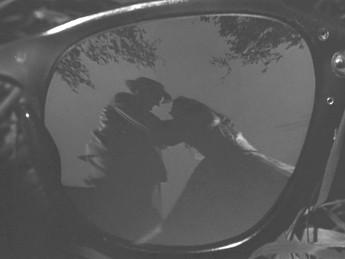 Then there’s the classic extended sequence where Bruno follows Guy’s coquettish wife (and her callow boyfriends) around a fairground: their exchanged glances, his demonstration of strength at a sound-the-bell contest; his shadow ominously overtaking hers in the Tunnel of Love as his boat trails hers; and finally the murder, reflected in her broken glasses (the old observation that Hitchcock shot scenes of murder as if they were scenes of lovemaking and vice-versa was never as true as in this shot).
The comedy is at its darkest too – notably in the scene between Bruno and his equally crazy mother. (This scene, incidentally, begins with a classic dissolve from the Pure Filmmaking canon when a shot of Bruno’s flexed hands – which are being manicured by his mother - is superimposed over Guy’s shouting “I could break her [his wife’s] neck!” over the phone.)
And then there’s the great scene where Bruno jokes with an elderly society lady at a party about the most efficient killing methods.
“I’d take him out in the car,” she squeals in delight, referring to her husband, “knock him over the head with a hammer, pour gasoline over him and the car, and light a match.”
“And have to walk all the way home?” asks Bruno disapprovingly.
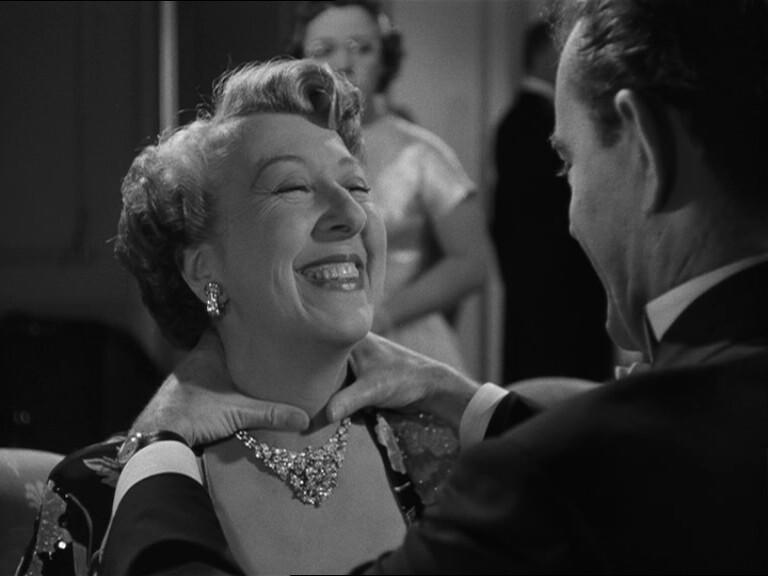 It’s characteristic of Hitchcock’s unerring moral sense that this fun-and-nonsense scene (which we as viewers have been morbidly enjoying all the while) ends on a horrific note, with Bruno going into a trance and nearly killing the poor old lady for real while demonstrating a strangling method. It pulls the carpet right out from under the audience’s feet.
Time and again, Hitchcock accentuates that the “leading man”, Guy, has many weaknesses himself, and that the death of his wife is a welcome development for him though it inconveniences him to admit it. Naturally, his girlfriend’s family makes all the politically correct noises about how tragic the murder was, all except for the straight-talking younger sister who sniffs, “Some people are better off dead.”
This theme – maintaining a high moral ground and looking away as others do your dirty work – is masterfully encapsulated in a typical throwaway moment at the film’s climax. The roundabout is out of control and an old fairground worker offers to undertake the dangerous task of crawling under it to get to the controlling lever. “You’ll get yourself killed!” shouts a concerned detective, but he shuts up when his superior looks at him and says, “Well, do you want to do it yourself?”
Incidentally, the roles of Guy and his girlfriend Ann are played respectively by Farley Granger, an actor whose stock in trade was nervous, inwardly conflicted characters, and Ruth Roman, a Warner Bros starlet of very limited ability. I was a bit bemused by Hitchcock’s statement in an interview to Francois Truffaut that he would have preferred more robust, confident actors in these roles – the conventionally heroic William Holden for Guy, for example. I think that would have taken a lot away from the film, which is anything but a conventional morality tale. It’s to the movie’s advantage, for instance, that the romantic relationship between Guy and Ann seems strained and awkward at times, because throughout we are aware that Guy may be using the relationship to further his political ambitions. They aren’t meant to be a fairytale Hollywood couple and I think it’s important to retain the sense at the film’s end that given these characters’ weaknesses, history can easily repeat itself. That would certainly be appropriate for a film that brims over with circular motifs and imagery.
P.S. Robert Walker, whose performance as Bruno counts among the best in any Hitchcock film, died at a tragically young age the same year the film was released. Check this tribute website.
Thursday, September 22, 2005
No Direction Home: Ebert on Dylan
Nice piece here by Roger Ebert about the ambivalence of his feelings about Bob Dylan. This is a part-review of Martin Scorsese’s new four-hour documentary, No Direction Home, but it’s more a personal account of the disenchantment felt by Ebert (and many others of his generation) towards someone they had held up as a spokesperson for their times. Now, he says, he can see Dylan in a different light:
Read.
"His songs led the change, but they transcended it. His audience was uneasy with transcendence. They kept trying to draw him back down into categories. He sang and sang, and finally, still a very young man, found himself a hero who was booed..... His music stands and it will survive. Because it embodied our feelings, we wanted him to embody them, too. He had his own feelings. He did not want to embody ours. We found it hard to forgive him for that."
Read.
Wednesday, September 21, 2005
Netizen’s lament
"What’s a blogger?" my grandmother asked suddenly, during my last visit to her house. She’d been seeing my Blog.com columns in Business Standard for several weeks - reading them keenly without understanding most of the content. Seeing my name on the thing was enough to make her happy; she knew better than to ask too many questions about something that was so far removed from her own world. But on this occasion she was all charged up: the catalyst was that I had been referred to as "a popular Delhi-based blogger" in a story done by another newspaper. Now she wanted to know what it all meant. Her grandson was "a popular" what?
The question threw me back to the days when I first started writing professionally. The great joy of those early bylines was being able to show them off to family - that was always the big attraction of getting my name published back then (and to an extent it still hasn’t changed). Whatever appeared in print was zealously subscribed to, cut out and hoarded by my grandparents, but the bylines that appeared only online (on the Britannica India website, for instance) were a different matter. I would take printouts of those along on my weekly visits and try to explain that I wrote these articles "on the computer". That much they understood; what evaded them was how it was possible for other people, on other computers, to access them. "You mean people come to your computer and read these articles there?" was the inevitable bemused question, as I tried uselessly to explain phone lines, modems and data transference.
I felt the disconnect between my world and theirs most clearly then. In her heyday my grandmother had travelled widely around Europe with my granddad, stayed at embassies, attended and hosted grand dinners; she fondly recalls being present at Queen Elizabeth’s coronation in 1953. She’s seen more of the (physical) world than I yet have, though it’s another matter how well she remembers all the places she’s been to and lived in. But in the past couple of decades, through a combination of family tragedies, old age and illness, she’s been largely cut off from the outside world. She’s never even seen a computer up close. Explaining the concept of the Internet to her, without being able to demonstrate it, is as tough as explaining rocket science to someone from the 18th century (not that I’d be able to explain rocket science to anyone anyway).
The other reason the question strummed a melancholic chord was, it reminded me that much of the writing I enjoy doing is of little relevance or interest to the people who matter most. Discussions on what goes on in the blogosphere (which they know nothing about), reviews of films they’ll never see, reviews of books they’ll never read (my grandmother did once show interest in a book after seeing one of my reviews, but nothing came of it; fading eyesight and concentration means that she can barely even read one page of a magazine now without taking a long break).
Ironically, the few times they can enthusiastically discuss something I’ve written is when I do the boring, reportage-driven industry stories I dislike doing: the ones where every second para begins with something fatuous like "Plans are also underway to expand into other cities..." blah blah blah. I used to feel mildly irritated when my grandparents would say they’d enjoyed a story I had done on the latest trends on the watch industry, or on luxury shoe brands. Annoyed as I already was about having to do work of that nature, I came close to snapping that this wasn’t really my writing: it was information that had been collected and clinically put together, and then in all probability rewritten by the editor. But then I realised that they felt comfortable with these stories: they could understand them, relate to them, and so they wanted to talk about them. And consequently, I started valuing that kind of work as well, acknowledging that it did have a place somewhere. However dissatisfied I personally felt with it, at least it had the effect of letting my grandparents know that there was a point where my life intersected theirs.
Back to the "blogger" question: I’m still trying to explain the answer, and not doing a very good job of it. I’ve taken my laptop along to her house to show her the web pages saved as HTMLs, but that’s about as far as it can go. It feels odd. One of my earliest childhood memories is of this same lady giving me an idealised description of how a train is put together: how each compartment is carefully furnished with all the things a traveller might need, how all the compartments are finally joined together to make a living, breathing chook-chook. It was described so vividly that when I think of a train even today, I think of that imagined, brand-new marvel rather than any of the actual trains I’ve seen.
Today, when it’s my turn to explain the Internet and what I do in that strange faraway world, no words seem adequate. This is more than a generational gap: we might as well have been born several centuries apart.
The question threw me back to the days when I first started writing professionally. The great joy of those early bylines was being able to show them off to family - that was always the big attraction of getting my name published back then (and to an extent it still hasn’t changed). Whatever appeared in print was zealously subscribed to, cut out and hoarded by my grandparents, but the bylines that appeared only online (on the Britannica India website, for instance) were a different matter. I would take printouts of those along on my weekly visits and try to explain that I wrote these articles "on the computer". That much they understood; what evaded them was how it was possible for other people, on other computers, to access them. "You mean people come to your computer and read these articles there?" was the inevitable bemused question, as I tried uselessly to explain phone lines, modems and data transference.
I felt the disconnect between my world and theirs most clearly then. In her heyday my grandmother had travelled widely around Europe with my granddad, stayed at embassies, attended and hosted grand dinners; she fondly recalls being present at Queen Elizabeth’s coronation in 1953. She’s seen more of the (physical) world than I yet have, though it’s another matter how well she remembers all the places she’s been to and lived in. But in the past couple of decades, through a combination of family tragedies, old age and illness, she’s been largely cut off from the outside world. She’s never even seen a computer up close. Explaining the concept of the Internet to her, without being able to demonstrate it, is as tough as explaining rocket science to someone from the 18th century (not that I’d be able to explain rocket science to anyone anyway).
The other reason the question strummed a melancholic chord was, it reminded me that much of the writing I enjoy doing is of little relevance or interest to the people who matter most. Discussions on what goes on in the blogosphere (which they know nothing about), reviews of films they’ll never see, reviews of books they’ll never read (my grandmother did once show interest in a book after seeing one of my reviews, but nothing came of it; fading eyesight and concentration means that she can barely even read one page of a magazine now without taking a long break).
Ironically, the few times they can enthusiastically discuss something I’ve written is when I do the boring, reportage-driven industry stories I dislike doing: the ones where every second para begins with something fatuous like "Plans are also underway to expand into other cities..." blah blah blah. I used to feel mildly irritated when my grandparents would say they’d enjoyed a story I had done on the latest trends on the watch industry, or on luxury shoe brands. Annoyed as I already was about having to do work of that nature, I came close to snapping that this wasn’t really my writing: it was information that had been collected and clinically put together, and then in all probability rewritten by the editor. But then I realised that they felt comfortable with these stories: they could understand them, relate to them, and so they wanted to talk about them. And consequently, I started valuing that kind of work as well, acknowledging that it did have a place somewhere. However dissatisfied I personally felt with it, at least it had the effect of letting my grandparents know that there was a point where my life intersected theirs.
Back to the "blogger" question: I’m still trying to explain the answer, and not doing a very good job of it. I’ve taken my laptop along to her house to show her the web pages saved as HTMLs, but that’s about as far as it can go. It feels odd. One of my earliest childhood memories is of this same lady giving me an idealised description of how a train is put together: how each compartment is carefully furnished with all the things a traveller might need, how all the compartments are finally joined together to make a living, breathing chook-chook. It was described so vividly that when I think of a train even today, I think of that imagined, brand-new marvel rather than any of the actual trains I’ve seen.
Today, when it’s my turn to explain the Internet and what I do in that strange faraway world, no words seem adequate. This is more than a generational gap: we might as well have been born several centuries apart.
Transcribing for ur edification
Just got this SMS from the publicity chaps at PVR Cinemas. Everything is exactly as it appears in the message:
"PVR Plaza invites u for th special intraction with celbs like SUSHMA SETH, MANPREET BRAR, ANITA KAUL BASU, SABA ALI KHAN AND SHIVANI WAZIR PASRICH alng wth MR. SANJEEV KUMAR BIJLI-co promotr PVR Ltd, at th special screening of Iqbal organisd for cancer patients on rose day - 22nd sept - tmrw. Be thre at 10.45 am to see all th celebs offrng floral tribute to people fighting wth ths deadly disease, only at PVR."
"PVR Plaza invites u for th special intraction with celbs like SUSHMA SETH, MANPREET BRAR, ANITA KAUL BASU, SABA ALI KHAN AND SHIVANI WAZIR PASRICH alng wth MR. SANJEEV KUMAR BIJLI-co promotr PVR Ltd, at th special screening of Iqbal organisd for cancer patients on rose day - 22nd sept - tmrw. Be thre at 10.45 am to see all th celebs offrng floral tribute to people fighting wth ths deadly disease, only at PVR."
Tuesday, September 20, 2005
Photo back(b)log: Bir trip
I didn’t start using the photo-blog facility until a couple of months ago, so am now adding visuals to some of the earlier posts that I think deserve it. To start with, here’s the republished post of my trip to the monastic university near Bir early this year. Not great photos, but I think they give a sense of the grandeur of the university. Once again, it's a must-visit if you're planning a hill trip to that region.
P.S. haven’t been able to upload the larger version of the pics (as I would’ve liked to), because of Net speed etc. Maybe later.
P.S. haven’t been able to upload the larger version of the pics (as I would’ve liked to), because of Net speed etc. Maybe later.
Monday, September 19, 2005
Quick books update: Zadie, Roth and others
Not much reading is happening these days, and the Books to be Read list is growing at a frightening rate. I’m talking not about the perpetual backlist (which continues to lengthen anyhow) but the books that have to be read for work, and inside of deadlines – for reviews, columns, author profiles. Etc etc. Am halfway through Zadie Smith’s On Beauty now, and though it’s engrossing enough in the way you’d expect a novel by her to be, I haven’t so far been floored by its brilliance or anything. Incidentally, it’s a hommage to E M Forster, specifically Howards End, which I haven’t read – but I can see the parallels already, from Merchant-Ivory’s lovely film version.
In the queue also are And the World Changed, an anthology of contemporary stories by Pakistani women, and Kavery Nambisan’s The Hills of Angheri. Kalpana Swaminathan’s Bougainvillea House (which I’m actually looking forward to, having enjoyed her previous book, Ambrosia for Afters) should be on the way as well. Am also trying very hard not to think about the fact that the new Vikram Seth is due soon.
And barely had I started to contemplate all this when I received an uncorrected book proof of this new thing called Percy Jackson and the Olympians: The Lightning Thief by Rick Riordan (Book One of yet another fantasy trilogy, this time billed as “a comic bestseller of Artemis Fowl proportions”). Doesn’t seem too promising at first glance (the most convincing thing I’ve heard about it so far is that it’s backed by a 75,000-pound PR and marketing campaign, including “consumer advertising, consumer competition and media stunts”. Movie rights sold to Fox. Ah well), so will set it aside for now.
In between, foolishly deluded that I’d have some time to read for pleasure, I picked up Chuck Palahniuk’s Fight Club and Philip Roth’s The Breast from Khan market, both slim books that wouldn’t take up much time (and I’m familiar enough with Fight Club anyway, because of the film). Managed to get through Roth’s novella in just over an hour yesterday: it’s about a man (Professor David Kepesh, one of Roth’s infrequently recurring protagonists) who wakes up to find himself transformed into a 155-pound female breast. There are the expected nods to Kafka and Gogol, and Roth does some interesting things with the premise. But I was also slightly disappointed for reasons that Martin Amis had once articulated in a fine essay: “He is a comic genius,” Amis had written, referring to Roth’s early work (of which The Breast, published in 1972, is one), “so where does he get off not being funny enough?”
I felt that way too, because for all the serious observations Roth makes in this book (on sexuality, the use of coercion in relationships, the connection between literature and life), it’s also clear that he intended it to be a comic novel in tone - and somehow it just doesn’t work from that perspective. There are no sustained laugh-out-loud moments, certainly nothing that approaches the brilliance of Portnoy’s Complaint. But it’s still Roth, and no one raves like he does. Here’s an excerpt:
And I just realised I’ve been writing this post in what was meant to be my reading time. So now I’ll go.
In the queue also are And the World Changed, an anthology of contemporary stories by Pakistani women, and Kavery Nambisan’s The Hills of Angheri. Kalpana Swaminathan’s Bougainvillea House (which I’m actually looking forward to, having enjoyed her previous book, Ambrosia for Afters) should be on the way as well. Am also trying very hard not to think about the fact that the new Vikram Seth is due soon.
And barely had I started to contemplate all this when I received an uncorrected book proof of this new thing called Percy Jackson and the Olympians: The Lightning Thief by Rick Riordan (Book One of yet another fantasy trilogy, this time billed as “a comic bestseller of Artemis Fowl proportions”). Doesn’t seem too promising at first glance (the most convincing thing I’ve heard about it so far is that it’s backed by a 75,000-pound PR and marketing campaign, including “consumer advertising, consumer competition and media stunts”. Movie rights sold to Fox. Ah well), so will set it aside for now.
In between, foolishly deluded that I’d have some time to read for pleasure, I picked up Chuck Palahniuk’s Fight Club and Philip Roth’s The Breast from Khan market, both slim books that wouldn’t take up much time (and I’m familiar enough with Fight Club anyway, because of the film). Managed to get through Roth’s novella in just over an hour yesterday: it’s about a man (Professor David Kepesh, one of Roth’s infrequently recurring protagonists) who wakes up to find himself transformed into a 155-pound female breast. There are the expected nods to Kafka and Gogol, and Roth does some interesting things with the premise. But I was also slightly disappointed for reasons that Martin Amis had once articulated in a fine essay: “He is a comic genius,” Amis had written, referring to Roth’s early work (of which The Breast, published in 1972, is one), “so where does he get off not being funny enough?”
I felt that way too, because for all the serious observations Roth makes in this book (on sexuality, the use of coercion in relationships, the connection between literature and life), it’s also clear that he intended it to be a comic novel in tone - and somehow it just doesn’t work from that perspective. There are no sustained laugh-out-loud moments, certainly nothing that approaches the brilliance of Portnoy’s Complaint. But it’s still Roth, and no one raves like he does. Here’s an excerpt:
“Now, with Dr Klinger’s assistance, I was trying to figure out why of all things I had chosen a breast. Why a big, brainless bag of dumb, desirable tissue, acted on instead of acting, unguarded, immobile, hanging, there, as a breast simply hangs and is there? Why this primitive identification with the object of infantile veneration? What unfulfilled appetites, what cradle confusions, what fragments out of my remotest past could have collided to spark a delusion of such classical simplicity? On and on I babbled to my father and then, once again, joyously, I wept. Where were my tears? How soon before I would feel tears again? When would I feel my teeth, my tongue, my toes?”
And I just realised I’ve been writing this post in what was meant to be my reading time. So now I’ll go.
Saturday, September 17, 2005
Welcoming Jebbit (and gush gush gush)
Okay, I haven’t plugged any blogs in a long time but this is very welcome news: via Uma, a link to Jebbit, a blog set up by Jaideep Varma as a storehouse for the music pieces he wrote for Gentleman magazine between 1998 and 2001. I’m excited about this because one of my earliest encounters with seriously good feature writing in an Indian newspaper/magazine (still a rarity, incidentally) came via the pieces written by Jaideep, Leslie Mathew, Amit and a few others for Gentleman. I loved that magazine (I still have copies of most of the issues from that period) and the articles on music in particular, and strongly recommend most of what’s archived here - especially in the “Great Songwriters” sub-blog. (A personal favourite was Jaideep’s piece on REM, partly because no one else around me seemed to have the same regard for their great album Up as I did.)
Now get off this site and go read.
Now get off this site and go read.
Friday, September 16, 2005
Sex and violence
I mentioned in an earlier post that an evil web-filtering software called Fortinet had classified my blog (and a few others I know of) as “Pornography”. Well, it seems Fortinet enjoyed casting aspersions on my present state of being so much that it’s now tracking my life’s archives to wreak more damage. When I attempted to access the official website of my old school, St Columba’s, from my office server (which, alas, uses Fortinet), a familiar message appeared: Accessing this site is in violation of your user policy. The classification this time, believe it or not, was “Weaponry”.
Now Columba’s has a spotless reputation: no gun battles have been fought in its corridors, so far as I know, and the most dangerous instruments on the premises in my time were the serrated canes employed by the Irish “brothers”. So I investigated further, and the only possible reason for this classification seems to be that the site is hosted by Angelfire. Which probably means they could have debarred it on grounds of “Offensive to religion” as well.
Stupid, stupid, stupid Net monitors.
Now Columba’s has a spotless reputation: no gun battles have been fought in its corridors, so far as I know, and the most dangerous instruments on the premises in my time were the serrated canes employed by the Irish “brothers”. So I investigated further, and the only possible reason for this classification seems to be that the site is hosted by Angelfire. Which probably means they could have debarred it on grounds of “Offensive to religion” as well.
Stupid, stupid, stupid Net monitors.
Monday, September 12, 2005
Herzog, Kinski: portraits in madness
One of the more surreal movie-going experiences I’ve recently had is watching Werner Herzog’s The White Diamond in the plush, air-conditioned luxury of PVR Gurgaon’s Europa Lounge last week: all thanks to an unlikely tie-up between the multiplex and the organisers of the 0110 Digital Film Festival (of which The White Diamond was the opening film). In a perfect world, of course, this wouldn’t be a novel experience – we’d all sink into leather couches to watch great works by the masters of cinema, with large bags of buttery popcorn supplied regularly by liveried footmen. But PVR’s attitude towards cinema perceived as being outside the Mainstream is a well-documented one. It makes the occasional half-hearted attempt but never really sees it through: a few years ago, in a bizarre bit of experimenting, it screened a terrible, unrestored print of Hitchcock’s Vertigo for a full week, with no explanation (or advance publicity). And ironically, when the Europa Lounge was first opened a couple of years ago, many well-intentioned promises were made about how this ‘special hall’ would become a bastion for European art-house cinema/movies that don’t typically play at multiplexes. We all know how that turned out.
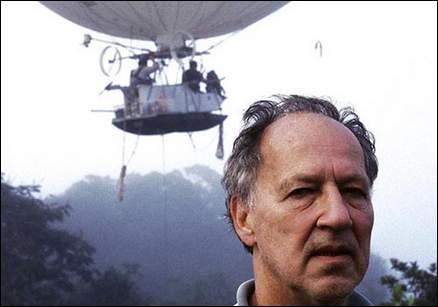
 But back to The White Diamond, a documentary in which Herzog (who was 63 years old at the time of filming this) introduces us to a researcher, Graham Dorrington, and the airship using which he hopes to sail over the rainforests of Guyana to study the fauna of this impermeable terrain. A stunning prologue gives us the early history of zeppelins and the expectations for inter-continental travel that ended with the Hindenberg tragedy. We then meet Dorrington and learn about his childhood obsession with rockets (“Explain to us what happened to your hand,” says an off-camera Herzog in a deadpan voice, as Dorrington holds up his hand to show us that two fingers are missing). We learn, too, about a catastrophe that befell the researcher 10 years earlier - an accident during a previous airship test, in which his cinematographer was killed, and which brings an added edge and purpose to his present mission. And as the film progresses, we get stunning visuals of the imperious Kaieteur Falls and the largely uncharted landscapes surrounding them, even as wistful comic relief is provided by Mark Anthony Yhap, a local man who seems very high on some yet-undiscovered jungle weed; he speaks in aphorisms and talks fondly of his family staying in faraway England, and his pet rooster (not necessarily in that order).
This is a fine, absorbing film by most standards – but not if you remember some of the towering portrayals of obsession its director once brought to the screen. How Herzog has mellowed with time! Watching The White Diamond, images from the many unforgettable scenes in Aguirre, the Wrath of God, Fitzcarraldo and Nosferatu kept flashing through my mind: films dominated by the extraordinary face of Klaus Kinski, about whom Herzog once reportedly said “The moment I first saw him, I knew it was my destiny to make films and his to act in them.”
That quote encapsulates the Herzog-Kinski relationship so well that it’s completely irrelevant whether it’s true or apocryphal. There’s a whole separate post waiting to be written about the great director-actor pairings in film history, but (with due respect to Kurosawa-Mifune, Von Sternberg-Marlene Dietrich, Bergman-Liv Ullmann, Scorsese-De Niro, Ford-Wayne, Ray-Soumitra and many, many others) this pair is in a class entirely of itself. Though they made only five films together, Kinski’s hypnotically sensual face, his wild, piercing eyes, became the agents for Herzog’s own obsession with pushing the filmmaking process beyond all accepted frontiers.
In Aguirre, Kinski was the 16th century conquistador who leads an expedition through the Peruvian rainforest to find a mythical city of gold. In Fitzcarraldo he was 10 years older, the character he played wore a formal white suit and was less wild to outward appearances; but this was a madman obsessed with the idea of dragging a 360-tonne ship over a mountain in order to realize his dream of building an opera house in the jungle. Famously, Herzog eschewed the use of plastic models or special effects, insisting that this confounding feat be achieved in reality during the shooting of the film – and consequently, the story behind the making of Fitzcarraldo became as famous as the film itself.
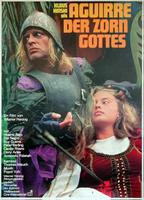 Among all the scenes from these films that have been seared into my mind, the final moments of Aguirre are particularly unforgettable. Almost all Aguirre’s men have been cut down by arrows; he turns to see his daughter swaying slowly, realizes she’s mortally wounded. As he holds her body in his arms, hands trailing through her golden hair, one sees that his madness has reached its apotheosis. He now limps about in the desolation (this is a walk Olivier’s Richard III would have been proud of), muttering his grand plans to himself (he would have married his own daughter, founded a race of superior golden beings in the heart of this darkness) and then shouting them out loud to hundreds of little monkeys scampering around the boat. The camera circles the boat a few times, then fades out, leaving him to rule over this chattering little band of subjects.
In comparison to the passion of these movies, The White Diamond seems a trifle. Even the researcher Dorrington’s long monologue, in which he relates in painful detail the death of his cinematographer friend 10 years earlier, is flat, heavy-handed and vaguely gratuitous. (Dorrington himself has an unfortunately goofy expression in many of his scenes – agreed, he isn’t a professional actor, let alone a Kinski, but this does reduce the film’s dramatic impact.)
Maybe I’m being unreasonable in judging Werner Herzog by the standards he set 30 years ago – maybe he should be allowed to be quieter, more reflective, in his old age. But then I recall Aguirre, Fitzcarraldo, the vampire Nosferatu, and I think: Quiet? Mellow? Herzog? No way – leave the monkey kingdoms to lesser mortals.
P.S. I strongly recommend a superb essay titled “Rats”, published in Granta’s issue on Film a few months ago, written by a Dutchman named Maarten ‘t Hart, who was hired as rat-trainer for Herzog’s Nosferatu in 1979. The essay is fascinating because the author, by his own admission, isn’t a film-lover and is more concerned throughout with the cruelty meted out to his beloved animals – and yet his description of his experience provides one of the clearest insights I’ve ever seen of the attraction held by the filmmaking process. It’s also an invaluable look at Herzog’s dictatorial working style.
P.P.S. Interesting interview of Herzog by Roger Ebert here.
Update: don't miss this post by Falstaff, about Herzog's documentary Grizzly Man.
 But back to The White Diamond, a documentary in which Herzog (who was 63 years old at the time of filming this) introduces us to a researcher, Graham Dorrington, and the airship using which he hopes to sail over the rainforests of Guyana to study the fauna of this impermeable terrain. A stunning prologue gives us the early history of zeppelins and the expectations for inter-continental travel that ended with the Hindenberg tragedy. We then meet Dorrington and learn about his childhood obsession with rockets (“Explain to us what happened to your hand,” says an off-camera Herzog in a deadpan voice, as Dorrington holds up his hand to show us that two fingers are missing). We learn, too, about a catastrophe that befell the researcher 10 years earlier - an accident during a previous airship test, in which his cinematographer was killed, and which brings an added edge and purpose to his present mission. And as the film progresses, we get stunning visuals of the imperious Kaieteur Falls and the largely uncharted landscapes surrounding them, even as wistful comic relief is provided by Mark Anthony Yhap, a local man who seems very high on some yet-undiscovered jungle weed; he speaks in aphorisms and talks fondly of his family staying in faraway England, and his pet rooster (not necessarily in that order).
This is a fine, absorbing film by most standards – but not if you remember some of the towering portrayals of obsession its director once brought to the screen. How Herzog has mellowed with time! Watching The White Diamond, images from the many unforgettable scenes in Aguirre, the Wrath of God, Fitzcarraldo and Nosferatu kept flashing through my mind: films dominated by the extraordinary face of Klaus Kinski, about whom Herzog once reportedly said “The moment I first saw him, I knew it was my destiny to make films and his to act in them.”
That quote encapsulates the Herzog-Kinski relationship so well that it’s completely irrelevant whether it’s true or apocryphal. There’s a whole separate post waiting to be written about the great director-actor pairings in film history, but (with due respect to Kurosawa-Mifune, Von Sternberg-Marlene Dietrich, Bergman-Liv Ullmann, Scorsese-De Niro, Ford-Wayne, Ray-Soumitra and many, many others) this pair is in a class entirely of itself. Though they made only five films together, Kinski’s hypnotically sensual face, his wild, piercing eyes, became the agents for Herzog’s own obsession with pushing the filmmaking process beyond all accepted frontiers.
In Aguirre, Kinski was the 16th century conquistador who leads an expedition through the Peruvian rainforest to find a mythical city of gold. In Fitzcarraldo he was 10 years older, the character he played wore a formal white suit and was less wild to outward appearances; but this was a madman obsessed with the idea of dragging a 360-tonne ship over a mountain in order to realize his dream of building an opera house in the jungle. Famously, Herzog eschewed the use of plastic models or special effects, insisting that this confounding feat be achieved in reality during the shooting of the film – and consequently, the story behind the making of Fitzcarraldo became as famous as the film itself.
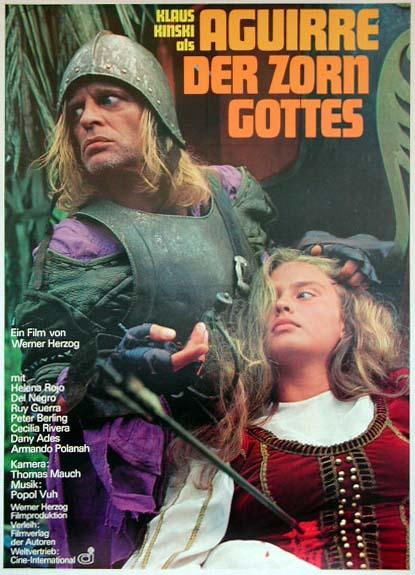 Among all the scenes from these films that have been seared into my mind, the final moments of Aguirre are particularly unforgettable. Almost all Aguirre’s men have been cut down by arrows; he turns to see his daughter swaying slowly, realizes she’s mortally wounded. As he holds her body in his arms, hands trailing through her golden hair, one sees that his madness has reached its apotheosis. He now limps about in the desolation (this is a walk Olivier’s Richard III would have been proud of), muttering his grand plans to himself (he would have married his own daughter, founded a race of superior golden beings in the heart of this darkness) and then shouting them out loud to hundreds of little monkeys scampering around the boat. The camera circles the boat a few times, then fades out, leaving him to rule over this chattering little band of subjects.
In comparison to the passion of these movies, The White Diamond seems a trifle. Even the researcher Dorrington’s long monologue, in which he relates in painful detail the death of his cinematographer friend 10 years earlier, is flat, heavy-handed and vaguely gratuitous. (Dorrington himself has an unfortunately goofy expression in many of his scenes – agreed, he isn’t a professional actor, let alone a Kinski, but this does reduce the film’s dramatic impact.)
Maybe I’m being unreasonable in judging Werner Herzog by the standards he set 30 years ago – maybe he should be allowed to be quieter, more reflective, in his old age. But then I recall Aguirre, Fitzcarraldo, the vampire Nosferatu, and I think: Quiet? Mellow? Herzog? No way – leave the monkey kingdoms to lesser mortals.
P.S. I strongly recommend a superb essay titled “Rats”, published in Granta’s issue on Film a few months ago, written by a Dutchman named Maarten ‘t Hart, who was hired as rat-trainer for Herzog’s Nosferatu in 1979. The essay is fascinating because the author, by his own admission, isn’t a film-lover and is more concerned throughout with the cruelty meted out to his beloved animals – and yet his description of his experience provides one of the clearest insights I’ve ever seen of the attraction held by the filmmaking process. It’s also an invaluable look at Herzog’s dictatorial working style.
P.P.S. Interesting interview of Herzog by Roger Ebert here.
Update: don't miss this post by Falstaff, about Herzog's documentary Grizzly Man.
Sunday, September 11, 2005
Arthur & George review
Today’s Hindustan Times has carried a heavily cut version of my Arthur & George review. Now there are roughly two ways in which an 800-word review can be chopped down to 350 words. The first is by simply pasting the first 350 words of the piece on the Quark file – which is what HT has done. The second is the creative rewriting way, wherein an enterprising sub-editor with too much time on his hands picks one or two sentences out of every para and magically strings them together, often aided by his own improvisations.
If one of the two evils has to be practiced at all, I prefer the first method – at least it ensures that what does go in stays more or less in the same form that you wrote it: even if it cuts off the piece at exactly the point where it’s beginning to gather momentum. So will steel my heart now.
(Btw, the HT version ended at “…many uncertainties of the real world” in the fourth para.)
Here’s the full thing:
--------------
 Julian Barnes’s new novel starts by giving us, in parallel narratives, the early years of two young boys in the second half of the 19th century. George grows up in the parish of Great Wyrley, Staffordshire, the son of a vicar. His father, unusually, is Parsi, and from an early age George has to contend with fellow students’ taunts: “You’re not a right sort,” they say. But beyond correcting the pronunciation of his family name – Edalji – he has no sense of an identity other than that of an Englishman, living in “the beating heart of the Empire”. He studies law and begins a career as a solicitor in Birmingham.
Arthur, meanwhile, comes to maturity in a very different social setting in Edinburgh, a member of a large family that doesn’t take Church teachings at face value. He is marked out as a future Captain of Cricket but he also learns the art of storytelling from his mother, honing the talent to the point where he can tell classmates tales in exchange for a piece of pastry or an apple: “thus he learnt the essential connection between narrative and reward”. This lesson will serve him well; he will become one of the most respected authors of his era, the creator of the Sherlock Holmes stories.
In the early 20th century the paths of these two men briefly crossed in a case that made headlines in Britain: The Great Wyrley Outrages. George Edalji was convicted (on flimsy evidence made to appear conclusive by officials handling the case) of mutilating farm animals, and spent three years in prison; on his release he appealed to Sir Arthur Conan Doyle, who turned detective himself and helped clear the young solicitor’s name. In Julian Barnes’s accomplished hands, this story becomes not just a solidly entertaining yarn but also a thoughtful examination of the ambiguities that govern human actions, the interior lives of two very different men and the conflicts between faith and knowledge.
Be warned this is no Sherlock Holmes mystery – in fact, Barnes repeatedly contrasts the facile workings of detective fiction with the many uncertainties of the real world. (“Holmes was never obliged to stand in the witness box and have his suppositions and intuitions and immaculate theories ground to fine dust…”) And though there is a certain amount of courthouse drama, the focus is on the lives and motivations of the two men, presented in alternating chapters. Arthur’s personal life is in disarray at the time George’s case comes to his desk: for 10 years, as his consumption-afflicted first wife slowly wasted away, he had maintained a clandestine, “platonic love affair” with another woman, Jean Leckie; now, after becoming a widower, he realises that making his relationship with Jean public will entail a new set of deceptions. In Barnes’s (slightly simplistic) treatment of this sub-plot, the Great Wyrley case gives the distressed author the opportunity to plunge full-bloodedly into a cause that will help him conquer his own self-doubt.
Arthur & George is a fictionalised account of actual events, and it’s difficult to know where fact ends and storytelling begins – but in a sense that’s apposite to this novel. What can one ever truly know? -- this is the question that rears its head repeatedly in this narrative. It arises in the subtle, almost invisible, workings of racism and discrimination that may have played a part in George’s conviction (though interestingly enough, he himself strongly resists the idea). It comes up when Arthur agonises over his relationship with Jean, defends his position to his disapproving brother-in-law and wonders whether his first wife, on her deathbed, suspected anything. And it occurs, most strangely and movingly, in a passage towards the end when George reflects that Sir Arthur’s positive descriptions of him in articles weren’t necessarily accurate -- even though they helped clear his name. “He did not smoke. This was true. He judged it a pointless, unpleasant and costly habit. But also one unconnected with criminal behaviour. Even Sherlock Holmes famously smoked a pipe…”
This uncertainty is also reflected in the conflict between the irrationalities of organised religion and the rationalities of reasoned thought. “How peculiarly repellent were the perversions of an institutional religion once it began its irreversible decline,” thinks Arthur to himself bitterly at one point. “The sooner the whole edifice were swept away the better.” But even here there is ambiguity: Arthur, a renowned rationalist, pledges his troth to “Spiritism” and participates in séances, which many others dismiss as mere charlatanry. Haunted by a childhood image of his grandmother’s dead body (only the “sloughed husk” left behind), he searches for the elusive truth that lies behind superficial religious practices. These questions along with many others, he believes, will be answered in the more enlightened century that is to come.
But a hundred years on, the answers are still elusive.
If one of the two evils has to be practiced at all, I prefer the first method – at least it ensures that what does go in stays more or less in the same form that you wrote it: even if it cuts off the piece at exactly the point where it’s beginning to gather momentum. So will steel my heart now.
(Btw, the HT version ended at “…many uncertainties of the real world” in the fourth para.)
Here’s the full thing:
--------------
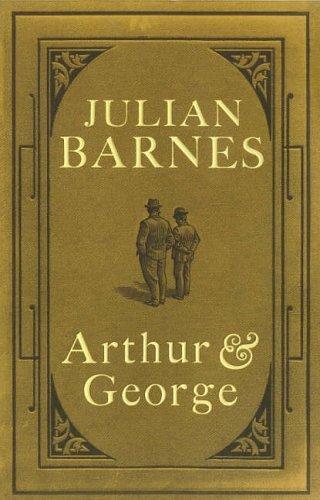 Julian Barnes’s new novel starts by giving us, in parallel narratives, the early years of two young boys in the second half of the 19th century. George grows up in the parish of Great Wyrley, Staffordshire, the son of a vicar. His father, unusually, is Parsi, and from an early age George has to contend with fellow students’ taunts: “You’re not a right sort,” they say. But beyond correcting the pronunciation of his family name – Edalji – he has no sense of an identity other than that of an Englishman, living in “the beating heart of the Empire”. He studies law and begins a career as a solicitor in Birmingham.
Arthur, meanwhile, comes to maturity in a very different social setting in Edinburgh, a member of a large family that doesn’t take Church teachings at face value. He is marked out as a future Captain of Cricket but he also learns the art of storytelling from his mother, honing the talent to the point where he can tell classmates tales in exchange for a piece of pastry or an apple: “thus he learnt the essential connection between narrative and reward”. This lesson will serve him well; he will become one of the most respected authors of his era, the creator of the Sherlock Holmes stories.
In the early 20th century the paths of these two men briefly crossed in a case that made headlines in Britain: The Great Wyrley Outrages. George Edalji was convicted (on flimsy evidence made to appear conclusive by officials handling the case) of mutilating farm animals, and spent three years in prison; on his release he appealed to Sir Arthur Conan Doyle, who turned detective himself and helped clear the young solicitor’s name. In Julian Barnes’s accomplished hands, this story becomes not just a solidly entertaining yarn but also a thoughtful examination of the ambiguities that govern human actions, the interior lives of two very different men and the conflicts between faith and knowledge.
Be warned this is no Sherlock Holmes mystery – in fact, Barnes repeatedly contrasts the facile workings of detective fiction with the many uncertainties of the real world. (“Holmes was never obliged to stand in the witness box and have his suppositions and intuitions and immaculate theories ground to fine dust…”) And though there is a certain amount of courthouse drama, the focus is on the lives and motivations of the two men, presented in alternating chapters. Arthur’s personal life is in disarray at the time George’s case comes to his desk: for 10 years, as his consumption-afflicted first wife slowly wasted away, he had maintained a clandestine, “platonic love affair” with another woman, Jean Leckie; now, after becoming a widower, he realises that making his relationship with Jean public will entail a new set of deceptions. In Barnes’s (slightly simplistic) treatment of this sub-plot, the Great Wyrley case gives the distressed author the opportunity to plunge full-bloodedly into a cause that will help him conquer his own self-doubt.
Arthur & George is a fictionalised account of actual events, and it’s difficult to know where fact ends and storytelling begins – but in a sense that’s apposite to this novel. What can one ever truly know? -- this is the question that rears its head repeatedly in this narrative. It arises in the subtle, almost invisible, workings of racism and discrimination that may have played a part in George’s conviction (though interestingly enough, he himself strongly resists the idea). It comes up when Arthur agonises over his relationship with Jean, defends his position to his disapproving brother-in-law and wonders whether his first wife, on her deathbed, suspected anything. And it occurs, most strangely and movingly, in a passage towards the end when George reflects that Sir Arthur’s positive descriptions of him in articles weren’t necessarily accurate -- even though they helped clear his name. “He did not smoke. This was true. He judged it a pointless, unpleasant and costly habit. But also one unconnected with criminal behaviour. Even Sherlock Holmes famously smoked a pipe…”
This uncertainty is also reflected in the conflict between the irrationalities of organised religion and the rationalities of reasoned thought. “How peculiarly repellent were the perversions of an institutional religion once it began its irreversible decline,” thinks Arthur to himself bitterly at one point. “The sooner the whole edifice were swept away the better.” But even here there is ambiguity: Arthur, a renowned rationalist, pledges his troth to “Spiritism” and participates in séances, which many others dismiss as mere charlatanry. Haunted by a childhood image of his grandmother’s dead body (only the “sloughed husk” left behind), he searches for the elusive truth that lies behind superficial religious practices. These questions along with many others, he believes, will be answered in the more enlightened century that is to come.
But a hundred years on, the answers are still elusive.
Friday, September 09, 2005
Tin Fish, and a nostalgia trip
It’s slightly unsettling to read a first novel written by someone you’ve hitherto known in only a one-dimensional way - especially if that one dimension happens to be as a Very Scary Boss, and the story is a personal one. Sudeep Chakravarti’s Tin Fish is a fluidly written coming-of-age tale set over a 3-4-year period in the mid-1970s in Mayo College, Ajmer, and narrated by Barun Ray (nicknamed “Brandy” on his first day of school). The story revolves around Brandy and his three closest friends (notably “Fish”, whose tragic fate gives the book its emotional centre), their experiences at boarding-school and how they cope with being cut off from family for long periods (or, in some cases, with not being cut off for long enough) – and with growing up during the political tumult of the Emergency and its farcical aftermath. Much slang (“cat”, for instance) abounds. There are cameos by the buxom Katy Mirza, the urine-imbibing Morarji Desai and other relics from the era. It’s an enjoyable read and (something I’m always grateful for these days) a quick one, easily finished in the course of an afternoon.
I met Sudeep the other day for a profile but that was only part of it; we were going to catch up anyway. He was my first boss in journalism, and like most others in the NewspaperToday.Com office I was chary about his temper. When I joined the website in 2001 I didn’t have to interact much with him the first few months but I heard hair-raising stories from colleagues, and occasionally witnessed for myself how the entire 6th floor of Videocon Tower would reverberate when he bellowed at someone. Night after torturous night of doing the 1 AM-9 AM graveyard shift, staring bleary-eyedly into the computer screen at the wretched site template that had to be refreshed every few minutes, I was kept awake by the doom spelt out by a more experienced colleague: “So mat jaana varna Gabbar Singh ka phone call aa jayega.” (Sudeep, if you’re reading this that was Rumman, and now that we’re all living in different cities I can only hope and pray that you won’t hunt him down!)
Later, when the afternoon paper Today was launched from the same office, we worked together more closely – but even though we were all on edge during those weeks leading up to the launch (the intensity levels higher than I’ve ever known in my professional life), some of the fearfulness also dissipated. For a brief, foolishly idealistic period, every member of the team felt proprietorial about this thing we were all giving birth to, and so it was easy to empathise when someone else lost their temper. And subsequently, after Sudeep had left the paper, we stayed in touch on the phone and occasionally at nostalgia get-togethers, and I saw a mellower side to him.
But all that hadn’t prepared me for Tin Fish - for the childlike enthusiasm that runs through the book, the sense one gets of a writer wanting to set down everything he can remember about the era in which he grew up. I know many former Mayo students with whom Sudeep’s book has struck a chord but I think there’s more to it than that. What interested me most (apart, of course, from the natural interest there is in reading a first novel by someone you know) was the first-person perspective it provided of a particular time and milieu. It doesn’t pretend to be an indepth social record but it reads like an honest account by someone who lived through interesting times. (One of the things Sudeep and I discussed was that there’s so much talk of chronicling the “real India” - whatever that grossly overused term means - in current literature that a lot of other things get undermined: the experiences, for instance, of a whole urban generation that grew up in boarding schools in the 1970s and who are as much a part of modern India as anyone else.)
I think it’s vital for personal experiences of this sort to be chronicled, especially because of the pace at which the world is changing now. To take an example: Sudeep is 15 years older than I am so there’s a clear generational gap there. But, as I often discuss with friends, people in my age group already feel alienated from those who are just five or six years younger than us. Some of us, 28-year-old sages that we are, already think there’s a case for our story to be told, because the world is so much different now from when we were growing up. This comes up every time I feel like walking up to a 20-year-old and saying, “Did you know, once upon a not-so-long time ago, the highlight of our TV-watching week was gathering around the B&W set on Sunday evening to see the old film Doordarshan was telecasting that day?” Or “Tsk tsk. We didn’t have cellphones in college – we used paper chits, not SMSes, to send messages to girlfriends. Paper chits build character.” Or “It seems just yesterday that a ‘trunk call’ used to be a special event – and now you kids have MSN Messenger and, worse, Google Talk? Bah!”
Groan, I feel so old. So thanks, Sudeep, for reminding me that there are generations that precede mine. I don’t even remember that Katy Mirza. She must’ve been cat.
I met Sudeep the other day for a profile but that was only part of it; we were going to catch up anyway. He was my first boss in journalism, and like most others in the NewspaperToday.Com office I was chary about his temper. When I joined the website in 2001 I didn’t have to interact much with him the first few months but I heard hair-raising stories from colleagues, and occasionally witnessed for myself how the entire 6th floor of Videocon Tower would reverberate when he bellowed at someone. Night after torturous night of doing the 1 AM-9 AM graveyard shift, staring bleary-eyedly into the computer screen at the wretched site template that had to be refreshed every few minutes, I was kept awake by the doom spelt out by a more experienced colleague: “So mat jaana varna Gabbar Singh ka phone call aa jayega.” (Sudeep, if you’re reading this that was Rumman, and now that we’re all living in different cities I can only hope and pray that you won’t hunt him down!)
Later, when the afternoon paper Today was launched from the same office, we worked together more closely – but even though we were all on edge during those weeks leading up to the launch (the intensity levels higher than I’ve ever known in my professional life), some of the fearfulness also dissipated. For a brief, foolishly idealistic period, every member of the team felt proprietorial about this thing we were all giving birth to, and so it was easy to empathise when someone else lost their temper. And subsequently, after Sudeep had left the paper, we stayed in touch on the phone and occasionally at nostalgia get-togethers, and I saw a mellower side to him.
But all that hadn’t prepared me for Tin Fish - for the childlike enthusiasm that runs through the book, the sense one gets of a writer wanting to set down everything he can remember about the era in which he grew up. I know many former Mayo students with whom Sudeep’s book has struck a chord but I think there’s more to it than that. What interested me most (apart, of course, from the natural interest there is in reading a first novel by someone you know) was the first-person perspective it provided of a particular time and milieu. It doesn’t pretend to be an indepth social record but it reads like an honest account by someone who lived through interesting times. (One of the things Sudeep and I discussed was that there’s so much talk of chronicling the “real India” - whatever that grossly overused term means - in current literature that a lot of other things get undermined: the experiences, for instance, of a whole urban generation that grew up in boarding schools in the 1970s and who are as much a part of modern India as anyone else.)
I think it’s vital for personal experiences of this sort to be chronicled, especially because of the pace at which the world is changing now. To take an example: Sudeep is 15 years older than I am so there’s a clear generational gap there. But, as I often discuss with friends, people in my age group already feel alienated from those who are just five or six years younger than us. Some of us, 28-year-old sages that we are, already think there’s a case for our story to be told, because the world is so much different now from when we were growing up. This comes up every time I feel like walking up to a 20-year-old and saying, “Did you know, once upon a not-so-long time ago, the highlight of our TV-watching week was gathering around the B&W set on Sunday evening to see the old film Doordarshan was telecasting that day?” Or “Tsk tsk. We didn’t have cellphones in college – we used paper chits, not SMSes, to send messages to girlfriends. Paper chits build character.” Or “It seems just yesterday that a ‘trunk call’ used to be a special event – and now you kids have MSN Messenger and, worse, Google Talk? Bah!”
Groan, I feel so old. So thanks, Sudeep, for reminding me that there are generations that precede mine. I don’t even remember that Katy Mirza. She must’ve been cat.
Thursday, September 08, 2005
The 2005 Booker shortlist…
…has been announced, and this is what it looks like:
The Sea - John Banville
Arthur & George - Julian Barnes
A Long Long Way - Sebastian Barry
Never Let Me Go - Kazuo Ishiguro
The Accidental - Ali Smith
On Beauty - Zadie Smith
No major surprise, except perhaps that James Meek’s The People’s Act of Love was left out – I haven’t read it but apparently it was the favourite in some circles (including the Guardian – admittedly biased, what with Meek being on their rolls). Big names like McEwan, Rushdie and Coetzee are out of the reckoning, but again, nothing so eyebrow-raising about that given how many big names there were on this year’s longlist to begin with. (As chairman of judges John Sutherland said, “There was sufficient quality this year for two distinguished lists.”)
Have read three of the six books on the shortlist (the Ishiguro, the Barnes, the Ali Smith) and will tackle the others anon. I have a feeling this could be Barnes’s year (not just because of my high opinion of Arthur & George but because he’s a veteran - and a member of that famous Granta young authors’ class of 1981 - who’s never won the prize before).
It’s only in the last 3-4 years that I’ve developed an excitement for the Booker announcements comparable to Oscar-nomination mania (and no, I’m not saying I have much respect for either the Booker or the Oscars, or any other competitive award – just that these events are always such fun, both for speculative purposes and for mugging up trivia).
P.S. Fun's begun already – much scrapping on the Guardian blog.
The Sea - John Banville
Arthur & George - Julian Barnes
A Long Long Way - Sebastian Barry
Never Let Me Go - Kazuo Ishiguro
The Accidental - Ali Smith
On Beauty - Zadie Smith
No major surprise, except perhaps that James Meek’s The People’s Act of Love was left out – I haven’t read it but apparently it was the favourite in some circles (including the Guardian – admittedly biased, what with Meek being on their rolls). Big names like McEwan, Rushdie and Coetzee are out of the reckoning, but again, nothing so eyebrow-raising about that given how many big names there were on this year’s longlist to begin with. (As chairman of judges John Sutherland said, “There was sufficient quality this year for two distinguished lists.”)
Have read three of the six books on the shortlist (the Ishiguro, the Barnes, the Ali Smith) and will tackle the others anon. I have a feeling this could be Barnes’s year (not just because of my high opinion of Arthur & George but because he’s a veteran - and a member of that famous Granta young authors’ class of 1981 - who’s never won the prize before).
It’s only in the last 3-4 years that I’ve developed an excitement for the Booker announcements comparable to Oscar-nomination mania (and no, I’m not saying I have much respect for either the Booker or the Oscars, or any other competitive award – just that these events are always such fun, both for speculative purposes and for mugging up trivia).
P.S. Fun's begun already – much scrapping on the Guardian blog.
Tuesday, September 06, 2005
Julian Barnes and Arthur & George
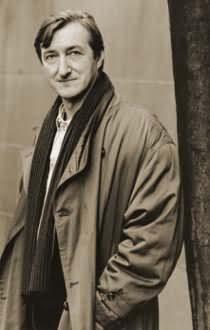 I'm a little uncertain about my position on Julian Barnes. On the one hand I’ve essentially enjoyed each book of his that I’ve read (these include Before She Met Me, Flaubert's Parrot, England, England and Cross Channel), and it’s easy to see the qualities that make him one of Britain's foremost contemporary novelists. His many strengths include a powerful and varied imagination, and a very original sense of humour (check out the first chapter of A History of the World in Ten and a Half Chapters, in which he gives us a stowaway woodworm’s-eye view of what really went on in Noah’s Ark). And I especially admire his moving depictions of obsessive love, its ability to sustain, nurture and destroy lives. The "half-chapter" in A History of the World... and the growing jealousy of the husband in Before She Met Me provide some of the most incisive, open-hearted writing on the subject - which is noteworthy given Barnes’s popular image as a most propahly, urbanely British writer, someone you wouldn’t expect to carry his heart on his sleeve. The passion in some of his best work is at odds with the public persona, his interviews and (if you’re into physiognomy) the impression of gentility one gets from his photographs.
 But I find it difficult to muster unequivocal admiration for Barnes’s books. They're all, every one of them, brilliant in parts but also uneven when taken as a whole. Also (and this is puzzling, given that his writing style itself is so simple and elegant, in a coolly classical way), they aren't exactly what you'd call easy reads. One can see why this would be the case with Flaubert’s Parrot, his star-making novel from 1984 - a full appreciation of that book requires a high level of familiarity with Gustave Flaubert’s work, perhaps even something approaching the fixation of Barnes’s narrator (a doctor who examines the minutiae of Flaubert’s life and career). But even Barnes’s other novels, which are of more general interest, require great reserves of concentration.
One of the reasons for this is his interest in the interior lives of his characters - it isn’t quite on the level of Virginia Woolf but it does make for intense reading. A typical Barnes narrative won't stick with one character all the way through, even when there is a clear protagonist; it will sidetrack, linger here a while, dawdle there, pick at each new character’s thoughts and motivations. At its best, this method can be reminiscent of masters from a less impatient literary age: Dickens, Henry James. But when it doesn't come off, it can impede the main narrative - on occasion, Barnes spends a little too much time with his peripheral characters when he should be taking the plot forward instead.
Speaking of which, high time I took this post forward. So to get to the point, Barnes’s latest, Arthur & George, is the most satisfying of his novels I've yet encountered; my interest never flagged, and I was able to finish it quite comfortably over two night-reading sessions. A full-length review will soon follow so I won’t write too much here, but in brief this is a fictionalised account of a case that made headlines in Britain in the early years of the 20th century: The Great Wyrley Outrages, in which a young, half-Parsi solicitor, George Edalji, was convicted of mutilating farm animals, spent three years in prison but subsequently had his name cleared as the result of an investigation by Sir Arthur Conan Doyle himself.
If you haven’t read Barnes before, it might not be a bad idea to start with Arthur & George. It has most of the best qualities of his prose, but without the shilly-shallying; he reins in his proclivity for rushing off into too many different directions. Don’t expect it to be like a Sherlock Holmes mystery though - part of Barnes’s point is the contrast between the facile workings of detective fiction and the many ambiguities of real life. While there is a certain amount of courthouse drama, the focus is on the lives and motivations of the two men, presented in alternating chapters that are very short to begin with but which get lengthier as the story progresses. (Their paths don’t actually cross until page 200 or so.)
There haven’t been too many gushing reviews of Arthur & George yet (especially given the author’s reputation) but I thought it was excellent – both in its handling of the story and in its detailing of the fearfulness about a coming century and the effects of modernity on human faith and beliefs. Hope it makes it to the Booker shortlist.
(Will post full review here later.)
Sunday, September 04, 2005
Jabberwock turns one: a personal history
(Statutory warning: long, more self-indulgent-than-usual post. Take two aspirin, one before you start and one midway - at which point you’ll probably have to stop reading anyway.)
Blog birthday posts are all the rage this season, so here go my two coins for the collection bowl. A year ago (though it feels much longer) I stopped procrastinating and finally got this blog underway - with some encouragement from *beat of drums* Abhilasha (who doesn't blog herself but loves reading comments), Rajat (who used to blog but stopped) and Rumman (who's been part of the blogging circuit for years, but whose recently converted Missus is now more enthusiastic about it). Speaking practically, it helped that around this time we had finally got a decent Internet connection on our office server (this was important, since I had a painful on-again-off-again dial-up connection at home).
The main reason for starting the blog was that I felt stagnated. Work wasn't very interesting at the time, I had a workmanlike approach to most of my official assignments and was drifting away from writing about the things I was really enthusiastic about. The occasional book review/author profile for the paper was still happening but I hadn't officially written on films for a very long time. Most worryingly, I was starting to get lazy about a habit I had maintained for the previous 4-5 years: that of scribbling notes in a little pad (yes! On paper! With pen!) about each film seen/each book read/an interesting outing with friends or family.
As Salman Rushdie said in a tribute to Gunter Grass's The Tin Drum, "Writing is as close as we get to keeping a hold on the thousand and one things - childhood, certainties, cities, doubts, dreams, instants, phrases, parents, loves - that go on slipping, like sand, through our fingers." Well, writing itself was slipping away from me, and I figured that shifting it to a dynamic medium like the Internet might keep me more interested.
So Jabberwock began, as a forum for the writing I didn’t want to lose touch with, plus as a possible storehouse for some of the published work I was reasonably happy about (very limited in those days). I started with a couple of self-conscious introductory posts, then slowly got around to short posts about films and books, mixed with the occasional rant. Though I had no delusions that the Internet was anything other than a public space, I figured the blog would be read only by the six or seven friends I had tipped off about it, and maybe the occasional arbitrary surfer. I had no clue it could lead to anything bigger.
World, wide, web
My first tangible sense of how this medium can shrink the world came when, on only my second or third day of blogging, an amateur filmmaker based in LA commented on one of my movie posts, saying it made him want to watch (or re-watch) the film. It was a short comment, and of course in hindsight I know that it was no big deal, but it felt good at the time. But the first major high, and one that served to illustrate the power of blogging to me, came a few days later: a comments exchange with Hurree babu of the venerated literary blog Kitabkhana led to the discovery that Hurree was none other than Nilanjana S Roy, whose literary column I had been a big fan of for a very long time. Now Nilanjana is a good friend today and so it feels a little awkward fawning like this (and I know she'll hate it too), but I need to give some background here. I had joined Business Standard a year and a half before I started blogging, and this was a paper she was closely associated with (as a former employee who still wrote regularly for them). Apart from the BS connection, we had similar interests (our beats intersected at Bookreviewville), lived in the same city, and were both members of a profession where (famously, tediously) everyone knows everyone else - but we had somehow never touched base in all that time. And yet, just a couple of weeks after I started blogging, Hurree Babu and Jabberwock knew each other and were communicating regularly. A few months later I was to experience something similar with Amit Varma, whose cricket writings I had admired in Wisden/Cricinfo long before I even knew what blogging was. These friendships and many others like them were forged in the blogosphere, and I'm very grateful for them.
Tipping point
Jabberwock acquired a measure of fame/notoriety, at least in journalistic circles, as the result of a post that (and no one believes me when I say this now) was Not Intended to Change the World. It was in November last year and it was on plagiarism. (Long-time readers will know what I'm talking about. To the others, if you're interested enough go look in the archives, because I'm not going to discuss it explicitly here.) Kitabkhana and DesiMediaBitch, two sites with heavy readership, linked to the post, and my traffic started growing. Offline, I went to journalistic get-togethers and found myself being introduced as "this Enterprising Young Man who blew the whistle on..." and such-like. Senior journalists would sniff self-righteously and tell me, "You did the right thing. This is such a disgrace to the profession. Tsk tsk."
This was all so funny. I wrote that post because a) lazy Sunday, nothing much to do, b) I had just started feeling the onset of Blogger Unrest, which meant that not more than two days should pass before a new post is put up, and c) I thought it would be fun. There was nothing more serious intended - I was far too cynical, not just about the lady in question and the paper she represented (which, to be honest, is a soft target anyway) but about the standards of journalism in general (including some of the stuff I've done myself in the past), to want to Make a Difference in any way. But well, I shouldn’t complain now.
'Personal posts'
People sometimes ask me why I don't make personal posts. Well, the easy answer to that is I didn't start this blog for that purpose; I'm not good at emotional exegesis and don't indulge in it too much even in the private ("hardcopy") diary I've written every night for the last 16 years, except in times of extreme stress. Having said that, I did in fact write a couple of personal posts early on in my blog-life - examples here and here - which I'm a little embarrassed about now (though not enough to want to delete them).
But the question is also a superficial one. In a long post about a certain aspect of a book or film that appeals to me strongly, or when writing something in defence of Sachin Tendulkar, I think I probably say more about myself than in a conventional personal post where I was explicitly discussing my life: because in the latter case there would be a defence mechanism firmly in place, monitoring everything I wrote. I think the same applies to many other bloggers who aren’t private-journal sorts at all; you often need to read between the lines instead of making all-too-easy distinctions between Personal and Impersonal blogging.
On comments and feedback
It’s almost become politically incorrect to admit that you write more for yourself than for others. So let me get this out of the way first: yes, I do greatly value the comments. If I didn’t, I would have disabled them a long time ago (especially since blog comments tend to eat up a large chunk of one’s time, and time has been at a premium for me in the last several months). I never cease to be pleasantly surprised that something I write here can be of interest to someone else, and there’s never been any question of being completely indifferent to the reader.
But the bottomline is, I did start this thing mainly for myself, and in essence I don’t want that to change. Given a choice between writing a long post about an obscure film that means a lot to me (but that few others will have seen or will want to read about) and a facile post on a topic I know everyone will relate to and want to weigh in on, I’ll pick the first one every time. (Of course, the whole point about blogging is that one doesn’t have to make that choice. And I’ve done a bit of both over the past year. But you get the idea.)
Also, I’m a little cynical about comments as indicators of anything. When I write a quick four-line post about a typo I saw in the newspaper that morning, it’s almost certain to get more comments than a carefully thought out and put together post about a film or a book. And it’s always easy to predict which posts will get the most comments - the personal ones and, weirdly enough, the technical ones with rants about Tata Indicom or Airtel or Firefox. So they need to be taken with liberal sprinklings of salt.
The future? No clue really. The blogosphere is getting so cluttered, so information-heavy now that I feel quite lost. So much linking and cross-linking, lots of new bloggers with very interesting things to say - but equally, far too much mediocrity, too many people freely expressing opinions without being informed enough on the topics in question (yes yes Yazad, Amit, I want to be a libertarian, but at times I think I’m just a nasty little fascist deep inside). The best thing to do I suppose is continue posting whatever I want to, as and when I feel like it, without worrying much about readership, site counts etc. Much easier said than done, as any blogger will know, but my increased workload should help me concentrate on some of the other things that need my attention. (Looking at my Blogger dashboard, I see to my surprise that this is my 355th post, which means pretty much one a day on average - and as despairing readers will know, many of those have been v-e-r-y l-o-o-n-n-g! I think that average should dip in the future.)
Meanwhile, thanks to everyone who’s read and commented and written in. It’s been a very eventful year and if the next one is even half as exciting, that’ll be exciting enough for me.
Blog birthday posts are all the rage this season, so here go my two coins for the collection bowl. A year ago (though it feels much longer) I stopped procrastinating and finally got this blog underway - with some encouragement from *beat of drums* Abhilasha (who doesn't blog herself but loves reading comments), Rajat (who used to blog but stopped) and Rumman (who's been part of the blogging circuit for years, but whose recently converted Missus is now more enthusiastic about it). Speaking practically, it helped that around this time we had finally got a decent Internet connection on our office server (this was important, since I had a painful on-again-off-again dial-up connection at home).
The main reason for starting the blog was that I felt stagnated. Work wasn't very interesting at the time, I had a workmanlike approach to most of my official assignments and was drifting away from writing about the things I was really enthusiastic about. The occasional book review/author profile for the paper was still happening but I hadn't officially written on films for a very long time. Most worryingly, I was starting to get lazy about a habit I had maintained for the previous 4-5 years: that of scribbling notes in a little pad (yes! On paper! With pen!) about each film seen/each book read/an interesting outing with friends or family.
As Salman Rushdie said in a tribute to Gunter Grass's The Tin Drum, "Writing is as close as we get to keeping a hold on the thousand and one things - childhood, certainties, cities, doubts, dreams, instants, phrases, parents, loves - that go on slipping, like sand, through our fingers." Well, writing itself was slipping away from me, and I figured that shifting it to a dynamic medium like the Internet might keep me more interested.
So Jabberwock began, as a forum for the writing I didn’t want to lose touch with, plus as a possible storehouse for some of the published work I was reasonably happy about (very limited in those days). I started with a couple of self-conscious introductory posts, then slowly got around to short posts about films and books, mixed with the occasional rant. Though I had no delusions that the Internet was anything other than a public space, I figured the blog would be read only by the six or seven friends I had tipped off about it, and maybe the occasional arbitrary surfer. I had no clue it could lead to anything bigger.
World, wide, web
My first tangible sense of how this medium can shrink the world came when, on only my second or third day of blogging, an amateur filmmaker based in LA commented on one of my movie posts, saying it made him want to watch (or re-watch) the film. It was a short comment, and of course in hindsight I know that it was no big deal, but it felt good at the time. But the first major high, and one that served to illustrate the power of blogging to me, came a few days later: a comments exchange with Hurree babu of the venerated literary blog Kitabkhana led to the discovery that Hurree was none other than Nilanjana S Roy, whose literary column I had been a big fan of for a very long time. Now Nilanjana is a good friend today and so it feels a little awkward fawning like this (and I know she'll hate it too), but I need to give some background here. I had joined Business Standard a year and a half before I started blogging, and this was a paper she was closely associated with (as a former employee who still wrote regularly for them). Apart from the BS connection, we had similar interests (our beats intersected at Bookreviewville), lived in the same city, and were both members of a profession where (famously, tediously) everyone knows everyone else - but we had somehow never touched base in all that time. And yet, just a couple of weeks after I started blogging, Hurree Babu and Jabberwock knew each other and were communicating regularly. A few months later I was to experience something similar with Amit Varma, whose cricket writings I had admired in Wisden/Cricinfo long before I even knew what blogging was. These friendships and many others like them were forged in the blogosphere, and I'm very grateful for them.
Tipping point
Jabberwock acquired a measure of fame/notoriety, at least in journalistic circles, as the result of a post that (and no one believes me when I say this now) was Not Intended to Change the World. It was in November last year and it was on plagiarism. (Long-time readers will know what I'm talking about. To the others, if you're interested enough go look in the archives, because I'm not going to discuss it explicitly here.) Kitabkhana and DesiMediaBitch, two sites with heavy readership, linked to the post, and my traffic started growing. Offline, I went to journalistic get-togethers and found myself being introduced as "this Enterprising Young Man who blew the whistle on..." and such-like. Senior journalists would sniff self-righteously and tell me, "You did the right thing. This is such a disgrace to the profession. Tsk tsk."
This was all so funny. I wrote that post because a) lazy Sunday, nothing much to do, b) I had just started feeling the onset of Blogger Unrest, which meant that not more than two days should pass before a new post is put up, and c) I thought it would be fun. There was nothing more serious intended - I was far too cynical, not just about the lady in question and the paper she represented (which, to be honest, is a soft target anyway) but about the standards of journalism in general (including some of the stuff I've done myself in the past), to want to Make a Difference in any way. But well, I shouldn’t complain now.
'Personal posts'
People sometimes ask me why I don't make personal posts. Well, the easy answer to that is I didn't start this blog for that purpose; I'm not good at emotional exegesis and don't indulge in it too much even in the private ("hardcopy") diary I've written every night for the last 16 years, except in times of extreme stress. Having said that, I did in fact write a couple of personal posts early on in my blog-life - examples here and here - which I'm a little embarrassed about now (though not enough to want to delete them).
But the question is also a superficial one. In a long post about a certain aspect of a book or film that appeals to me strongly, or when writing something in defence of Sachin Tendulkar, I think I probably say more about myself than in a conventional personal post where I was explicitly discussing my life: because in the latter case there would be a defence mechanism firmly in place, monitoring everything I wrote. I think the same applies to many other bloggers who aren’t private-journal sorts at all; you often need to read between the lines instead of making all-too-easy distinctions between Personal and Impersonal blogging.
On comments and feedback
It’s almost become politically incorrect to admit that you write more for yourself than for others. So let me get this out of the way first: yes, I do greatly value the comments. If I didn’t, I would have disabled them a long time ago (especially since blog comments tend to eat up a large chunk of one’s time, and time has been at a premium for me in the last several months). I never cease to be pleasantly surprised that something I write here can be of interest to someone else, and there’s never been any question of being completely indifferent to the reader.
But the bottomline is, I did start this thing mainly for myself, and in essence I don’t want that to change. Given a choice between writing a long post about an obscure film that means a lot to me (but that few others will have seen or will want to read about) and a facile post on a topic I know everyone will relate to and want to weigh in on, I’ll pick the first one every time. (Of course, the whole point about blogging is that one doesn’t have to make that choice. And I’ve done a bit of both over the past year. But you get the idea.)
Also, I’m a little cynical about comments as indicators of anything. When I write a quick four-line post about a typo I saw in the newspaper that morning, it’s almost certain to get more comments than a carefully thought out and put together post about a film or a book. And it’s always easy to predict which posts will get the most comments - the personal ones and, weirdly enough, the technical ones with rants about Tata Indicom or Airtel or Firefox. So they need to be taken with liberal sprinklings of salt.
The future? No clue really. The blogosphere is getting so cluttered, so information-heavy now that I feel quite lost. So much linking and cross-linking, lots of new bloggers with very interesting things to say - but equally, far too much mediocrity, too many people freely expressing opinions without being informed enough on the topics in question (yes yes Yazad, Amit, I want to be a libertarian, but at times I think I’m just a nasty little fascist deep inside). The best thing to do I suppose is continue posting whatever I want to, as and when I feel like it, without worrying much about readership, site counts etc. Much easier said than done, as any blogger will know, but my increased workload should help me concentrate on some of the other things that need my attention. (Looking at my Blogger dashboard, I see to my surprise that this is my 355th post, which means pretty much one a day on average - and as despairing readers will know, many of those have been v-e-r-y l-o-o-n-n-g! I think that average should dip in the future.)
Meanwhile, thanks to everyone who’s read and commented and written in. It’s been a very eventful year and if the next one is even half as exciting, that’ll be exciting enough for me.
Friday, September 02, 2005
LXG 2
 Bookwise, the major recent acquisition has been The League of Extraordinary Gentlemen Volume II (known as LXG-2 within the comic-lovers’ fraternity). Samit had told me it probably wouldn’t be available here for a while so I pirouetted like a pixie on steroids when I saw it in The Book Shop, Khan Market, placed neatly in (AARRGHH!) the children’s section. Much fun if one of those sweet little kiddilies were to open the book right to the much-anticipated (and very funny) sex scene between Allan Quatermain and Mina Harker.
[For the uninitiated: this is the sequel to Alan Moore and Kevin O’Neill’s masterful graphic novel/comic/what you will about the coming together of a band of heroes from 1890s adventure fiction – Mr Quatermain from King Solomon’s Mines, Ms Harker from Dracula, Hawley Griffin from The Invisible Man, Captain Nemo from 20,000 Leagues Under the Sea, Dr Jekyll and Mr Hyde. The first book was made into a film that was amazingly bad, especially given that Moore/O’Neill’s storyboard approach should have made it easy for any director trying to transpose the story to celluloid.]
I’ve finished my first reading of LXG 2 – that is, the one where I just get through the story. Will need at least a further two for a proper appreciation of the thing. Graphic novels of this quality are so rich in detail, each new perusal shows you things you’d overlooked the previous time, and besides, you have to assimilate them at two entirely different levels. Personally, I find the intensity of effort required higher than while reading most conventional texts (which is just one of the reasons it’s ironical that the genre is sniffed at by high-literary types).
One of the things I like most about the second book so far is the increased importance given to Mr Hyde. Realising that Dr Jekyll was always going to be a dour presence, the authors decided to do away with him altogether and hand the stage to his Gentleman-Monster alter ego. It works spectacularly well, especially in Hyde’s amusing attempts to be courtly with Mina, the grisly comeuppance he wreaks on the traitor Griffin and his rousing final heroics.
Incidentally, LXG 2 references The Island of Dr Moreau and The War of the Worlds but I didn’t get all the nods. Will get back to it now to work them all out. Needless to say, both LXGs come with the highest recommendation, just don’t gift them to your little ’uns. (As the Samuel L Jackson character says in Unbreakable, “This is Art. But you must think you're in a toy store, because you're here shopping for an infant named Jeb. Do you see any Teletubbies in here?”)
P.S. Only tangentially related, but great post here by Gamesmaster on Batman, Robin and alternate sexuality.
Thursday, September 01, 2005
Just spreading the word...
...about a Delhi bloggers’ meet being organised on Sunday by Saket Vaidya and Shivam Vij. If you’re a blogger and in Delhi (though even Sikkim will do, apparently), feel free to drop by. Details here.
Subscribe to:
Posts (Atom)