Saturday, July 30, 2005
Collablogs on Mumbai floods
Just a tip about two group blogs - Mumbai Help and Cloudburst Mumbai - that are helping to collate information about the Mumbai tragedy. Between them, these sites will contain news and links about the cloudburst and its aftermath: hospital locations, maps of rescue routes, addresses of doctors and medical workers, volunteer organisations, food and water points, safe roads and railway stations. Please contribute information if you can.


Ray films 3: Seemabaddha, Mahanagar, Sonar Kella
Just rounding off my notes on the Ray films screened at Cinefan. Like I said before, these aren’t meant to be comprehensive write-ups. Feel the need to make that point again because a couple of office colleagues (Bongs, Ray devotees) told me they wished I’d written more about Pather Panchali and Charulata. Honestly, I wish I had too, and I know I could have. But – and this is something I’ll need to elaborate on again soon – I don’t always have the time or energy to treat blogging as a parallel activity. One of the things I find attractive about this medium is that it allows me to focus on just one aspect of a film or book rather than write a full, formal review. And though I will continue to post my official reviews here after they’ve appeared in print, it just isn’t possible to keep writing fresh (and structured) stuff exclusively for the blog.
Besides, my freelancing finally begins this Monday and I’m going to have a whole new set of responsibilities. So this might taper off a bit anyway.
(Also, with reference to the last two Ray posts, I think the comments that have come in have been far more informed and interesting than what I originally wrote. So JAP, Tridib, Blogisite, Some Ol’ Guy, keep them coming. And Bonatellis: would like to know what you wanted to share about Seemabaddha.)
Here go the snippets:
Seemabaddha: Gripping urban parable about an upwardly mobile sales manager working with a big foreign company in Calcutta, who finds that his bid to become the company director leads him into increasingly murky moral terrain. Most of the film deals with the relationship between the protagonist Shyamal and his visiting sister-in-law, played by Sharmila Tagore. ("I play the role of Conscience in this film," Sharmila-di told us in her introductory speech at Siri Fort, while I mulled the plaintive defence she had mounted for her deer-slaying husband at press conferences a few days earlier. But okay, that’s irrelevant I know.) She’s pretty good in the film, though the lanky Barun Chandra is superb as Shyamal. Reminded me in some scenes of the young, pre-Zanjeer Amitabh. I’ll shut up about this now.
As he so often does, Ray infuses dramatic tension in scenes that might not have seemed particularly significant on paper. I particularly love the way he implicates us, the audience, in the protagonist’s deepening amorality. Shyamal is very likable throughout the film and we’re with him most of the way, and then a turning point occurs towards the end. An elderly watchman is badly injured during a labour strike that was part of a plan set into motion by Shyamal and the labour officer. Initially Shyamal seems genuinely conscience-stricken, as we’d expect him to be – but then, a little while later he laughs casually when his co-conspirator makes a joke about how they would have sent a big bouquet of flowers to the watchman’s family if he’d died. A line has been crossed, and though it's a brief moment it's a chilling one.
I thought the last shot – of the Sharmila character vanishing as Shyamal holds his head in his hands – was a little heavy-handed, but the film was superb overall, taut and economical, like all of Ray’s best work.
Mahanagar: One of Ray’s first urban films and an underrated one, sandwiched as it is between films that were among his most acclaimed in the west (the "Apu Trilogy", Charulata). I thought the script was a bit weak in places (only by Ray’s own standards) but the characterisation is nearly flawless - fine performances by Madhabi Mukherjee as the housewife who takes up a job to help her family make ends meet, but then finds that said family is dismayed about her actually finding self-fulfillment in the job (to see Madhabi in this role after seeing Charulata is to watch a goddess put on a mortal’s clothes), as well as by Anil Chatterjee as her husband, and the 14-year-old Jaya Bhaduri as his sister.
My viewing experience was spoilt in part by terribly subtitles ridden with awkward sentences and typos: one read "I sometimes offer life to people on the road" (instead of "lift") and the same scene later had "I even pick up strangers in my ear".
Sonar Kella: Now officially my favourite Ray movie. Soumitra as Feluda is as cool as Mifune, Santosh Dutta as the pulp-writer Jotayu is superb and the camels rock, as they must. Everything that needs to be said about this film has been said before, so I’ll add only that I can see why Salman Rushdie (who cited the film version of The Wizard of Oz as one of the biggest artistic influences on his life) was such a big fan of this film. In an essay in Imaginary Homelands Rushdie mentions how, when he told Ray that Sonar Kella was one of his favourite movies, the director jumped up from his chair enthusiastically, in the manner of a father whose most underappreciated child has been praised.
P.S. if you want more indepth information on Ray and these movies, check this site.
Besides, my freelancing finally begins this Monday and I’m going to have a whole new set of responsibilities. So this might taper off a bit anyway.
(Also, with reference to the last two Ray posts, I think the comments that have come in have been far more informed and interesting than what I originally wrote. So JAP, Tridib, Blogisite, Some Ol’ Guy, keep them coming. And Bonatellis: would like to know what you wanted to share about Seemabaddha.)
Here go the snippets:
Seemabaddha: Gripping urban parable about an upwardly mobile sales manager working with a big foreign company in Calcutta, who finds that his bid to become the company director leads him into increasingly murky moral terrain. Most of the film deals with the relationship between the protagonist Shyamal and his visiting sister-in-law, played by Sharmila Tagore. ("I play the role of Conscience in this film," Sharmila-di told us in her introductory speech at Siri Fort, while I mulled the plaintive defence she had mounted for her deer-slaying husband at press conferences a few days earlier. But okay, that’s irrelevant I know.) She’s pretty good in the film, though the lanky Barun Chandra is superb as Shyamal. Reminded me in some scenes of the young, pre-Zanjeer Amitabh. I’ll shut up about this now.
As he so often does, Ray infuses dramatic tension in scenes that might not have seemed particularly significant on paper. I particularly love the way he implicates us, the audience, in the protagonist’s deepening amorality. Shyamal is very likable throughout the film and we’re with him most of the way, and then a turning point occurs towards the end. An elderly watchman is badly injured during a labour strike that was part of a plan set into motion by Shyamal and the labour officer. Initially Shyamal seems genuinely conscience-stricken, as we’d expect him to be – but then, a little while later he laughs casually when his co-conspirator makes a joke about how they would have sent a big bouquet of flowers to the watchman’s family if he’d died. A line has been crossed, and though it's a brief moment it's a chilling one.
I thought the last shot – of the Sharmila character vanishing as Shyamal holds his head in his hands – was a little heavy-handed, but the film was superb overall, taut and economical, like all of Ray’s best work.
Mahanagar: One of Ray’s first urban films and an underrated one, sandwiched as it is between films that were among his most acclaimed in the west (the "Apu Trilogy", Charulata). I thought the script was a bit weak in places (only by Ray’s own standards) but the characterisation is nearly flawless - fine performances by Madhabi Mukherjee as the housewife who takes up a job to help her family make ends meet, but then finds that said family is dismayed about her actually finding self-fulfillment in the job (to see Madhabi in this role after seeing Charulata is to watch a goddess put on a mortal’s clothes), as well as by Anil Chatterjee as her husband, and the 14-year-old Jaya Bhaduri as his sister.
My viewing experience was spoilt in part by terribly subtitles ridden with awkward sentences and typos: one read "I sometimes offer life to people on the road" (instead of "lift") and the same scene later had "I even pick up strangers in my ear".
Sonar Kella: Now officially my favourite Ray movie. Soumitra as Feluda is as cool as Mifune, Santosh Dutta as the pulp-writer Jotayu is superb and the camels rock, as they must. Everything that needs to be said about this film has been said before, so I’ll add only that I can see why Salman Rushdie (who cited the film version of The Wizard of Oz as one of the biggest artistic influences on his life) was such a big fan of this film. In an essay in Imaginary Homelands Rushdie mentions how, when he told Ray that Sonar Kella was one of his favourite movies, the director jumped up from his chair enthusiastically, in the manner of a father whose most underappreciated child has been praised.
P.S. if you want more indepth information on Ray and these movies, check this site.
Wednesday, July 27, 2005
Notes on Ray films 2: Charulata
 There’s usually no better way to put me off a movie than to say it’s so-and-so-director’s "most perfect" film. A statement like that gets me thinking one of two things: 1) it probably isn’t true, so let’s watch the film and poke holes into it, or 2) it’s probably true, which would make this an uninteresting movie, and I’d much rather watch something that’s edgier. As it is, the films I find most interesting in directors’ resumes tend to be the ones that haven’t achieved polished-diamond perfection but that are flawed in some obvious ways, with glimpses of brilliance. (At an impromptu DVD-watching session I would opt for Scorsese’s The King of Comedy over Raging Bull; Hitchcock’s Marnie or Rope over Rear Window; Kurosawa’s The Bad Sleep Well over The Seven Samurai; Welles’ moody Macbeth over Citizen Kane.)
Ray’s Charulata is one of the exceptions. Intellectually speaking, I know what people mean when they say it’s his best film in terms of all its elements coming together perfectly, and that it’s made by an assured filmmaker in complete command of his craft. But at the same time, while watching the film I’m not conscious of any of those things. A part of my brain isn’t on red alert, telling me: what are you doing watching this boringly Accomplished movie? All I can see is the beauty and subtlety of the story and the performances and how, without any melodrama or even explicit admissions by the characters, the film draws the viewer deep into an emotional conflict.
The first 10 minutes are vital to any film’s impact and Charulata is set up beautifully by a number of vignettes that have passed into movie lore. Charu (Madhabi Mukherjee) with her fieldglasses, moving from window to window. The brilliantly theatrical scene where she stands by sullenly as her kindly but inattentive husband, engrossed in his newspaper, passes by without noticing her (in this scene she almost seems to be addressing the viewer directly - defining for us her status as a bored housewife). The game of cards with her sister-in-law, which establishes how static these women’s lives are - the building up of tension followed by the sister-in-law’s cry of dismay when she loses the entire pack on the final card (this is a suspense sequence Hitchcock would have been proud of). The breaking of the storm: the room darkening as Charu lies on her bed, the frenetic activity as the women hurry to get the clothes off the clothesline, the camera swirling about madly, and alll of this culminating in Amol’s (Soumitra Chatterjee) great entrance, posturing as "Krishna, slayer of demons".
But striking as the opening scenes are, I wouldn’t be writing about Charulata here if the rest of the film didn’t measure up to the great start. In scene after masterful scene, Ray establishes Charu’s growing feelings for her husband’s young cousin and, remarkably, creates a wrenching emotional drama out of a story where the three protagonists are all likeable, well-meaning people. This is a lesson in movie-making of the sort where everything doesn’t have to be spelt out to the audience - where viewers can be treated as intelligent people. It deserves multiple viewings, which is not something you’ll usually catch me saying about a movie that is so widely acknowledged as a director’s best.
Tuesday, July 26, 2005
Notes on Ray (Rai?) films 1: Pather Panchali
 Given the demands on my time in the past two weeks, plus the general difficulties of planning for a film festival (or, in some cases, even getting into an auditorium alive), I’m very pleased that I managed to see all five Satyajit Ray (henceforth pronounced Rai - Raa-ay) films that were screened at this year’s Cinefan. Technically speaking, Mahanagar was the only one I hadn’t seen before but I realised that of the others (most of which I’d seen on iffy video prints years ago) I had a crystal-clear memory of only Pather Panchali. Besides – why not admit it – this was the first time I was watching any of these movies on the big screen. So to a large extent it was a fresh experience.
Here are a few notes on the films. These aren’t reviews but scattered observations, and I don’t know how much sense they’ll make to someone who isn’t familiar with the movies, or with Ray’s oeuvre in general. But here goes:
Pather Panchali: Ray’s first film, still his best known (in both India and the West) and cited on many lists/polls as the Best Indian Film Ever Made - all of which has inevitably led to a trend of revisionism where we are repeatedly assured that it isn’t really his best. Aparajito, we’re told, is the one true masterpiece in the so-called Apu Trilogy. Charulata is a "near-perfect film", a polished diamond, an assured work by a master in full command, which Pather Panchali certainly isn’t. (How could it be, anyway?) Nayak and Goopi Gyne Bagha Byne are inventive in ways that the "song of the little road" wasn’t.
All probably true, and it’s also true that revisionism comes easily to most of us; we self-anointed phillum critic often take a film’s existing reputation into account, consciously or unconsciously. But here’s my take on Pather Panchali, and naturally it’s a personal one: it’s among a very select band of films that I just couldn’t tear my eyes away from, at least the first couple of times I saw it. (I became consciously aware of this when, while watching it in Siri Fort the other day, I got an important SMS to which I had to reply with a simple "OK", and I found it very hard to look down at my phone for even those few seconds.) But what’s interesting is that, of the other films that fall into this category for me, Pather Panchali is, cinematically speaking, the least dramatic - it doesn’t have as many "setpiece" scenes and it doesn’t have any one actor who holds you in thrall (like Klaus Kinski in Herzog’s Aguirre, the Wrath of God, or Toshiro Mifune in Yojimbo or Max von Sydow in The Seventh Seal - some of the other films on my list). I could never pick a favourite scene from this film, or even three favourite scenes. But it’s hypnotic as a whole, and in a way that’s very difficult to define.
This might sound pretentious, but I think of Pather Panchali as a one-of-a-kind masterpiece that shouldn’t be compared with anything else made by its director. Some films exist so perfectly in their own worlds that it feels wrong to closet them in lists or to argue about whether they are best or second-best.
(to be continued)
Silly plastic trees
Annie Zaidi of Known Turf nicely summarises some of the things that went wrong at Cinefan this year. I’m writing an overview of the fest myself and will be stressing the good things (since, after the confusion of the first couple of days, I thought it was more professionally managed on the whole than previous editions had been) - but it never hurts to be reminded of the many screw-ups that could so easily have been avoided. And yes, I had a run-in too with the neurotic "organiser-lady" Annie mentions in her post.
P.S. Have to say this: all the supposed high-level security (which had, among other things, entailed confiscating pens from some of us) broke down on the last day, when delegates and press-wallahs flashing single accreditation passes were being allowed to sneak in up to 6-7 people (without bag checks) through the special side-entrance.
P.S. Have to say this: all the supposed high-level security (which had, among other things, entailed confiscating pens from some of us) broke down on the last day, when delegates and press-wallahs flashing single accreditation passes were being allowed to sneak in up to 6-7 people (without bag checks) through the special side-entrance.
Monday, July 25, 2005
It's all about the cyclist: Lance Armstrong's books
Lance Armstrong has won his seventh consecutive Tour de France, and so here's a plug for his autobiographies, which I reviewed for Biblio magazine around a year ago. They’re highly recommended, especially the first, It’s Not About the Bike, which I enjoyed more than I’d ever thought possible (given that I’m not into the sport, plus I’d feared the book would be painfully maudlin).
This is a joint review (it’s a long one btw, longer than I’m usually comfortable with):
---------
In the real world of sport, it’s rare to find that perfect match, that perfect score or comeback that plays itself out so routinely in schoolboy dreams. In Lance Armstrong’s case, however, schoolboy dreams couldn’t possibly have held a candle to real life. Here’s Armstrong’s life, abridged: he was raised in a one-bedroom apartment in a Dallas suburb by a single mother – and later, for a few years, by her second husband who fitted every cruel stepfather stereotype (he would whip young Lance, or beat him with a paddle, for the most minor trespasses). Biking was an escape from the drudgery of his life - "all endurance athletes are running away from something", he believes – and he grew in stature over the years, his professional life coming to a culmination of sorts when he won the World Championships in 1995.
Then, a year later, he was diagnosed with an advanced stage of testicular cancer. Given a less than 40 per cent chance of survival (and that was only the softened version, as he later learned), he fought the disease; conquered it; returned to life and to biking, a better man and athlete; and won the grueling Tour de France – one of the greatest endurance challenges in world sport. In the face of taunts that his win had been a (possibly drug-aided) fluke, he came back and won the Tour again the following year. And again the year after that. And the next. Along the way, he met and married Kristin Richard; they had their first child in between his first two Tour de France wins.
It’s a story that might have been lifted from the script of one of those inspirational Disease of the Week TV movies so popular on American television - except that even the most brain-dead TV executive would have demanded a rewrite to make the story less clichéd. Which is why the great wonder of It’s Not About the Bike: My Journey Back to Life and, to a marginally lesser extent, its sequel Every Second Counts is that they are enthralling reads, with none of the chest-thumping overstatement that could so easily have marred a story as dramatic as this. And yes, they are wittier and more informative than most of what you’ll find on the “Self Help” shelves of bookstores.
It’s Not About the Bike was published in 2001 when Armstrong’s struggles were very fresh in his mind - and when the possibility of a relapse still haunted him. The book begins with the nightmarish build-up to his cancer diagnosis and the realisation that he was in such an advanced stage that he could easily lose not just his sport but his life. ("In an X-ray, black is good, white is bad. My chest looked like a snowstorm.") It then backtracks to tell the story of his conflicted childhood, his relationship with his redoubtable mother Linda and progress in his sport of choice.
The fight against cancer - complete with financial problems, debilitating chemotherapy and doctors’ conflicting opinions - occupies the bulk of the story. Armstrong describes with unnerving stoicism the horrors he lived through in those days: having to visit a sperm bank at the peak of his illness, because he would be sterile later; an operation to remove cancerous lesions from his brain; a catheter that made a horrible tearing sound when it was ripped from his chest. This section makes for understandably intense reading, but it’s the winning of the 1999 Tour de France - just 16 months after his discharge from hospital - that is the book’s emotional core. The Tour win would have been the soul-stirring epiphany in that aforementioned TV movie script. But it doesn’t quite work out that way here, because the Tour is a complex race. Spread over three weeks, with different stages across varying terrain and physically drained men wheezing their way towards the close, it rarely provides the climactic humdinger seen in racing movies. In 1999, Armstrong established an early lead, held on to it and was the obvious winner long before the race ended. At the finish line, therefore, there was no drama, just an enormous sense of relief. Which is just as well: it would have felt wrong if this story had suddenly metamorphosed into a high-suspense racing thriller.
While this isn’t a conventional sports book – it’s a compelling read even if you’re not in the least interested in cycling, or in the details of Armstrong’s career – it does supply interesting nuggets on what many of us believe to be a simple sport. Armstrong discusses the complexities of cycling with the passion one would expect from him. He speaks about the criticality of working in a team, especially on lengthy races when the champion cyclist is often shielded from strong winds by his teammates, who ride in front of him. With obvious pride he tells of an old-world courtliness in cycling that is lost to most other sports in this competitive age: of how, when a rider has established a significant overall lead in the Tour, it is the done thing to allow other competitors to win individual stages in the event ("There is an unwritten code against individual greed…you helped other riders if you could, and you didn’t take stages you didn’t need…that probably sounds like tanking but there is a strange honour in it").
By comparison, and only by comparison, Every Second Counts is less exhilarating; it lacks some of its predecessor’s intensity. Also, its first 60-odd pages are mainly a retreading of ground already covered in the first book – the 1999 and 2000 Tour wins and the bronze medal at the Sydney Olympics (which made his wife prouder than his Tour victories - because of the way he dealt with not being a winner.)
A more relaxed Armstrong now speaks at length about a few other topics, including his scepticism of organised religion: "Too many people look to religion as an excuse, or a crutch … heaven and hell are both here on earth every day, and we make our lives around them." He discusses his encounters with other cancer patients/survivors, the intrusive random drug tests he was subjected to, the birth of his twin daughters and the painfully difficult task of balancing family and profession. (“One of the ways I was determined to be a good father was to make the best living I could for them, out of this brief opportunity I had as a world-champion athlete. But professional success could become a personal failure.”) And there are, of course, the details of his subsequent Tour de France triumphs. (Incidentally, Armstrong won a record sixth Tour earlier this year, though that falls outside the ambit of these books.)
Apart from an occasional sense of repetition, there’s nothing in these autobiographies that deserves serious criticism. Yes, the text is scattered with homilies in places: "I’ll never ride again, who will I be if not Lance Armstrong?" (gentle violins in the background). "I’m determined to fight this disease and conquer it" (beat of drums). "If you get a second chance, make sure to go all the way” (orchestral crescendo). But these are par for the course, so to speak. The voice that really sticks with you throughout is that of a man who might, in other circumstances, have become a conceited, precocious champion but whose experiences in cancer’s hell instead made him a more complete person – humble, sensitive and grateful for small mercies.
That voice first makes itself heard very early on, and it goes: "I’ve read that I flew up the hills and mountains of France. But you don’t fly up a hill. You struggle slowly and painfully up a hill and maybe, if you work very hard, you get to the top ahead of everybody else. Cancer is like that too. Good, strong people get cancer and they do all the right things to beat it, and they still die…I still don’t completely understand why I’m still alive. All I can do is tell you what happened."
Crucially, the candour and humility are leavened by humour; there’s a lightness of touch here that, dare I say it, puts many of our homegrown autobiographies to shame. Stylewise, these books read like prose written by one of the more erudite hip-hop artistes - by turns angry, puzzled and scared, often savage and tender in the same sentence. And it helps enormously that Armstrong’s ghostwriter Sally Jenkins is given co-authorial credit - it brings the project a verisimilitude that would have been missing if he had hogged the limelight. At any rate, the collaboration appears to have been a seamless one; the writing is lucid even as it conveys the nervous energy of a man desperate to share his lessons with the world.
More than once, Armstrong says that if it hadn’t been for the cancer, he would probably never have won a Tour de France. That’s open to debate, a question best left for the overcrowded pantheon of sporting "what ifs". What you can be sure of though is that these books would then never have been so exuberant, so full of the joy of living - and so universally appealing. You don’t have to be a race buff or a fan of “inspirational” non-fiction (I’m neither) to enjoy them.
This is a joint review (it’s a long one btw, longer than I’m usually comfortable with):
---------
In the real world of sport, it’s rare to find that perfect match, that perfect score or comeback that plays itself out so routinely in schoolboy dreams. In Lance Armstrong’s case, however, schoolboy dreams couldn’t possibly have held a candle to real life. Here’s Armstrong’s life, abridged: he was raised in a one-bedroom apartment in a Dallas suburb by a single mother – and later, for a few years, by her second husband who fitted every cruel stepfather stereotype (he would whip young Lance, or beat him with a paddle, for the most minor trespasses). Biking was an escape from the drudgery of his life - "all endurance athletes are running away from something", he believes – and he grew in stature over the years, his professional life coming to a culmination of sorts when he won the World Championships in 1995.
Then, a year later, he was diagnosed with an advanced stage of testicular cancer. Given a less than 40 per cent chance of survival (and that was only the softened version, as he later learned), he fought the disease; conquered it; returned to life and to biking, a better man and athlete; and won the grueling Tour de France – one of the greatest endurance challenges in world sport. In the face of taunts that his win had been a (possibly drug-aided) fluke, he came back and won the Tour again the following year. And again the year after that. And the next. Along the way, he met and married Kristin Richard; they had their first child in between his first two Tour de France wins.
It’s a story that might have been lifted from the script of one of those inspirational Disease of the Week TV movies so popular on American television - except that even the most brain-dead TV executive would have demanded a rewrite to make the story less clichéd. Which is why the great wonder of It’s Not About the Bike: My Journey Back to Life and, to a marginally lesser extent, its sequel Every Second Counts is that they are enthralling reads, with none of the chest-thumping overstatement that could so easily have marred a story as dramatic as this. And yes, they are wittier and more informative than most of what you’ll find on the “Self Help” shelves of bookstores.
It’s Not About the Bike was published in 2001 when Armstrong’s struggles were very fresh in his mind - and when the possibility of a relapse still haunted him. The book begins with the nightmarish build-up to his cancer diagnosis and the realisation that he was in such an advanced stage that he could easily lose not just his sport but his life. ("In an X-ray, black is good, white is bad. My chest looked like a snowstorm.") It then backtracks to tell the story of his conflicted childhood, his relationship with his redoubtable mother Linda and progress in his sport of choice.
The fight against cancer - complete with financial problems, debilitating chemotherapy and doctors’ conflicting opinions - occupies the bulk of the story. Armstrong describes with unnerving stoicism the horrors he lived through in those days: having to visit a sperm bank at the peak of his illness, because he would be sterile later; an operation to remove cancerous lesions from his brain; a catheter that made a horrible tearing sound when it was ripped from his chest. This section makes for understandably intense reading, but it’s the winning of the 1999 Tour de France - just 16 months after his discharge from hospital - that is the book’s emotional core. The Tour win would have been the soul-stirring epiphany in that aforementioned TV movie script. But it doesn’t quite work out that way here, because the Tour is a complex race. Spread over three weeks, with different stages across varying terrain and physically drained men wheezing their way towards the close, it rarely provides the climactic humdinger seen in racing movies. In 1999, Armstrong established an early lead, held on to it and was the obvious winner long before the race ended. At the finish line, therefore, there was no drama, just an enormous sense of relief. Which is just as well: it would have felt wrong if this story had suddenly metamorphosed into a high-suspense racing thriller.
While this isn’t a conventional sports book – it’s a compelling read even if you’re not in the least interested in cycling, or in the details of Armstrong’s career – it does supply interesting nuggets on what many of us believe to be a simple sport. Armstrong discusses the complexities of cycling with the passion one would expect from him. He speaks about the criticality of working in a team, especially on lengthy races when the champion cyclist is often shielded from strong winds by his teammates, who ride in front of him. With obvious pride he tells of an old-world courtliness in cycling that is lost to most other sports in this competitive age: of how, when a rider has established a significant overall lead in the Tour, it is the done thing to allow other competitors to win individual stages in the event ("There is an unwritten code against individual greed…you helped other riders if you could, and you didn’t take stages you didn’t need…that probably sounds like tanking but there is a strange honour in it").
By comparison, and only by comparison, Every Second Counts is less exhilarating; it lacks some of its predecessor’s intensity. Also, its first 60-odd pages are mainly a retreading of ground already covered in the first book – the 1999 and 2000 Tour wins and the bronze medal at the Sydney Olympics (which made his wife prouder than his Tour victories - because of the way he dealt with not being a winner.)
A more relaxed Armstrong now speaks at length about a few other topics, including his scepticism of organised religion: "Too many people look to religion as an excuse, or a crutch … heaven and hell are both here on earth every day, and we make our lives around them." He discusses his encounters with other cancer patients/survivors, the intrusive random drug tests he was subjected to, the birth of his twin daughters and the painfully difficult task of balancing family and profession. (“One of the ways I was determined to be a good father was to make the best living I could for them, out of this brief opportunity I had as a world-champion athlete. But professional success could become a personal failure.”) And there are, of course, the details of his subsequent Tour de France triumphs. (Incidentally, Armstrong won a record sixth Tour earlier this year, though that falls outside the ambit of these books.)
Apart from an occasional sense of repetition, there’s nothing in these autobiographies that deserves serious criticism. Yes, the text is scattered with homilies in places: "I’ll never ride again, who will I be if not Lance Armstrong?" (gentle violins in the background). "I’m determined to fight this disease and conquer it" (beat of drums). "If you get a second chance, make sure to go all the way” (orchestral crescendo). But these are par for the course, so to speak. The voice that really sticks with you throughout is that of a man who might, in other circumstances, have become a conceited, precocious champion but whose experiences in cancer’s hell instead made him a more complete person – humble, sensitive and grateful for small mercies.
That voice first makes itself heard very early on, and it goes: "I’ve read that I flew up the hills and mountains of France. But you don’t fly up a hill. You struggle slowly and painfully up a hill and maybe, if you work very hard, you get to the top ahead of everybody else. Cancer is like that too. Good, strong people get cancer and they do all the right things to beat it, and they still die…I still don’t completely understand why I’m still alive. All I can do is tell you what happened."
Crucially, the candour and humility are leavened by humour; there’s a lightness of touch here that, dare I say it, puts many of our homegrown autobiographies to shame. Stylewise, these books read like prose written by one of the more erudite hip-hop artistes - by turns angry, puzzled and scared, often savage and tender in the same sentence. And it helps enormously that Armstrong’s ghostwriter Sally Jenkins is given co-authorial credit - it brings the project a verisimilitude that would have been missing if he had hogged the limelight. At any rate, the collaboration appears to have been a seamless one; the writing is lucid even as it conveys the nervous energy of a man desperate to share his lessons with the world.
More than once, Armstrong says that if it hadn’t been for the cancer, he would probably never have won a Tour de France. That’s open to debate, a question best left for the overcrowded pantheon of sporting "what ifs". What you can be sure of though is that these books would then never have been so exuberant, so full of the joy of living - and so universally appealing. You don’t have to be a race buff or a fan of “inspirational” non-fiction (I’m neither) to enjoy them.
Sunday, July 24, 2005
I had coffee with an award-winning actress yesterday…
…and you saw this here first. Trina has won the best actress award in the Indian Competition section at Cinefan, for Nisshabd. She had an inkling that something was afoot when her director asked her to be at the venue before time but I don’t think she was quite prepared for this.
(Incidentally, Nisshabd also won the best film award, which was somewhat perplexing to many of us who saw it. But never mind that.)
Just returned from the closing ceremony where the awards were announced. Trina was looking a little dazed but I think she’ll survive the television-interview madness. “Don’t let this get to your head,” I told her sagaciously on the phone later, to which she replied that her principal concern was that she’d have to wear high heels to interviews/press conferences. Oh well, don’t let it get to your feet then – and congrats again!
(Incidentally, Nisshabd also won the best film award, which was somewhat perplexing to many of us who saw it. But never mind that.)
Just returned from the closing ceremony where the awards were announced. Trina was looking a little dazed but I think she’ll survive the television-interview madness. “Don’t let this get to your head,” I told her sagaciously on the phone later, to which she replied that her principal concern was that she’d have to wear high heels to interviews/press conferences. Oh well, don’t let it get to your feet then – and congrats again!
Bloglines primer
I make the mistake of assuming that everyone already knows about Bloglines – but I’ve lately realised that many dedicated bloggers/blog readers don’t. So here’s my good deed for the week, a tip: if you follow blogs regularly and find it tedious to surf sites every day, do yourself a favour and get a Bloglines account. Registration is easy and you can then “subscribe” to any number of URLs, which means you don’t have to go to individual blogs to check if there’s a new post; just keep the Bloglines window open and you’ll get updates there. I started using the thing myself because my office computer at the time was this creaky creature from 1982, which would emit otherworldly groans and then hang if I tried to open more than one Internet Explorer window at the same time. So it was pretty much a necessity if I wanted to save on time while blog-surfing. Now it’s an enormously practical option because I like to stay in touch with what’s happening on around 90 blogs (that’s the current figure and it keeps increasing) and there’s no question of visiting each site. (As it is, I’m not much of a blog-reader, I just keep an eye out for stuff that’s of interest and glance through it.)
The flip side of using Bloglines is that you might still miss some interesting posts if you jump from one update to the next in a hurry. But then, the only real solution to that is to limit your blog-reading. The other disadvantage is that if you regularly track your “site hits” with Sitemeter, BlogPatrol etc, you might not want people subscribing to your site on Bloglines, because then you won’t have an accurate picture of how many visitors you get (unless Bloglines now has its own facility for tracking, I have no idea).
The flip side of using Bloglines is that you might still miss some interesting posts if you jump from one update to the next in a hurry. But then, the only real solution to that is to limit your blog-reading. The other disadvantage is that if you regularly track your “site hits” with Sitemeter, BlogPatrol etc, you might not want people subscribing to your site on Bloglines, because then you won’t have an accurate picture of how many visitors you get (unless Bloglines now has its own facility for tracking, I have no idea).
Writer’s voice
At Cinefan yesterday I met Trina Nileena Banerjee, fellow blogger and leading lady of the film Nisshabd, which was screened here. We spoke for only a short while but as I was leaving Trina said she had pictured me as being quite different, based on my blog. “I thought you’d be more intimidating,” she said, as I shuffled about awkwardly, studying my shoes.
She had a point – I’m more irreverent and articulate in my writing than in person – but I don’t see why people’s personalities should be expected to exactly match what and how they write. There’s usually a world of difference between the written voice and the spoken voice. In that context I’d urge you to read this essay by Louis Menand, which I came across in the India Uncut archives. (Btw, Amit: the New Yorker link is no longer functional.)
A sampler:
At another level, much of the acrimony in the blogosphere (nasty exchanges between blogger and commenter) arises from the disconnect between what a blogger writes and what he/she is like in the real world. Speaking from personal experience, for instance, I often write things in a facetious vein that some readers end up taking very seriously. If these people knew me in person, over a period of time, they’d probably feel less offended: they’d know, for instance, that my rants against PR people are, more than anything else, lame attempts to be funny; that I have close friends in PR (and in marketing, and advertising – two other professions I’m not very charitable to); and that, when in a certain kind of “hold a mirror up to the world” mood, I can be equally disparaging towards my own profession, journalism, or towards some of the things I love doing myself – like spending long hours at film festivals, or reading and reviewing three books a week.
Long-time friends will almost never post an angry, strongly worded comment, even if they completely disagree with something you’ve written. Partly of course that’s because they can just pick up the phone and talk to you about it, or send you a personal mail; but it’s also because, having known you over a period of time, they’re less likely to think of you as a threat to their entire moral universe just because you’ve expressed one opinion (or two, or five) that counters their own beliefs. But with commenters who don’t know the blogger, it’s different – it’s easy for them to misread even one sentence as a summary judgement on them and their way of thinking, and consequently their very existence.
Anyway, I rambleth on, despite promising myself that I’d try to keep my next few posts short. Read that Louis Menand essay – it’s really very good, and you don’t have to look at it in the context of blogging at all.
(P.S. Have cross-posted this at Indi Cubed.)
She had a point – I’m more irreverent and articulate in my writing than in person – but I don’t see why people’s personalities should be expected to exactly match what and how they write. There’s usually a world of difference between the written voice and the spoken voice. In that context I’d urge you to read this essay by Louis Menand, which I came across in the India Uncut archives. (Btw, Amit: the New Yorker link is no longer functional.)
A sampler:
Writing that has a voice is writing that has something like a personality. But whose personality is it? As with most things in art, there is no straight road from the product back to the person who made it. There are writers read and loved for their humor who are not especially funny people, and writers read and loved for their eloquence who, in conversation, swallow their words or can’t seem to finish a sentence. Wisdom on the page correlates with wisdom in the writer about as frequently as a high batting average correlates with a high IQ: they just seem to have very little to do with one another. Charming people can produce prose of sneering sententiousness, and cranky neurotics can, to their readers, seem to be inexhaustibly delightful. Personal drabness, through some obscure neural kink, can deliver verbal blooms. Readers who meet writers whose voice they have fallen in love with usually need to make a small adjustment in order to hang on to their infatuation.
At another level, much of the acrimony in the blogosphere (nasty exchanges between blogger and commenter) arises from the disconnect between what a blogger writes and what he/she is like in the real world. Speaking from personal experience, for instance, I often write things in a facetious vein that some readers end up taking very seriously. If these people knew me in person, over a period of time, they’d probably feel less offended: they’d know, for instance, that my rants against PR people are, more than anything else, lame attempts to be funny; that I have close friends in PR (and in marketing, and advertising – two other professions I’m not very charitable to); and that, when in a certain kind of “hold a mirror up to the world” mood, I can be equally disparaging towards my own profession, journalism, or towards some of the things I love doing myself – like spending long hours at film festivals, or reading and reviewing three books a week.
Long-time friends will almost never post an angry, strongly worded comment, even if they completely disagree with something you’ve written. Partly of course that’s because they can just pick up the phone and talk to you about it, or send you a personal mail; but it’s also because, having known you over a period of time, they’re less likely to think of you as a threat to their entire moral universe just because you’ve expressed one opinion (or two, or five) that counters their own beliefs. But with commenters who don’t know the blogger, it’s different – it’s easy for them to misread even one sentence as a summary judgement on them and their way of thinking, and consequently their very existence.
Anyway, I rambleth on, despite promising myself that I’d try to keep my next few posts short. Read that Louis Menand essay – it’s really very good, and you don’t have to look at it in the context of blogging at all.
(P.S. Have cross-posted this at Indi Cubed.)
Thursday, July 21, 2005
Cinefan again: good things and bad
The temptation to rant is always stronger than the desire to give credit where credit is due. So let me get this out of the way first: I value the Cinefan festival, it’s done some great work and it’s even more important for the Delhi movie-lovers’ circuit now that IFFI has moved to Goa. I’ve seen some good and great films here (along with some terrible ones) in the past six years, films I otherwise wouldn’t have had access to - and free of cost at that. And about this year’s edition: things have improved after the first two days. Though I still feel bad about India Habitat Centre no longer being on the venues list, I have to concede that with Siri Fort (and its four auditoria) becoming a consolidated centre, Cinefan has acquired something of the ethos of a high-quality film festival - with people leaving one hall after a film finishes and rushing to another one, or to the media centre, or for a lecture/seminar/press conference, with everything within walking distance. These are positive developments and I’ll include them all in the fest-overview I’ll be doing for my newspaper, along with my rants about Neville Tulli’s silly speeches.
Having got that out of the way *turns off "Gracious Jabberwock" switch*, some organisational screw-ups are so blindingly obvious one wonders how they could ever have been implemented without someone in the planning committee keeling over in shock. Yesterday Ray’s Pather Panchali, the festival’s "centrepiece", was screened. It was fully anticipated that a huge, unmanageable crowd would show up and that there would be enough problems for the organisers anyway, with vast queues in place (and out of place) well before the screening time. The film was scheduled for 6.30 PM. So what diabolical scheduling, one must ask, permitted the screening of a 131-minute film (that’s 2 hours 11 minutes, for the mathematically challenged) in the same auditorium at 4.30 PM? So that by 6.45 PM incensed crowds, having waited for an hour already, were pressing hard against the auditorium doors with an almost equally large number of people trapped inside.
I won’t go on about this because given the disaster potential in this situation, surprisingly little happened. No deaths or anything. But you get the idea. This is as bizarre as it is annoying, because in past editions the festival has usually ensured a fair gap before the screening of a high-profile film. These are easily avoidable mistakes, one would think, and yet, and yet.
P.S. For some reason everyone who makes pre-screening speeches says Satyajit Rai (as in Lala Lajpat...). Everyone. It’s pronounced with a particularly lusty Punjabi inflection. I know not why this is.
P.P.S. Overheard during long wait outside auditorium, conversation between two young college-students, one of whom was playing Ray-expert for his uninitiated friend:
CS1: I believe this is the first film Satyajit Rai made?
CS2 (sagely): No no, I’ve seen Mahanagar and Sonar Kella before this.
Also overheard: man asking if this was where Paanch Patthar was being screened. Hmm. Sounds like a neat Feluda movie. Hidden treasure, location unknown. Five stones in strange formation.
Having got that out of the way *turns off "Gracious Jabberwock" switch*, some organisational screw-ups are so blindingly obvious one wonders how they could ever have been implemented without someone in the planning committee keeling over in shock. Yesterday Ray’s Pather Panchali, the festival’s "centrepiece", was screened. It was fully anticipated that a huge, unmanageable crowd would show up and that there would be enough problems for the organisers anyway, with vast queues in place (and out of place) well before the screening time. The film was scheduled for 6.30 PM. So what diabolical scheduling, one must ask, permitted the screening of a 131-minute film (that’s 2 hours 11 minutes, for the mathematically challenged) in the same auditorium at 4.30 PM? So that by 6.45 PM incensed crowds, having waited for an hour already, were pressing hard against the auditorium doors with an almost equally large number of people trapped inside.
I won’t go on about this because given the disaster potential in this situation, surprisingly little happened. No deaths or anything. But you get the idea. This is as bizarre as it is annoying, because in past editions the festival has usually ensured a fair gap before the screening of a high-profile film. These are easily avoidable mistakes, one would think, and yet, and yet.
P.S. For some reason everyone who makes pre-screening speeches says Satyajit Rai (as in Lala Lajpat...). Everyone. It’s pronounced with a particularly lusty Punjabi inflection. I know not why this is.
P.P.S. Overheard during long wait outside auditorium, conversation between two young college-students, one of whom was playing Ray-expert for his uninitiated friend:
CS1: I believe this is the first film Satyajit Rai made?
CS2 (sagely): No no, I’ve seen Mahanagar and Sonar Kella before this.
Also overheard: man asking if this was where Paanch Patthar was being screened. Hmm. Sounds like a neat Feluda movie. Hidden treasure, location unknown. Five stones in strange formation.
Wednesday, July 20, 2005
Ventilating the heart: Marjane Satrapi’s Embroideries
 "To speak behind others’ backs is the ventilator of the heart" says a grandmother knowingly, and with those words a group of Iranian ladies settle down for a post-prandial session of tea and gossip in Marjane Satrapi’s graphic novella Embroideries. In the cinematic style so beloved of this medium, a short prologue is followed by the "credits", in the form of an aerial view of the book’s title embroidered across a table cloth. It’s a homely picture - but "embroideries" has more than one meaning, as we will soon see.
 The women narrate their stories, or the stories of other people they know. One woman has given birth to four children but still has no inkling of what the male organ looks like; another was, as a 13-year-old, made up to look "like a little whore" in preparation for her wedding with a 69-year-old man; another seemingly picture-perfect marriage ends with the man stealing the woman’s jewellery and vanishing (though she’s equally concerned about her "lost honour"); a woman thrilled about having married her daughter off to a multi-millionnaire discovers he is homosexual. Virginity, and the need to "preserve" it for your husband - or, if that isn’t possible, to fake it - is the theme that runs through the book (and which eventually gives the title its far edgier double meaning).
Marjane Satrapi has been widely acclaimed for her autobiographical graphic novels Persepolis: The Story of a Childhood and Persepolis II: The Story of a Return, about growing up in Iran under the shadow of the Islamic revolution - and later, as a liberated young woman, dealing with repression and hypocrisy. Those were fully fleshed out creations: one got the sense of a story that had to be urgently told, of a narrative with a beginning, a middle and an end. Embroideries is a patchwork in comparison - a smaller, more modest book. The story doesn’t cover as wide a canvas (though to be fair it wasn’t intended to - cosiness and intimacy are the bywords here, and by all accounts Embroideries is something of a filler between the author’s bigger projects). Nor are Satrapi’s trademark woodcut illustrations as complex or innovative as in the earlier novels.
Satrapi herself is part of the story, along with her mother, grandmother and aunts, and this book is undoubtedly an amalgamation of many such women’s discussions she has been part of, or has heard about: it’s obvious that she has an insider’s view. But it’s also important to remember that she was part of a progressive family to begin with, and then spent her crucial adolescent years in a liberal setting (living in Austria between the ages of 14 and 18). Consequently, at times the narrative seems patronising, like an easy-to-digest primer on the Sex Lives of Upper Class Women in Islamic Countries, aimed at the western reader. Nonetheless, this is engrossing stuff while it lasts. The talking point of this book is likely to be its sexual frankness. Men, even the ones who consider themselves progressive, will find much to be squeamish about (it’s common knowledge that our tribe is very uncomfortable about how much women tell each other!) while women everywhere will find much here that they can relate to.
But speaking in the context of Islamic societies, one can’t believe the cosy framework of Satrapi’s novella contains the whole picture. There have to be more stories to be told. Personally I much preferred the two Persepolises, which managed to address many of the topics covered in Embroideries, but wove them into a larger, more satisfying narrative framework. If you aren’t familiar with Satrapi’s work, I suggest you devour the first two books and then try to get hold of this one at half-price.
Monday, July 18, 2005
Donald Richie lecture (preceded by another brief rant)
Yesterday I raged about the Siri Fort Auditorium; today let me cast my wrathful gaze on some of the people within – boors, louts who have neither the sense to stay away from events that are of no interest to them nor the sensitivity to show some respect when an 81-year-old film scholar is addressing an audience that might actually want to hear what he’s saying. Donald Richie, one of the world’s great authorities on Japanese cinema (and a Westerner who has lived in Japan for nearly 60 years), spoke on "notions of ‘Japaneseness’ in film" for around 25 minutes, in one of Siri Fort’s smallest auditoria. For at least 15 of those 25 minutes, his voice (firm, given his age, but occasionally strained) had to compete with the sounds of journalists barking instructions at photographers - who in turn shuffled in and out at whim, setting up their equipment as noisily as possible, zipping and unzipping bags and muttering phrases like "budha bhenchod" loudly to each other at intervals.
Other things were happening simultaneously. Inevitably, there were a large number of people who had no clue why they were sitting in this auditorium, listening to this old man ramble on, and who chose the most interesting points in Richie’s lecture to stand up, yawn and stretch noisily (one of them made a freakish ululating sound) and exit, after tripping over three or four of the seated attendees.
Given all this, I consider it one of the minor triumphs of my life that I heard as much of Richie’s talk as I did. It was very general, which was just as well, but he said some interesting things about the origins of Japanese film (theatre being the life-force of early cinema; the important role played in the early days by a character known as the "benshi" - a Japanese approximation of the sutradhar/Greek chorus, who would stand near the screen and comment on the action while silent movies played). He spoke about how Japanese cinema’s idea of "realism" is very different from that in the West, giving the example of the scene halfway through Kurosawa’s Ikuru, where the hitherto realistic structure of the film is ruptured by the introduction of an anonymous narrator who informs us about the death of the protagonist ("Western audiences," said Richie, "still can’t quite come to terms with this break in the narrative. But the Japanese easily absorb such shifts from conventional notions of realism"). He also discussed Anime, the Japanese "manga" comics and made gently deprecating remarks about the excesses of violence in the modern direct-to-video films.
Unfortunately, he didn't speak much about Yasujiro Ozu. The previous night, while introducing the Taiwanese director's Hou Hsiao-Hsien's Cafe Lumiere, a tribute to Ozu, Richie had commented on some of the trademarks of Ozu's work: his disapproval of plots ("they entail the misuse of characters") and his reluctance to use devices like fades and dissolves in his films, which he thought of as camera-gimmickry. I had been hoping to hear a little more.
P.S. I’m a fan of Richie’s work; his The Films of Akira Kurosawa is one of my prized books on film, and I strongly recommend it to anyone interested in Kurosawa in particular (especially the influence of the dramatic form ‘Noh’ on his work), and in 20th-century Japanese art and culture in general. And here’s an online interview.
Other things were happening simultaneously. Inevitably, there were a large number of people who had no clue why they were sitting in this auditorium, listening to this old man ramble on, and who chose the most interesting points in Richie’s lecture to stand up, yawn and stretch noisily (one of them made a freakish ululating sound) and exit, after tripping over three or four of the seated attendees.
Given all this, I consider it one of the minor triumphs of my life that I heard as much of Richie’s talk as I did. It was very general, which was just as well, but he said some interesting things about the origins of Japanese film (theatre being the life-force of early cinema; the important role played in the early days by a character known as the "benshi" - a Japanese approximation of the sutradhar/Greek chorus, who would stand near the screen and comment on the action while silent movies played). He spoke about how Japanese cinema’s idea of "realism" is very different from that in the West, giving the example of the scene halfway through Kurosawa’s Ikuru, where the hitherto realistic structure of the film is ruptured by the introduction of an anonymous narrator who informs us about the death of the protagonist ("Western audiences," said Richie, "still can’t quite come to terms with this break in the narrative. But the Japanese easily absorb such shifts from conventional notions of realism"). He also discussed Anime, the Japanese "manga" comics and made gently deprecating remarks about the excesses of violence in the modern direct-to-video films.
Unfortunately, he didn't speak much about Yasujiro Ozu. The previous night, while introducing the Taiwanese director's Hou Hsiao-Hsien's Cafe Lumiere, a tribute to Ozu, Richie had commented on some of the trademarks of Ozu's work: his disapproval of plots ("they entail the misuse of characters") and his reluctance to use devices like fades and dissolves in his films, which he thought of as camera-gimmickry. I had been hoping to hear a little more.
P.S. I’m a fan of Richie’s work; his The Films of Akira Kurosawa is one of my prized books on film, and I strongly recommend it to anyone interested in Kurosawa in particular (especially the influence of the dramatic form ‘Noh’ on his work), and in 20th-century Japanese art and culture in general. And here’s an online interview.
Saturday, July 16, 2005
Cinefan Day 1: a Siri Fort rant
After writing yesterday’s post, I wondered if I should have avoided that last comment about Siri Fort Auditorium. Well, those conscience pangs have been dispelled now. Will try to keep the ranting short but here’s a rough list of the things that happened to me and my friend Shougat at Cinefan today:
- Reached the venue to discover that, predictably, they were disallowing people from carrying cellphones into the auditorium (this happens practically every time there’s a big event on at Siri Fort, though the security is never as strict as it appears to be when they’re haranguing you; there are always a few people who somehow do manage to smuggle their phones in, and these phones invariably ring very loudly while the event is on). We were tersely, and cryptically, told that the “last few bomb incidents have been caused by cellphones”.
- Now this cellphone rule is a severe inconvenience for people who don’t have their own vehicles to leave the things in, and who don’t have the option of leaving the phones at home (because they have to go straight to office after the screening, or because they are coming to the screening straight from office). No arrangement is made for phones to be left with security or at a reception (not that that would be a very practical arrangement when there are thousands of people in attendance); in fact the organisers are downright rude and spare no opportunity to wash their hands of all responsibility.
- Even those who have vehicles are given no assurance. After leaving my phone in my car, I went up to one of the many guards posted in the car park, and asked if someone would be keeping watch over the cars at all times. The guy went on the defensive immediately. “Haan, guards yahan honge toh, par aapka personal samaan aapka hi responsibility hai.” As if that wasn’t bad enough, apparently my question had convinced him I was an Al-Qaida recruitee myself: he walked purposefully to my car, circled it a few times, stuck numerous mirrors under it, looked suspiciously at the two Harry Potters lying in the backseat (which Shougat and I had picked up from the Penguin office en route to the fest) and then waved us on patronisingly.
- Anyway, we made it inside, fuming, and finally reached the auditorium entrance, where we met the Dirty Harry of the Delhi police squad. “Arre, body search theek se karo,” this rogue screamed while his subordinate molested my friend, “trouser ko full upar kar ke dekho. Joote kholo.” He then objected – you have to believe this – to our carrying a pen into the auditorium. “Isse kya karoge? Yahan phillum dekhne aaye ho ya paath likhne?” he asked with a leer, as we attempted to tell him we were journos and would die if left alone for a few hours without a writing instrument in our possession.
I’ve been attending Cinefan for five years now – four of those as a journalist – and each time there have been problems of this sort when it comes to the screenings held at Siri Fort. I’m familiar by now with most of the organisers and the promotions people, and have the option of calling one of them up if things get too troublesome; I have a press card to flash too; but despite these advantages I still find the whole thing so bureaucratic, cumbersome, even hostile, that it sometimes makes sense just to stay away. I imagine it’s much worse for regular movie-lovers who don’t have any sort of clout. Given all this, it’s laughable when one hears all the tut-tutting about how enough people don’t come for these festivals.
- Reached the venue to discover that, predictably, they were disallowing people from carrying cellphones into the auditorium (this happens practically every time there’s a big event on at Siri Fort, though the security is never as strict as it appears to be when they’re haranguing you; there are always a few people who somehow do manage to smuggle their phones in, and these phones invariably ring very loudly while the event is on). We were tersely, and cryptically, told that the “last few bomb incidents have been caused by cellphones”.
- Now this cellphone rule is a severe inconvenience for people who don’t have their own vehicles to leave the things in, and who don’t have the option of leaving the phones at home (because they have to go straight to office after the screening, or because they are coming to the screening straight from office). No arrangement is made for phones to be left with security or at a reception (not that that would be a very practical arrangement when there are thousands of people in attendance); in fact the organisers are downright rude and spare no opportunity to wash their hands of all responsibility.
- Even those who have vehicles are given no assurance. After leaving my phone in my car, I went up to one of the many guards posted in the car park, and asked if someone would be keeping watch over the cars at all times. The guy went on the defensive immediately. “Haan, guards yahan honge toh, par aapka personal samaan aapka hi responsibility hai.” As if that wasn’t bad enough, apparently my question had convinced him I was an Al-Qaida recruitee myself: he walked purposefully to my car, circled it a few times, stuck numerous mirrors under it, looked suspiciously at the two Harry Potters lying in the backseat (which Shougat and I had picked up from the Penguin office en route to the fest) and then waved us on patronisingly.
- Anyway, we made it inside, fuming, and finally reached the auditorium entrance, where we met the Dirty Harry of the Delhi police squad. “Arre, body search theek se karo,” this rogue screamed while his subordinate molested my friend, “trouser ko full upar kar ke dekho. Joote kholo.” He then objected – you have to believe this – to our carrying a pen into the auditorium. “Isse kya karoge? Yahan phillum dekhne aaye ho ya paath likhne?” he asked with a leer, as we attempted to tell him we were journos and would die if left alone for a few hours without a writing instrument in our possession.
I’ve been attending Cinefan for five years now – four of those as a journalist – and each time there have been problems of this sort when it comes to the screenings held at Siri Fort. I’m familiar by now with most of the organisers and the promotions people, and have the option of calling one of them up if things get too troublesome; I have a press card to flash too; but despite these advantages I still find the whole thing so bureaucratic, cumbersome, even hostile, that it sometimes makes sense just to stay away. I imagine it’s much worse for regular movie-lovers who don’t have any sort of clout. Given all this, it’s laughable when one hears all the tut-tutting about how enough people don’t come for these festivals.
Friday, July 15, 2005
Thoughts on Cinefan
Most of my time in the next 10 days or so will be taken up by Cinefan – the annual Asian film festival, which starts tomorrow. Actually, I dissemble: I probably won’t be spending more than 4-5 hours each day at the fest. Yes, I do see the romance there is in spending days at a stretch at a screening venue, discussing films with friends, poring over schedules and film synopses, ticking off movies to watch, making decisions when the timings of two films clash, and then watching four, maybe five, films in the course of a day – it’s all very heady and I look forward to this time of year partly because it’s fun watching others go through that routine. But somehow I’m not quite into that sort of thing myself. And especially not the last bit: three movies a day (and they all have to be pretty good) are more than enough for me. Any more and my eyes hurt, my attention drifts, I get cranky and start snarling and then my friends all go away and sit elsewhere, leaving me in the company of the nose-digging, crotch-stroking security guard who’s waiting patiently for “hot scenes” to come.
Another thing– and I don’t know how to say this without seeming a complete pleb – is that, outside of the special screenings/films in competition/director tributes, many of the films shown at Cinefan every year are just very average, if not downright tedious. There are movies that you’re supposed to applaud because they “educate” you about other countries and cultures, or because they were made against vast odds, in the face of government oppression and practically no financing; never mind that some of these films are so heavy-handed and preachy that it’s impossible to open yourself to them. (It’s always possible, of course, to stand up and applaud once they’re over, to show you appreciate the “message”.) Some of them quite honestly make me want to rush back screaming to the good old days of Govinda and Kimi Katkar.
I know I’m not being fair. Most of these films come from countries that have no movie industries to speak of and that produce just three or four films a year (I was shocked when, in all my Little Blossom naivete, I first realised this - in the course of an interview with the lovely Indonesian director Nan Triveni Achnas a few years ago). These are places where films are made chiefly to educate, or as propaganda, and not to conform to our yardsticks of what constitutes “quality cinema” – yardsticks that have, in any case, been laid down by the established film-producing countries. It’s wrong to judge these movies by the standards we are used to. And it’s always very moving when Cinefan invites one of the directors of these small films to the fest, and you see the wonder in his eyes – the astonishment that so many people have come to watch his little film, which will probably never get any sort of distribution outside his country.
But well, what can I say? I've grown up with the notion that a film should be more than the sum of its messages, and beyond a point it's difficult to change established ideas. Life is short, and my contact lenses irritate my eyes after 12 hours, and my spectacles irritate my bulbous nose after 12 hours, and I get claustrophobic in crowded halls and so there’s only so much time I can spend inside an auditorium watching a Moroccan film about a poor family dying of thirst followed by a Kazakhstani film about a poor family dying of thirst. It’s sad, but there it is.
(Another reason I’m prejudiced is that the festival organisers – who I’ve interviewed a couple of times – are always so high-minded and tight-arsed about even the trashiest of these films being “meaningful cinema” compared to what comes in from Hollywood. Okay, we get the point, but PLEASE, stop being so sanctimonious.)
Anyway, so what am I definitely going to watch this year? Well, there are the five Satyajit Ray films, especially Mahanagar - which I haven’t seen before. Have seen the others but a very long time ago; am especially looking forward to Sonar Kella, with the great Soumitra Chatterjee as Feluda. And of course, Charulata. There’s this little film called Pather Panchali as well.
In the other sections, Nisshabd (Reaching Silence), which features a fellow blogger, The Letterhead. Sandip Ray’s After the Night…Dawn. Wong-Kar Wai’s 2046, a part-sequel to his lyrical In the Mood For Love. Vadim Perelman's House of Sand and Fog. And a few random choices from the Indian Competition section. Might blog about some of the films if I get the time, which is unlikely.
P.S. Some of the charm will be missing at this year’s Cinefan, with the removal of the India Habitat Centre from the venues list. It used to be the friendliest of the screening centres, and now almost all the screenings will be at Siri Fort Auditorium, a place I’ve never been able to develop much fondness for.
Another thing– and I don’t know how to say this without seeming a complete pleb – is that, outside of the special screenings/films in competition/director tributes, many of the films shown at Cinefan every year are just very average, if not downright tedious. There are movies that you’re supposed to applaud because they “educate” you about other countries and cultures, or because they were made against vast odds, in the face of government oppression and practically no financing; never mind that some of these films are so heavy-handed and preachy that it’s impossible to open yourself to them. (It’s always possible, of course, to stand up and applaud once they’re over, to show you appreciate the “message”.) Some of them quite honestly make me want to rush back screaming to the good old days of Govinda and Kimi Katkar.
I know I’m not being fair. Most of these films come from countries that have no movie industries to speak of and that produce just three or four films a year (I was shocked when, in all my Little Blossom naivete, I first realised this - in the course of an interview with the lovely Indonesian director Nan Triveni Achnas a few years ago). These are places where films are made chiefly to educate, or as propaganda, and not to conform to our yardsticks of what constitutes “quality cinema” – yardsticks that have, in any case, been laid down by the established film-producing countries. It’s wrong to judge these movies by the standards we are used to. And it’s always very moving when Cinefan invites one of the directors of these small films to the fest, and you see the wonder in his eyes – the astonishment that so many people have come to watch his little film, which will probably never get any sort of distribution outside his country.
But well, what can I say? I've grown up with the notion that a film should be more than the sum of its messages, and beyond a point it's difficult to change established ideas. Life is short, and my contact lenses irritate my eyes after 12 hours, and my spectacles irritate my bulbous nose after 12 hours, and I get claustrophobic in crowded halls and so there’s only so much time I can spend inside an auditorium watching a Moroccan film about a poor family dying of thirst followed by a Kazakhstani film about a poor family dying of thirst. It’s sad, but there it is.
(Another reason I’m prejudiced is that the festival organisers – who I’ve interviewed a couple of times – are always so high-minded and tight-arsed about even the trashiest of these films being “meaningful cinema” compared to what comes in from Hollywood. Okay, we get the point, but PLEASE, stop being so sanctimonious.)
Anyway, so what am I definitely going to watch this year? Well, there are the five Satyajit Ray films, especially Mahanagar - which I haven’t seen before. Have seen the others but a very long time ago; am especially looking forward to Sonar Kella, with the great Soumitra Chatterjee as Feluda. And of course, Charulata. There’s this little film called Pather Panchali as well.
In the other sections, Nisshabd (Reaching Silence), which features a fellow blogger, The Letterhead. Sandip Ray’s After the Night…Dawn. Wong-Kar Wai’s 2046, a part-sequel to his lyrical In the Mood For Love. Vadim Perelman's House of Sand and Fog. And a few random choices from the Indian Competition section. Might blog about some of the films if I get the time, which is unlikely.
P.S. Some of the charm will be missing at this year’s Cinefan, with the removal of the India Habitat Centre from the venues list. It used to be the friendliest of the screening centres, and now almost all the screenings will be at Siri Fort Auditorium, a place I’ve never been able to develop much fondness for.
Thursday, July 14, 2005
An Aussie most awesome
In its run-up to the 2005 Ashes, Cricinfo has the "Top 10 Moments that Defined the Men", from the 128-year history of cricket’s oldest international rivalry. I was pleasantly surprised to see that they included Michael Slater’s charge late on the first day of the 2001 series; it might so easily have been overlooked, especially given that he didn’t have a good tour overall.
Slater was one of my cricketing idols, and the sort of hero you always had to be a little protective about (unlike the heroes who stand on firm ground and who you know you never have to worry about, because there’ll always be others standing up for them). It’s easy to forget his contributions - after all, his leaving the Australian team cleared the way for one of the most successful opening pairs ever, Matthew Hayden and Justin Langer -but he played a very important role in the success of Mark Taylor’s Aussies in the mid-to-late 1990s. Remember, that was a time before this new golden age of batting began in 2001 and we started seeing a glut of double-centuries and 55-plus batting averages. Back in those years, only the three greats (Tendulkar, Lara, S Waugh) consistently averaged 50-plus over a long stretch and it was more than respectable to average 42-plus as a Test opener. It was also a time before Gilchrist, before Sehwag and Herscelle Gibbs and Chris Gayle and Graeme Smith; among Test openers of the time, Slater and Jayasuriya were the only ones who were consistently aggressive while maintaining a reasonable level of success.
But I’ve fallen into the statistics trap. At his best, Slater was a classically attractive player, and better than most others at taking the game away from the opposition at first whistle. Good to see him up there on an Ashes Top 10.
Slater was one of my cricketing idols, and the sort of hero you always had to be a little protective about (unlike the heroes who stand on firm ground and who you know you never have to worry about, because there’ll always be others standing up for them). It’s easy to forget his contributions - after all, his leaving the Australian team cleared the way for one of the most successful opening pairs ever, Matthew Hayden and Justin Langer -but he played a very important role in the success of Mark Taylor’s Aussies in the mid-to-late 1990s. Remember, that was a time before this new golden age of batting began in 2001 and we started seeing a glut of double-centuries and 55-plus batting averages. Back in those years, only the three greats (Tendulkar, Lara, S Waugh) consistently averaged 50-plus over a long stretch and it was more than respectable to average 42-plus as a Test opener. It was also a time before Gilchrist, before Sehwag and Herscelle Gibbs and Chris Gayle and Graeme Smith; among Test openers of the time, Slater and Jayasuriya were the only ones who were consistently aggressive while maintaining a reasonable level of success.
But I’ve fallen into the statistics trap. At his best, Slater was a classically attractive player, and better than most others at taking the game away from the opposition at first whistle. Good to see him up there on an Ashes Top 10.
Wednesday, July 13, 2005
Blog.com column: Baghdad Blogging
The first of my Blog.com columns for Business Standard is here on Rediff (courtesy an arrangement they have with BS). Caution: the para breaks mirror the ones on the BS site, which - and I’ve written about this before, in the context of book reviews - are annoyingly random and have nothing to do with the pieces as they appear in print. Spoke with a senior editor about it today, he said the site is being redesigned and some of these problems will be sorted out soon. Until then, well...
Also, the last bit (starting with the subhead "The person behind the screen") was a separate box in the printed column, but here seems like it’s a continuation of the main piece. Just clarifying.
Also, the last bit (starting with the subhead "The person behind the screen") was a separate box in the printed column, but here seems like it’s a continuation of the main piece. Just clarifying.
Monday, July 11, 2005
Matrubhoomi review
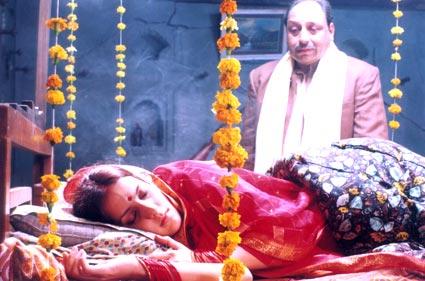 I didn’t know much about Manish Jha’s Matrubhoomi before I entered the hall to see it. I knew it was set in a dystopian society where there were hardly any women left, and that it involved a dark, twisted take on the Draupadi story - one woman shared by five men. I knew too that Time magazine had named it one of the 10 best films of the year, but that didn’t count for much (these being the same guys who put Devdas in their top 5 list for 2002, mentioning the "pretty, colourful frocks" worn by Madhuri and Aishwarya among the notable things about that movie).
Matrubhoomi starts quite well, with a number of striking scenes: the grotesquely effective image, for instance, of a man dancing in drag for the benefit of a group of sex-starved males (the mere image of a woman enough to inflame their senses); men falling over each other at a wedding for a glimpse of the 12-year-old "bride", who then turns out to be a little boy; a much-anticipated weekly porn film screening, with the all-male audience gazing at the screen as much in fascination as in lust (this scene reminded me of the 1980s cult film Cafe Flesh, set in a post-Holocaust world where "Sex Positives" - the few remaining people who can have sex without falling violently ill - perform onstage for the majority of "Sex Negatives).
After the porn screening one of the men gets up and enters a nearby barnyard to expend his lust on a cow. This metaphor - a holy animal, a supposed object of veneration, becoming a vent for frustrated sexuality – resurfaces through the film, and is particularly relevant in a story where a woman is subjected to repeated abuse in a household where the garlanded portrait of another woman (the deceased mother) occupies pride of place. It’s an old motif - the woman as Mother vs the woman as Whore.
But Matrubhoomi starts to go downhill when it moves from the general to the particular. We are introduced to a family headed by a corpulent sethji (Sudhir Pandey), looking worriedly for a bride for the eldest of his five sons. A young girl, Kalki (Tulip Joshi), is discovered by the village pandit: we first see her singing in the forest, dressed in white, plucking and polishing fruit, the picture of glowing innocence, and we just know her fate is to be defiled, and defiled again.
From this moment on the film enters a realm filled with cardboard-cutout sterotypes, and it never recovers. Kalki is effectively sold into "marriage" to all five brothers. Four of the brothers are leering beasts and see her as nothing more than property to be sexually divided amongst themselves (their father wants a share of the spoils too). The fifth brother, the youngest, is painfully noble and teaches her how to read, write and most importantly love; the scene where he enters the bedroom when it’s "his turn" and, instead of forcing himself on her, covers her head with her pallu, is as cringe-inducing in its own way as the rapes that preceded it were. He seems to have come not just from a different gene pool from that of his brothers but from a different planet altogether; we are never given any sort of explanation why he is so Good while the rest of them are so Bad (unless it has to do with the fact that he’s the only clean-shaven one of the lot). It’s a lazy bit of scripting, and the problem is it makes it impossible to take the film seriously. None of the characters (good or bad) is believable, so why care?
I was annoyed when, after several scenes of gratuitous violence, Matrubhoomi finally ended with a solemn, self-congratulatory title disclosing statistics about the abuse of women in India. This isn’t a bad film but it’s an irresponsible one. It does try to address a serious issue (an issue that must be addressed) and make statements about the hypocrisies of Indian society and its attitude to women. But for the most part it does this in such a synthetic, superficial, overwrought way that it defeats its own purpose; it makes it all too easy for people to look away, shrug and say "well, that isn’t a story about us, it doesn’t apply to our lives in any way."
What I found sad was that most of the things the film depicts aren’t as hyperbolic as the fantasy setting might suggest. But the treatment makes it seem like they are.
P.S. Here’s another blog review of the film.
P.P.S. I’m a little surprised that so many people think the film was too visceral and difficult to watch. Quite the contrary, I thought it did a sugar-coating job precisely when it shouldn’t have. Tulip Joshi manages to look luminous even when she’s chained to a post in the cowshed, surrounded by dirt and waste.
A quickie on Parineeta
Watched Parineeta yesterday, thought it was excellent on the whole. It’s been some time since I’ve seen a Hindi film that I could sink into without constantly having to look up to check on my disbelief, hanging from the ceiling (Dil Chahta Hai was probably the last). Which is not to say Parineeta wasn’t melodramatic, even florid, at times. But it managed mostly to be believable, given the contours of the world it was set in.
Won’t write at length about it, mainly because most of what I wanted to say has already been said - in this review. Some inevitable quibbles though: the wall scene was, as has been widely reported, ridiculous (I’d have liked to be a fly on the - err - wall during the scriptwriters’ meeting where it was decided to make that the climax). Sanjay Dutt was miscast. And as another friend pointed out, it was irritating to hear little Bengali phrases interspersed through the film, when it’s understood that the Hindi dialogue is cinematic licence, and that these characters are really meant to be speaking Bengali anyway.
But there was plenty that was wonderful. As Amit says, the unfussy establishment of a milieu with well-defined characters; this is very difficult to do, even when the script is good, but the film made it look easy. Saif was excellent, Vidya Balan was very good too, the music was lovely and there were hardly any shots that seemed extraneous.
Note: I’m not going to bring Sarat Chandra’s novel into this, I thought the film succeeded on its own terms. Also, I’m not in a position to talk about the issues many Bengali friends have with the film’s depiction of various customs. Feel free to weigh in with those.
Won’t write at length about it, mainly because most of what I wanted to say has already been said - in this review. Some inevitable quibbles though: the wall scene was, as has been widely reported, ridiculous (I’d have liked to be a fly on the - err - wall during the scriptwriters’ meeting where it was decided to make that the climax). Sanjay Dutt was miscast. And as another friend pointed out, it was irritating to hear little Bengali phrases interspersed through the film, when it’s understood that the Hindi dialogue is cinematic licence, and that these characters are really meant to be speaking Bengali anyway.
But there was plenty that was wonderful. As Amit says, the unfussy establishment of a milieu with well-defined characters; this is very difficult to do, even when the script is good, but the film made it look easy. Saif was excellent, Vidya Balan was very good too, the music was lovely and there were hardly any shots that seemed extraneous.
Note: I’m not going to bring Sarat Chandra’s novel into this, I thought the film succeeded on its own terms. Also, I’m not in a position to talk about the issues many Bengali friends have with the film’s depiction of various customs. Feel free to weigh in with those.
Sunday, July 10, 2005
Revisiting the Vampyr: Elizabeth Kostova’s The Historian
My review of Elizabeth Kostova’s The Historian - it appeared in yesterday’s Business Standard Weekend. Wasn’t meant to be a review, more like a write-up on an interesting new book with some background detail. But oh well.
Note: I’m not completely knocking The Da Vinci Code; like most people, I enjoyed it for what it was. But I’m rapidly developing a fascination for books like The Historian (another distant relative is Donna Tartt’s The Secret History, the first half of which was absolutely brilliant) that come from a similar genre but allow events to unfold (and characters to develop) at a more leisurely pace. Next on my list: Jon Fasman’s The Geographer’s Library.
Note 2: Weird that Istanbul suddenly seems to be featuring prominently in everything I read.
------------
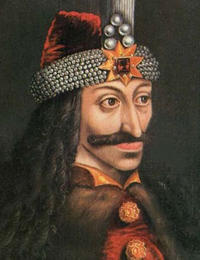 The legend of Vlad Tepes, the tyrannical 15th-century ruler whose many acts of cruelty and torture gave him the title Vlad the Impaler, has cast an unusual shadow on the modern world. The novelist Abraham Stoker used Vlad as the inspiration for his vampire novel Dracula, published in 1897, and that tale was in turn appropriated and glamorised by cinema in the early decades of the last century. Through a series of films – from F W Murnau’s genuinely creepy classic Nosferatu and Carl Theodor Dreyer’s atmospheric Vampyr to the Hollywood movies that perpetuated the image of the suave, black-cloaked Count Dracula – the legend spread in popular culture. And in the performances of actors like Bela Lugosi and Christopher Lee, the vampire was hammed out of all resemblance to the fierce feudal lord who had inspired the story.
Now, in a compelling inversion of literature and history, first-time novelist Elizabeth Kostova gives us a lush fiction based on the Vlad legend. The Historian is set in three time periods (1930, the early 1950s and the early 1970s) and begins with a 16-year-old girl discovering a macabre old book in her father’s library, a picture of a dragon spread across its centre pages. Over a series of journeys around central and eastern Europe with her diplomat-father, she learns in fragments the tale of a quest to discover the tomb of Vlad Tepes, and of separate obsessive searches carried out by her parents, and by her father’s adviser, Professor Rossi. The premise of these searches - hold on to your crucifixes - is that Vlad the Impaler is still alive; or rather, Undead.
Following the success of Dan Brown’s The Da Vinci Code and other books like The Rule of Four, there has been an increased interest in the historical thriller, and The Historian is easily one of the finest works to have come out of this sub-genre recently. Where the Brown bestseller was built on a series of chapter-ending cliffhangers that helped mask the tediousness of the writing, Kostova’s is a better paced, much better written novel.
Much of the narrative is in the form of expository letters and while this stretches credibility - how do these characters find so much time, in the midst of frantic vampire pursuits, to write leisurely letters to each other? - it also enriches the reading experience. In fact, there’s a point in the story when you realise that the journey has become more important than the destination - which is exactly what gives this kind of book a long shelf-life. You start to care about the characters and their internal struggles, and get drawn in by the author’s evocative place descriptions. Reading of a train journey from Budapest to Istanbul, for instance, I found myself wishing Kostova would write a travel book sometime:
"There is something vastly mysterious for me about the shift one sees, along that route, from the Islamic world to the Christian, from the Ottoman to the Austro-Hungarian, from the Muslim to the Catholic and Protestant. It is a gradation of towns, of architecture, of gradually receding minarets blended with advancing church domes, of the very look of forest and riverbank, so that little by little you begin to believe you can read in nature itself the saturation of history. Does the shoulder of a Turkish hillside really look so different from the slope of a Magyar meadow? Of course not, and yet the difference is as impossible to erase from the eye as the history that informs it is from the mind."
If The Historian disappoints at all, it disappoints at the very end, with the all-too-literal confrontation with the mythic Vlad/Dracula seeming anti-climactic compared to what’s gone before. But the occasional sloppiness of the last 50 pages can’t defeat the stately beauty of the 600 that went before. Kostova’s eye for detail, her subtle humour and her thesis that "in history, there are no tiny questions" make The Historian one of the most engrossing reads of the year. Compared to most other books in its genre, this is a richly textured whisky placed amidst cans of Diet Coke.
Note: I’m not completely knocking The Da Vinci Code; like most people, I enjoyed it for what it was. But I’m rapidly developing a fascination for books like The Historian (another distant relative is Donna Tartt’s The Secret History, the first half of which was absolutely brilliant) that come from a similar genre but allow events to unfold (and characters to develop) at a more leisurely pace. Next on my list: Jon Fasman’s The Geographer’s Library.
Note 2: Weird that Istanbul suddenly seems to be featuring prominently in everything I read.
------------
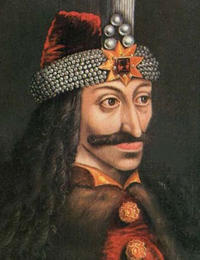 The legend of Vlad Tepes, the tyrannical 15th-century ruler whose many acts of cruelty and torture gave him the title Vlad the Impaler, has cast an unusual shadow on the modern world. The novelist Abraham Stoker used Vlad as the inspiration for his vampire novel Dracula, published in 1897, and that tale was in turn appropriated and glamorised by cinema in the early decades of the last century. Through a series of films – from F W Murnau’s genuinely creepy classic Nosferatu and Carl Theodor Dreyer’s atmospheric Vampyr to the Hollywood movies that perpetuated the image of the suave, black-cloaked Count Dracula – the legend spread in popular culture. And in the performances of actors like Bela Lugosi and Christopher Lee, the vampire was hammed out of all resemblance to the fierce feudal lord who had inspired the story.
Now, in a compelling inversion of literature and history, first-time novelist Elizabeth Kostova gives us a lush fiction based on the Vlad legend. The Historian is set in three time periods (1930, the early 1950s and the early 1970s) and begins with a 16-year-old girl discovering a macabre old book in her father’s library, a picture of a dragon spread across its centre pages. Over a series of journeys around central and eastern Europe with her diplomat-father, she learns in fragments the tale of a quest to discover the tomb of Vlad Tepes, and of separate obsessive searches carried out by her parents, and by her father’s adviser, Professor Rossi. The premise of these searches - hold on to your crucifixes - is that Vlad the Impaler is still alive; or rather, Undead.
Following the success of Dan Brown’s The Da Vinci Code and other books like The Rule of Four, there has been an increased interest in the historical thriller, and The Historian is easily one of the finest works to have come out of this sub-genre recently. Where the Brown bestseller was built on a series of chapter-ending cliffhangers that helped mask the tediousness of the writing, Kostova’s is a better paced, much better written novel.
Much of the narrative is in the form of expository letters and while this stretches credibility - how do these characters find so much time, in the midst of frantic vampire pursuits, to write leisurely letters to each other? - it also enriches the reading experience. In fact, there’s a point in the story when you realise that the journey has become more important than the destination - which is exactly what gives this kind of book a long shelf-life. You start to care about the characters and their internal struggles, and get drawn in by the author’s evocative place descriptions. Reading of a train journey from Budapest to Istanbul, for instance, I found myself wishing Kostova would write a travel book sometime:
"There is something vastly mysterious for me about the shift one sees, along that route, from the Islamic world to the Christian, from the Ottoman to the Austro-Hungarian, from the Muslim to the Catholic and Protestant. It is a gradation of towns, of architecture, of gradually receding minarets blended with advancing church domes, of the very look of forest and riverbank, so that little by little you begin to believe you can read in nature itself the saturation of history. Does the shoulder of a Turkish hillside really look so different from the slope of a Magyar meadow? Of course not, and yet the difference is as impossible to erase from the eye as the history that informs it is from the mind."
If The Historian disappoints at all, it disappoints at the very end, with the all-too-literal confrontation with the mythic Vlad/Dracula seeming anti-climactic compared to what’s gone before. But the occasional sloppiness of the last 50 pages can’t defeat the stately beauty of the 600 that went before. Kostova’s eye for detail, her subtle humour and her thesis that "in history, there are no tiny questions" make The Historian one of the most engrossing reads of the year. Compared to most other books in its genre, this is a richly textured whisky placed amidst cans of Diet Coke.
Saturday, July 09, 2005
Whither Spielberg?
Wrote this as a filler-column for my newspaper today. Not too happy with it; couldn’t think of an angle (had originally wanted to do something on various treatments of War of the Worlds, including the Orson Welles radio broadcast, but that had been written about in many newspapers already) so ended up writing this thing on Spielberg’s career instead. Six hundred words not enough to do justice to the subject.
--------------------
When the socialites emerged, blinking heavily, from the PVR Plaza hall after the special preview screening of War of the Worlds in Delhi last week, the first question they were asked by byte-seeking TV journalists was: "So who was the star of the film -- Tom Cruise or Steven Spielberg?"
The answers notwithstanding (most people replied "Spielberg" anyway, probably because they were annoyed with Tom for breaking up with Nicole), the very fact that such a question could be asked at all was significant. In the actor-struck world of commercial cinema, Spielberg is a brand name among directors -- among the rare few who have, in the tradition of Cecil B DeMille and Alfred Hitchcock, earned the right to have their name above the movie’s title. The comparison with Hitchcock is appropriate, or used to be: back in 1975, when the young Spielberg had just come off the success of Jaws, the Master of Suspense, filming at a nearby studio, pointed at the wunderkind and said "See that kid who made the fish film? He’ll go very far." Hitchcock had recognised in Jaws a talent for audience manipulation, for the slow, agonising build-up of suspense that had marked his own best work.
Since then, over a long and many-phased career, Spielberg has been many things to many viewers. At his best he is a master of technique, with a startling sense of composition and camera movement. He famously has an empathy for children that has contributed enormously to the success of films like E.T. The Extra-Terrestrial and that has given an autobiographical charge to even less successful movies like Hook, about Peter Pan, "the boy who never grew up". At his most earnest, he has responded to charges of being a "mere entertainer" by making films like Schindler’s List, Amistad and Saving Private Ryan -- all noteworthy movies but also over-hyped by a critical machinery that insists on judging films by the depth or relevance of their content (it’s notable, and a bit sad, that the Academy Awards only deigned to recognise Spielberg when he made the Serious Films). And at his worst he has been painfully cloying, often junking interesting ideas to accommodate happy endings (witness Artificial Intelligence, originally intended to be a bleak Kubrickian drama, but which somehow ended in the lap of a fairy godmother).
But the problem with War of the Worlds wasn’t that it was a bad Spielberg film; it was more that it didn’t really feel like a Spielberg film at all. Even the man’s biggest critics usually admit that his work is interesting. But War of the Worlds was full of sequences that could have been directed by just about anyone: scenes that were direct references to Spielberg’s own Jurassic Park, with giant-eyed mechanical alien scanners supplanting the T-Rexes of the earlier movie; scenes that cheapened suspense by reducing it to a hide-and-seek equation. The Spielberg touch was largely missing from this pointless update of the H G Wells novel (itself a curio today).
While Spielberg continues to be as financially successful as ever, a tediousness has seeped into his films, despite their occasional, frustrating flashes of brilliance. This could have to do with confusion about the kinds of films he should be making, excessive self-consciousness about his own reputation or the fact that neatly wrapped up endings (Oskar Schindler sobbing "I wish I could have saved more people" to give Schindler’s List an emotional epiphany it didn’t need) don’t go too well with the more "mature" subjects he occasionally takes on. Whatever the case, 30 years after Jaws, the "fish film kid" is floundering as a creative artist.
None of which means we’ll stop flocking in droves to his movies.
--------------------
When the socialites emerged, blinking heavily, from the PVR Plaza hall after the special preview screening of War of the Worlds in Delhi last week, the first question they were asked by byte-seeking TV journalists was: "So who was the star of the film -- Tom Cruise or Steven Spielberg?"
The answers notwithstanding (most people replied "Spielberg" anyway, probably because they were annoyed with Tom for breaking up with Nicole), the very fact that such a question could be asked at all was significant. In the actor-struck world of commercial cinema, Spielberg is a brand name among directors -- among the rare few who have, in the tradition of Cecil B DeMille and Alfred Hitchcock, earned the right to have their name above the movie’s title. The comparison with Hitchcock is appropriate, or used to be: back in 1975, when the young Spielberg had just come off the success of Jaws, the Master of Suspense, filming at a nearby studio, pointed at the wunderkind and said "See that kid who made the fish film? He’ll go very far." Hitchcock had recognised in Jaws a talent for audience manipulation, for the slow, agonising build-up of suspense that had marked his own best work.
Since then, over a long and many-phased career, Spielberg has been many things to many viewers. At his best he is a master of technique, with a startling sense of composition and camera movement. He famously has an empathy for children that has contributed enormously to the success of films like E.T. The Extra-Terrestrial and that has given an autobiographical charge to even less successful movies like Hook, about Peter Pan, "the boy who never grew up". At his most earnest, he has responded to charges of being a "mere entertainer" by making films like Schindler’s List, Amistad and Saving Private Ryan -- all noteworthy movies but also over-hyped by a critical machinery that insists on judging films by the depth or relevance of their content (it’s notable, and a bit sad, that the Academy Awards only deigned to recognise Spielberg when he made the Serious Films). And at his worst he has been painfully cloying, often junking interesting ideas to accommodate happy endings (witness Artificial Intelligence, originally intended to be a bleak Kubrickian drama, but which somehow ended in the lap of a fairy godmother).
But the problem with War of the Worlds wasn’t that it was a bad Spielberg film; it was more that it didn’t really feel like a Spielberg film at all. Even the man’s biggest critics usually admit that his work is interesting. But War of the Worlds was full of sequences that could have been directed by just about anyone: scenes that were direct references to Spielberg’s own Jurassic Park, with giant-eyed mechanical alien scanners supplanting the T-Rexes of the earlier movie; scenes that cheapened suspense by reducing it to a hide-and-seek equation. The Spielberg touch was largely missing from this pointless update of the H G Wells novel (itself a curio today).
While Spielberg continues to be as financially successful as ever, a tediousness has seeped into his films, despite their occasional, frustrating flashes of brilliance. This could have to do with confusion about the kinds of films he should be making, excessive self-consciousness about his own reputation or the fact that neatly wrapped up endings (Oskar Schindler sobbing "I wish I could have saved more people" to give Schindler’s List an emotional epiphany it didn’t need) don’t go too well with the more "mature" subjects he occasionally takes on. Whatever the case, 30 years after Jaws, the "fish film kid" is floundering as a creative artist.
None of which means we’ll stop flocking in droves to his movies.
Friday, July 08, 2005
After the quake, a giant frog

Have been reading/rereading Murakami a lot recently (partly because I might soon be doing a column on contemporary writers; partly because his treatment of the outsider appeals to me a lot these days). Highly recommended: after the quake (he insisted the title be in lower-case in the English translation), a collection of six short stories related, mostly indirectly, to the Kobe earthquake in 1995. Many trademarks of Murakami’s writing can be found here: plenty of surrealism, deadpan humour, malcontents trying to make sense of the world and of splintered relationships (which fits in with the earthquake theme), long philosophical conversations.
Just a couple of days ago I was having a blog argument with a friend - won't reproduce it here but my stand was that fantastical/supernatural creations can be allowed to exist in "realistic" settings, amidst real people; it isn’t necessary to restrict them to their own "otherworlds". At the time I was thinking in terms of SFF literature and graphic novels, but reading after the quake reminded me that this applies to the best of surrealistic writing too. Murakami recognises that sometimes the best way to make sense of our lives is to hand them over to the fantastical, and to sit back and watch what happens. Few writers are as good at making the everyday and the phantasmagorical coexist; the shifts in perception often happen so subtly that one doesn’t even realise it - I’m not going to try to describe it (Murakami’s work usually defeats such attempts) but read his novel A Wild Sheep Chase and you’ll see what I mean. (BTW, previous post on Murakami here.)
In after the quake there is a story, "Super-frog saves Tokyo", in which a bank executive returns to his apartment to find a six-foot-tall, Dostoevsky/Nietzsche-quoting frog (called Frog) who plans to save Tokyo from an impending earthquake by going underground and battling a a huge worm (called Worm). Now you can accept this story on either literal or allegorical terms ("I am, indeed, pure Frog, but at the same time I am a thing that stands for a world of un-Frog," says Frog with studied seriousness) - but what matters is that Murakami takes absurd premises like this one and somehow weaves them into moving stories about the fragility of human relations; about people mustering the courage to face their greatest fears and trying to make sense of the shifting tectonic plates in their own lives.
Wednesday, July 06, 2005
Miss, amiss: headline hackers
When I saw the headline "Muralitharan will Lara challenge" on the sports page of today’s TOI, my first thought was that the story was about Lara challenging Muralitharan, and that the copy editor had Master Yoda affiliations. That would have been a reasonable explanation. But no, it turned out the story was about Muralitharan saying he would miss the Lara challenge. Clearly headline-givers have progressed from being mere article-bowdlerizers to randomly doing away with all sorts of words.
T’was a time when the golden rule would be "If the headline doesn’t fit in the allotted space, remove one or all of the articles." (In my first copy-desk job, I remember this sagacious senior sub coming up to me and saying "Don’t ever use words like ‘the’ and ‘a’ in the headline." This was to be a blanket rule, even when it made nonsense of the story - ‘a few’ becoming ‘few’ for instance.) But now all words, regardless of their pedigree, are in danger. Soon, perhaps, in the tradition of Orwell’s Newspeak, we'll be able to say simply "Muralitharan Lara" for a story like this one.
P.S. My favourite headline anecdote involves a mistake I made late one night when I was in charge of releasing a page. I was feeling grumpy and tired and there was a story I couldn’t think of a headline for. So I wrote "give head give head" in the space, packed the page off to Design, and then forgot all about it until I saw the thing in printed form the next morning. Remarkably no one in office seemed to notice (or maybe they just thought it was the right headline; it made about as much sense as many of the others did, and it was more exciting).
T’was a time when the golden rule would be "If the headline doesn’t fit in the allotted space, remove one or all of the articles." (In my first copy-desk job, I remember this sagacious senior sub coming up to me and saying "Don’t ever use words like ‘the’ and ‘a’ in the headline." This was to be a blanket rule, even when it made nonsense of the story - ‘a few’ becoming ‘few’ for instance.) But now all words, regardless of their pedigree, are in danger. Soon, perhaps, in the tradition of Orwell’s Newspeak, we'll be able to say simply "Muralitharan Lara" for a story like this one.
P.S. My favourite headline anecdote involves a mistake I made late one night when I was in charge of releasing a page. I was feeling grumpy and tired and there was a story I couldn’t think of a headline for. So I wrote "give head give head" in the space, packed the page off to Design, and then forgot all about it until I saw the thing in printed form the next morning. Remarkably no one in office seemed to notice (or maybe they just thought it was the right headline; it made about as much sense as many of the others did, and it was more exciting).
Quick notes on two blogger meets
Have had a couple of very nice blogger meets in the past week - actually, not so much blogger meets (since that makes me think of the star-studded get-togethers that occur regularly in Mumbai) as meetings with individual bloggers. First, Aishwarya of Kaleidoglide expressed an urgent wish to borrow my copy of Pamuk’s Istanbul, having just returned from Turkey herself. At the PVR Barista we spoke, among other things, about: college students who walk into libraries and go "So this is where you get the books and stuff!"; mothers who give up on reading My Name is Red because the first chapter is narrated by a corpse, and how can that be; and people who say their favourite novel is The Fountainhead and describe it as "a book about an architect who believes only in straight lines". Also, the recent currency change in Turkey, which has made things even more confusing for tourists and shopkeepers. And whether studying in LSR is a sure sign that you’re a feminist (Aishwarya says no, too much rah-rahing of a cause tends to put her off it).
Then, evening before last, I met Shailaja Neelakantan and Jason Overdorf, who run DelhiBelly and whose life as freelancers means they can send messages saying things like "It’s Monday morning, so we thought we’d see a couple of movies." (In full-disclosure spirit, it was also July 4, which meant a light day for them - much of their work being done for American publications.) The noise levels at the pub we were in (here’s Jason’s post on Delhi bar etiquette by the way) forced us to move to another one in the same market, which was much better. Three drinks later a marathon bitching session happened - much raging about other journalists, exchanging inside gossip, lamenting the amount of junk that gets published as "Indian writing in English". Also discussed Susannah Clarke, Philip Pullman, Neil Gaiman … and, err, Rupa Gulab.
Incidentally, blogging hardly even came up at either of these meetings.
Good fun, like I said. Some of us have written before about how meeting longtime blog acquaintances for the first time usually isn’t awkward, because if you’ve been following a dedicated blogger’s posts on various topics over a period of time you feel like you know the person behind the screen; it isn’t like meeting someone you’ve only exchanged a few personal details with in a chatroom.
That said, I’d like to know a little more about the large blogger gatherings. How exactly do they work? I’m not sure I’d be too comfortable meeting a large group of bloggers all at once (meeting them all for the first time, that is). So how do you break the ice? Is a lot of time spent on introducing the people who aren’t familiar with each other’s blogs? Are the awkwardness levels very high to begin with? Does everyone feel the need to ramble on about blogging, and doesn’t that defeat the purpose? Amit, Yazad, Sonia, Chandrahas, elucidate please.
Then, evening before last, I met Shailaja Neelakantan and Jason Overdorf, who run DelhiBelly and whose life as freelancers means they can send messages saying things like "It’s Monday morning, so we thought we’d see a couple of movies." (In full-disclosure spirit, it was also July 4, which meant a light day for them - much of their work being done for American publications.) The noise levels at the pub we were in (here’s Jason’s post on Delhi bar etiquette by the way) forced us to move to another one in the same market, which was much better. Three drinks later a marathon bitching session happened - much raging about other journalists, exchanging inside gossip, lamenting the amount of junk that gets published as "Indian writing in English". Also discussed Susannah Clarke, Philip Pullman, Neil Gaiman … and, err, Rupa Gulab.
Incidentally, blogging hardly even came up at either of these meetings.
Good fun, like I said. Some of us have written before about how meeting longtime blog acquaintances for the first time usually isn’t awkward, because if you’ve been following a dedicated blogger’s posts on various topics over a period of time you feel like you know the person behind the screen; it isn’t like meeting someone you’ve only exchanged a few personal details with in a chatroom.
That said, I’d like to know a little more about the large blogger gatherings. How exactly do they work? I’m not sure I’d be too comfortable meeting a large group of bloggers all at once (meeting them all for the first time, that is). So how do you break the ice? Is a lot of time spent on introducing the people who aren’t familiar with each other’s blogs? Are the awkwardness levels very high to begin with? Does everyone feel the need to ramble on about blogging, and doesn’t that defeat the purpose? Amit, Yazad, Sonia, Chandrahas, elucidate please.
Tuesday, July 05, 2005
Obligatory Google search update
The latest search result to lead someone to my site: "how to be an estonian masseuse".
On checking I found "estonian masseuse" had appeared in a post where I quoted Philip Roth's I Married a Communist, so that bit is explained. But why, why, why why why is someone searching for this on Google? Free one-way trip to Estonia for anyone who can offer a reasonable explanation.
On checking I found "estonian masseuse" had appeared in a post where I quoted Philip Roth's I Married a Communist, so that bit is explained. But why, why, why why why is someone searching for this on Google? Free one-way trip to Estonia for anyone who can offer a reasonable explanation.
No coverage
Unsolicited phone calls from banks and credit-card companies we all know about. But what do you do when you get a phone call that’s solicited and welcome, but then, after five precious minutes of your life have been wasted, you realise no good is going to come of it?
A couple of months ago, when I was scouting for broadband connections for my new laptop, I called Airtel and discovered to my bemusement that they “didn’t have coverage” in the part of Saket I lived in, just five minutes away from the PVR complex. “But we’ll have soon, sir” said the customer-care executive, noting my cellphone number and promising that I’d be intimated when it happened.
Hours turned into days, days into weeks, like in the voiceovers for the Lord of the Rings movies. I got a Tata Indicom dial-up connection, which sometimes worked. Then, yesterday, the much-awaited call from Airtel came.
Customer Care Executive: Hello, Mr Jai Arjun ji se baat ho sakti hai please?
Jai (annoyed at people who call on your cellphone and assume it isn’t you on the line): Ji haan, boliye.
CCE: Madam, I want to speak only to Mr Jai Arjun.
J (adopting gruffest, manliest tone): Boss, this is Mr Jai Arjun speaking!
CCE: Oh, very sorry sir. Sir, I’m calling from Airtel. You had made enquiry about our broadband connection?
J (cheering up instantly): Yes, yes. Do you have coverage in our area now?
CCE: Absolutely, sir! We have very nice coverage. Excellent speed and very attractive schemes. Super-fast connection, 24 hours a day and best payment options according to your convenience. Up to 500 MB download free.
J: No dial-up or telephone instruments or USB ports?
CCE: No, sir. This is broadband. Very simple facility.
J: Excellent! So when can you come and install it?
CCE: Anytime at your convenience, sir. You name the time, I will send the boy with our full list of schemes. And we’ll install it within 24 hours after that. All for your convenience. Can I have your address please?
J: Yes, these are the Golf View Apartments in Saket, please note down the number…
CCE (after brief silence): Sir, Golf View Apartments? But we have no coverage there.
J (slow burn): Why did you call me then, just to gloat?
CCE: No sir, I thought you stayed in Saket.
J: I do stay in Saket. Golf View Apartments, Saket.
CCE: Sorry sir, we thought you stayed in PVR complex.
J (rage coursing through veins): Boss, no one stays in the PVR complex. People go there to watch films and to loiter uselessly. I thought you had my full address in your records.
CCE: Most sorry sir, our mistake. But we will definitely have coverage in your area in two months’ time. I will call you then. Goodbye. (Disconnects)
But I’ll have my revenge yet. Friends have warned me that after I start freelancing my creditworthiness will plummet. So the next time someone calls to tell me about a very attractive bank loan I’ll listen to the whole thing patiently, evince interest, ask them to send their man over with the papers…and only reveal at the last possible moment that there’s been a change in my professional status and I’m no longer loan-worthy. Ha! That’ll show them all.
A couple of months ago, when I was scouting for broadband connections for my new laptop, I called Airtel and discovered to my bemusement that they “didn’t have coverage” in the part of Saket I lived in, just five minutes away from the PVR complex. “But we’ll have soon, sir” said the customer-care executive, noting my cellphone number and promising that I’d be intimated when it happened.
Hours turned into days, days into weeks, like in the voiceovers for the Lord of the Rings movies. I got a Tata Indicom dial-up connection, which sometimes worked. Then, yesterday, the much-awaited call from Airtel came.
Customer Care Executive: Hello, Mr Jai Arjun ji se baat ho sakti hai please?
Jai (annoyed at people who call on your cellphone and assume it isn’t you on the line): Ji haan, boliye.
CCE: Madam, I want to speak only to Mr Jai Arjun.
J (adopting gruffest, manliest tone): Boss, this is Mr Jai Arjun speaking!
CCE: Oh, very sorry sir. Sir, I’m calling from Airtel. You had made enquiry about our broadband connection?
J (cheering up instantly): Yes, yes. Do you have coverage in our area now?
CCE: Absolutely, sir! We have very nice coverage. Excellent speed and very attractive schemes. Super-fast connection, 24 hours a day and best payment options according to your convenience. Up to 500 MB download free.
J: No dial-up or telephone instruments or USB ports?
CCE: No, sir. This is broadband. Very simple facility.
J: Excellent! So when can you come and install it?
CCE: Anytime at your convenience, sir. You name the time, I will send the boy with our full list of schemes. And we’ll install it within 24 hours after that. All for your convenience. Can I have your address please?
J: Yes, these are the Golf View Apartments in Saket, please note down the number…
CCE (after brief silence): Sir, Golf View Apartments? But we have no coverage there.
J (slow burn): Why did you call me then, just to gloat?
CCE: No sir, I thought you stayed in Saket.
J: I do stay in Saket. Golf View Apartments, Saket.
CCE: Sorry sir, we thought you stayed in PVR complex.
J (rage coursing through veins): Boss, no one stays in the PVR complex. People go there to watch films and to loiter uselessly. I thought you had my full address in your records.
CCE: Most sorry sir, our mistake. But we will definitely have coverage in your area in two months’ time. I will call you then. Goodbye. (Disconnects)
But I’ll have my revenge yet. Friends have warned me that after I start freelancing my creditworthiness will plummet. So the next time someone calls to tell me about a very attractive bank loan I’ll listen to the whole thing patiently, evince interest, ask them to send their man over with the papers…and only reveal at the last possible moment that there’s been a change in my professional status and I’m no longer loan-worthy. Ha! That’ll show them all.
Monday, July 04, 2005
The great champions, and complete dominance
On a lazy Friday evening, after a friend and I had watched Roger Federer beat Lleyton Hewitt in straight sets in the Wimbledon semis, we talked for a while about near-invincible champions and whether they’re good for a sport.
Conventional wisdom tells us no. Surely it isn’t good for cricket that Australia has been so dominant and for so long (and surely it’s a good sign that that dominance is now coming to an end). And similarly it can’t be good for tennis that its number one male player has beaten the world number two in eight consecutive matches without appearing to break sweat. I’ve read recent sports edits (and even a few blog posts) bemoaning the lack of a great rivalry in men’s tennis, and they all have a point. Even when there clearly is daylight between the best player/team and the next-best, it’s good to at least see something resembling a contest. Maybe Federer could have dropped a set in that semi before reasserting his supremacy, just to make the whole thing more interesting to watch; to add an element of suspense before the inevitable happened. Maybe Australia, at their peak, should have occasionally gone into the final Test of a series against their main rivals South Africa with the scoreline reading 1-1 instead of 2-0.
But of course, in practice it doesn’t work that way when the greatest champions are shining at their brightest, and why should it?
I’m not a big Federer fan yet, though I think I probably will be before too long. But in my years as a sports watcher (and that’s been a relatively short period) I’ve been a big fan of at least two of sport’s greatest champions: the Australian Test team from 1995 onwards, and Pete Sampras on grass between 1994 and 2001. Even while recognizing that their dominance wasn’t good for their respective sports on some level, that there was monotony in the predictability of their success, I savoured their every win. And here’s the strange thing: when they played I didn’t want a "good sporting contest", all I wanted was to see them crush the opposition in the most decisive way possible. Sampras at Wimbledon, beating all contenders in straight sets in the big matches. Australia everywhere, winning the first two Tests of a three-match series against S Africa by innings margins.
My friend felt the same way about the Federer-Hewitt match. He wouldn’t have minded the Wimbledon semi going into a four-setter, he said – it would have made for a longer, more memorable match and would have been good for the spectators too - but speaking from the heart, what he really wanted to see was Federer wrapping it up in three sets and asserting his dominance completely.
I think the reason is that when, once every 20 or so years in the history of a sport, a player or team comes along that is clearly leagues ahead of any contemporary, our gut response is to want to witness the full measure of that ability. Instinct (only later backed by statistics) tells us we’re seeing something special and we want to see how much more special it can get; we want to see the limits stretched. For the sake of political correctness, we might half-heartedly agree with the complete-dominance-isn’t-good stance. But secretly, when such a star does make its presence felt, we want to see it shine at its brightest, dwarfing everything around it.
There’s another, more poignant aspect: when we’re watching a champion in full flow, the knowledge that a day of dethronement must follow adds urgency to the desire to see the best he has to offer. Take Sampras. When his decline began, what a decline it was! I remember the thrill I felt watching his progress in that 2001 US Open where he came in after a spate of injury/fitness problems, nowhere near his best, and then proceeded to knock off all his major competitors one by one. Agassi, Rafter and then, memorably, the young Safin who had rudely beaten him in the previous year’s final. Sampras swept past them all to reach the 2001 final and as far as I was concerned, that was it: he was going to win, he was the Champion again, he would be champion forever. But I woke up the next morning to find that he had lost to a young upstart named Hewitt, and that was the beginning of the end; a new generation had taken over the marquee. As Pistol Pete began to look vulnerable, it became more imperative to cherish his days of glory.
Likewise with the Australian team. I became seriously interested in cricket very late, in 1995 or so, which is when Mark Taylor’s Australians had just risen to the summit of the game. What this basically means is that I have never known cricket without Australia as its leading team, and it now seems that in another couple of years (if not sooner) I will. Even if I hadn’t been such a big fan of the team, I’d probably have felt a tinge of regret, or at least nostalgia, at its passing.
I imagine there will be a similar poignancy when we see Federer’s light begin to fade a few years from now. That’s when we’ll look back and treasure the memory of these crushing three-set victories and say bollocks to polite notions of "competitive matches" and "good sporting contests". There are times when those niceties stop mattering.
Conventional wisdom tells us no. Surely it isn’t good for cricket that Australia has been so dominant and for so long (and surely it’s a good sign that that dominance is now coming to an end). And similarly it can’t be good for tennis that its number one male player has beaten the world number two in eight consecutive matches without appearing to break sweat. I’ve read recent sports edits (and even a few blog posts) bemoaning the lack of a great rivalry in men’s tennis, and they all have a point. Even when there clearly is daylight between the best player/team and the next-best, it’s good to at least see something resembling a contest. Maybe Federer could have dropped a set in that semi before reasserting his supremacy, just to make the whole thing more interesting to watch; to add an element of suspense before the inevitable happened. Maybe Australia, at their peak, should have occasionally gone into the final Test of a series against their main rivals South Africa with the scoreline reading 1-1 instead of 2-0.
But of course, in practice it doesn’t work that way when the greatest champions are shining at their brightest, and why should it?
I’m not a big Federer fan yet, though I think I probably will be before too long. But in my years as a sports watcher (and that’s been a relatively short period) I’ve been a big fan of at least two of sport’s greatest champions: the Australian Test team from 1995 onwards, and Pete Sampras on grass between 1994 and 2001. Even while recognizing that their dominance wasn’t good for their respective sports on some level, that there was monotony in the predictability of their success, I savoured their every win. And here’s the strange thing: when they played I didn’t want a "good sporting contest", all I wanted was to see them crush the opposition in the most decisive way possible. Sampras at Wimbledon, beating all contenders in straight sets in the big matches. Australia everywhere, winning the first two Tests of a three-match series against S Africa by innings margins.
My friend felt the same way about the Federer-Hewitt match. He wouldn’t have minded the Wimbledon semi going into a four-setter, he said – it would have made for a longer, more memorable match and would have been good for the spectators too - but speaking from the heart, what he really wanted to see was Federer wrapping it up in three sets and asserting his dominance completely.
I think the reason is that when, once every 20 or so years in the history of a sport, a player or team comes along that is clearly leagues ahead of any contemporary, our gut response is to want to witness the full measure of that ability. Instinct (only later backed by statistics) tells us we’re seeing something special and we want to see how much more special it can get; we want to see the limits stretched. For the sake of political correctness, we might half-heartedly agree with the complete-dominance-isn’t-good stance. But secretly, when such a star does make its presence felt, we want to see it shine at its brightest, dwarfing everything around it.
There’s another, more poignant aspect: when we’re watching a champion in full flow, the knowledge that a day of dethronement must follow adds urgency to the desire to see the best he has to offer. Take Sampras. When his decline began, what a decline it was! I remember the thrill I felt watching his progress in that 2001 US Open where he came in after a spate of injury/fitness problems, nowhere near his best, and then proceeded to knock off all his major competitors one by one. Agassi, Rafter and then, memorably, the young Safin who had rudely beaten him in the previous year’s final. Sampras swept past them all to reach the 2001 final and as far as I was concerned, that was it: he was going to win, he was the Champion again, he would be champion forever. But I woke up the next morning to find that he had lost to a young upstart named Hewitt, and that was the beginning of the end; a new generation had taken over the marquee. As Pistol Pete began to look vulnerable, it became more imperative to cherish his days of glory.
Likewise with the Australian team. I became seriously interested in cricket very late, in 1995 or so, which is when Mark Taylor’s Australians had just risen to the summit of the game. What this basically means is that I have never known cricket without Australia as its leading team, and it now seems that in another couple of years (if not sooner) I will. Even if I hadn’t been such a big fan of the team, I’d probably have felt a tinge of regret, or at least nostalgia, at its passing.
I imagine there will be a similar poignancy when we see Federer’s light begin to fade a few years from now. That’s when we’ll look back and treasure the memory of these crushing three-set victories and say bollocks to polite notions of "competitive matches" and "good sporting contests". There are times when those niceties stop mattering.
Sunday, July 03, 2005
Burnt toast
Just a short note to anyone who might want to take me out for a drink sometime: don’t feel slighted if I fail to do the “cheers” thing.
The obligatory clinking of glasses to commence a drinking session is something that trips me up at most alcohol-guzzling get-togethers. It isn’t so much that I object to the ritual on principle (though I do), it’s more that I always forget all about it and earn the ire of co-drinkers in the process. In the latest unfortunate incident I was at the Turquoise Cottage (yea, the same that’s been made famous in the blogosphere by The Compulsive Confessor) with friends, and my cocktail was a little late in arriving (not, as I like to think, because it was an unusually complex and noble concoction but because they mixed up orders and had to go back to redo mine). So there I was waiting with Buddha-like patience, vaguely wondering why my friends hadn’t yet started on their drinks. They had the glasses in front of them, yet they were merely playing about with the little umbrella thingajigs and looking formal. A jabberwock more sensitive to these little etiquettes might have perceived that they were waiting for my drink to appear so the toast could be made. But I didn’t realise this, and so when the waiter arrived I snatched the Planter’s Punch right off his tray and half-finished it with the first gulp. Then I looked up to see stricken faces all around me.
“Jai, how could you!”
“The uncouth swine, when will he ever learn the norms of civilised behaviour?”
“Their fifth wedding anniversary and you’ve ruined it!”
Geez people, it’s just a drink, it isn’t a formal supervillains’ convention to mark the capture and destruction of James Bond or Batman or Austin Powers. So lighten up. And cheers!
P.S. For your erudition, here’s more on the toast.
The obligatory clinking of glasses to commence a drinking session is something that trips me up at most alcohol-guzzling get-togethers. It isn’t so much that I object to the ritual on principle (though I do), it’s more that I always forget all about it and earn the ire of co-drinkers in the process. In the latest unfortunate incident I was at the Turquoise Cottage (yea, the same that’s been made famous in the blogosphere by The Compulsive Confessor) with friends, and my cocktail was a little late in arriving (not, as I like to think, because it was an unusually complex and noble concoction but because they mixed up orders and had to go back to redo mine). So there I was waiting with Buddha-like patience, vaguely wondering why my friends hadn’t yet started on their drinks. They had the glasses in front of them, yet they were merely playing about with the little umbrella thingajigs and looking formal. A jabberwock more sensitive to these little etiquettes might have perceived that they were waiting for my drink to appear so the toast could be made. But I didn’t realise this, and so when the waiter arrived I snatched the Planter’s Punch right off his tray and half-finished it with the first gulp. Then I looked up to see stricken faces all around me.
“Jai, how could you!”
“The uncouth swine, when will he ever learn the norms of civilised behaviour?”
“Their fifth wedding anniversary and you’ve ruined it!”
Geez people, it’s just a drink, it isn’t a formal supervillains’ convention to mark the capture and destruction of James Bond or Batman or Austin Powers. So lighten up. And cheers!
P.S. For your erudition, here’s more on the toast.
Friday, July 01, 2005
Woe of the worlds
Watched Spielberg’s War of the Worlds last night. Such a disappointment, mainly because it was shockingly ordinary. Even Spielberg’s biggest critics don’t expect that from him. When the great directors fail, they usually fail spectacularly. Even their lesser works provide glimpses of genius, of what could have been - you can sense that somewhere in the rubble there was a topnotch film waiting to be made. (I think of Scorsese’s New York, New York, of DePalma’s Snake Eyes, of Spielberg’s own Artificial Intelligence - thelast an underappreciated film anyway.)
But War of the Worlds is full of moments, in its "key scenes", that could have been directed by just about anyone given a mega-budget. I was particularly depressed by a sequence where the protagonists try to escape the prying electronic eyes of a snake-shaped alien scanner that has been sent into the basement where they’re hiding. This was hide-and-seek suspense of the cheapest, laziest variety and I had to keep reminding myself that it was done by the same man who gave us Jaws (and about whom Hitchcock, no less, once said, "The kid who made the fish film? - he’ll go very far.")
This isn’t a review - I want to get the movie out of my head as fast as possible - but I do want to rant about this creature named Dakota Fanning. She’s an 11-year-old actress who plays Tom Cruise’s little daughter and, well, she’s insufferable. I’d heard the name before but hadn’t seen any of her previous films; Shougat (sitting next to me and furiously scribbling notes by the light of his cellphone) tells me she’s one of Hollywood’s biggest child stars and an unbearably precocious brat. Well, that shows all right in this film, where she chews up the scenery in practically every frame. She acts around 30 years older than her age (no, make that 90 years older, because then at least she’d have senility as an excuse), gazes at the camera with intense, pellucid eyes and talks in a faux-adultlike tone. Everything about her is so horribly fake - the bored "I’m above all this" look, the preening, the posturing, the fox-tail fur she inexplicably has draped around her shoulders.
Worst of all, the camera seems obsessed with her; if you were an alien watching this film you’d never imagine that Tom Cruise was the bigger star. Some of this might have made a little sense if, say, in the final analysis, she was going to play a key role in the film - like the little girl in Shyamalan’s Signs. But no - little Ms Fanning is just your regular child star in danger, the problem being that she doesn’t seem to realise she’s a child. I was waiting for her to do something a normal 11-year-old girl might want to do: maybe spew green vomit at the camera and rasp, "I am Beezlebub", like this little lady here:

I have a big problem with forced precocity in children and with the fact that child celebrities are made to grow up too fast. (Remember those kids on Zee and Sony’s "talent shows" being forced to perform like monkeys while their mercenary parents/guardians look on fiercely from the sidelines? That’s matter for another post though.)
Back to the inappropriately acronymed WoW: Ms Fanning screams a lot too, and it’s far more grating than any of the sounds made by the alien tripods. Throw in that ham Tim Robbins playing yet another of his patented idiot savants and you have - a historic first, people - a movie where Tom Cruise actually seems understated and dignified. If that’s reason enough for you to see it, go.
But War of the Worlds is full of moments, in its "key scenes", that could have been directed by just about anyone given a mega-budget. I was particularly depressed by a sequence where the protagonists try to escape the prying electronic eyes of a snake-shaped alien scanner that has been sent into the basement where they’re hiding. This was hide-and-seek suspense of the cheapest, laziest variety and I had to keep reminding myself that it was done by the same man who gave us Jaws (and about whom Hitchcock, no less, once said, "The kid who made the fish film? - he’ll go very far.")
This isn’t a review - I want to get the movie out of my head as fast as possible - but I do want to rant about this creature named Dakota Fanning. She’s an 11-year-old actress who plays Tom Cruise’s little daughter and, well, she’s insufferable. I’d heard the name before but hadn’t seen any of her previous films; Shougat (sitting next to me and furiously scribbling notes by the light of his cellphone) tells me she’s one of Hollywood’s biggest child stars and an unbearably precocious brat. Well, that shows all right in this film, where she chews up the scenery in practically every frame. She acts around 30 years older than her age (no, make that 90 years older, because then at least she’d have senility as an excuse), gazes at the camera with intense, pellucid eyes and talks in a faux-adultlike tone. Everything about her is so horribly fake - the bored "I’m above all this" look, the preening, the posturing, the fox-tail fur she inexplicably has draped around her shoulders.
Worst of all, the camera seems obsessed with her; if you were an alien watching this film you’d never imagine that Tom Cruise was the bigger star. Some of this might have made a little sense if, say, in the final analysis, she was going to play a key role in the film - like the little girl in Shyamalan’s Signs. But no - little Ms Fanning is just your regular child star in danger, the problem being that she doesn’t seem to realise she’s a child. I was waiting for her to do something a normal 11-year-old girl might want to do: maybe spew green vomit at the camera and rasp, "I am Beezlebub", like this little lady here:
I have a big problem with forced precocity in children and with the fact that child celebrities are made to grow up too fast. (Remember those kids on Zee and Sony’s "talent shows" being forced to perform like monkeys while their mercenary parents/guardians look on fiercely from the sidelines? That’s matter for another post though.)
Back to the inappropriately acronymed WoW: Ms Fanning screams a lot too, and it’s far more grating than any of the sounds made by the alien tripods. Throw in that ham Tim Robbins playing yet another of his patented idiot savants and you have - a historic first, people - a movie where Tom Cruise actually seems understated and dignified. If that’s reason enough for you to see it, go.
Subscribe to:
Posts (Atom)