Friday, December 30, 2005

Year-end list: the comments parade

Bollocks to all those top 10 book/film lists. Since blogging is supposed to be a synonym for navel-gazing, here are some of the most entertaining comments I received this year (actually only the last 3-4 months or so - who has the patience to go through so many rambling posts?)

On review posts

Anonymous said...
an astonishingly bad review. your verbosity, my friend, hides your incompetence well. but do remember that not everyone is as easily fooled.

Anonymous said...
jai, agreed u'r a fine writer...but i dont't think that gives u the licence to hold forth on anything and everything.

(Anything and everything? But I haven’t blogged about stem cell research yet! And I’ve only written 350 posts this year...)

Pratinayak said...
After reading yer article, i have come to a conclusion that a silent movie puts you off. You want to hear voices. You missed the talking done by the face expressions of each character in both movie Company and Sarkar.

Cinephile said...
hmmm...

Anonymous said...
I had sex with a 40 year old woman (I was 14) with Strangers on the Train playing in the background.

Getting to know the Jabberwock

Sumeet Kaul said...
You are my man! For many years now, I have been looking for someone who shares my fear of roaches.

(Hope you continued working on the side, Sumeet)

amit varma said...
...so how was your suhaag raat? tell all again...

(Uh...this one needs to be read in context)

Anonymous said...
dear jabberwock,
have been reading your blog for nearly six months now.
Was just wondering, with the amount of books you read and movies you see, if you have anything resembling a social life!
cheers,
Rahul S

not_tinkerbell said...
Jabberwock!
I dreamt about you! You were singing(!), and playing a Tanpura(!!) and the song was Rehte the kabhi jinke dil main (!!!).
....I'm beginning to worry about me.
....:(

Anonymous said...
yes, 12 years [working on a books page outside India] was fun. got paid a lot. you'll never know the feeling. also, yes, flawless education. again, something you'll never have access to.
best (really),
claire

Anonymous said...
jabberwock: by amateurs, for amateurs.

Anonymous said...
J, srsly, i'd thought u wd delete my comment.
but now that u've chosen to bare it all, my respect for u has gone a notch higher :)

Anonymous said...
Jabberwock, your sarcastic apology only underscores your cockiness and maybe even arrogance. You are talented no doubt, but a little sensitivity and humility would be even more appreciated.

On the Julia Roberts post (where I criticised her for having too many teeth)


Anonymous said...
you are biches did sche ever did anything to make you think and say those things she's just a person with a successfull career which you probably don't have you're probably yalous because your life isn't as
interesting as hers ..which is pathetic cause it's not her fault your
miserable! xxx have fun with your shrink

Anonymous said...
Do you have false teeth/no teeth/decaying teeth?

On Sanjeev Kumar

Anonymous said...
hey! don't say anything bad about my sanjeev, he is my idol. i love him. i am trying to get all of his movies, and started drawing his photos. i have made him my hobby, to watch his movies and draw him. he will always be in my heart. i am just so sorry that he died so young. i wish i had the priveledge of meeting him.how could a woman turned him down, i wish i had that opportunity to be with him. leela

Anonymous said...
how can anyone sj is not a good actor. have anyone seen nayi din nayaa raat. have any other actor attempted to do so many different
roles in one movie. i think that sanjeev is one of the greatest and most hansome actor in his times. every one has his or her own taste. one man meat is another man's poison.
And my favourite:

Anonymous said...
What a lot of self-important wankers you all are.
The Gita says "Do not wank simply out of a self-importance/
Wank only that you may reduce your chances of falling into lust in inappropriate times and places/
And when you wank, wank such that the seed of your wanking will
resound through the three realms and give pleasure to all those who cannot wank/"

So please do continue to desecrate this blog, dear trolls, wannabes and books page editors in "other countries" - but do it creatively, as in the above example. Who knows, that might in turn lead you to start your own blog, and then we’ll have another addition to our intellectually pretentious, self-indulgent, group-hugging "community".

And happy 2006 to you all.

Thursday, December 29, 2005

One man's meet...

Just to spread the word that Amit Varma is going to be in Delhi for a few days and we’re all dying to show him that we can have big blog meets in our little town too. So do try to be there. It’s 2nd January, 6.30 pm at the Connaught Place Barista.

Young Shivam will moderate and, on our behalves, ask Amit the eternal question: "When are you going to climb down from that ivory tower and enable comments so we can pillory you in public, you snoot?" (If you want specific questions asked, however, you will have to make it worth Shivam’s while.)

Sometime later that week I’ll also escort Amit and Chandrahas to the mythical abode of Hurree Babu and his Many Cats. It should be a meeting of titans. We will accuse each other of being self-indulgent, incestuous and always linking to the same sites/saying the same things. We will also exchange notes on all the book deals we have got as a result of blogging - and, much more pertinently, will we ever get around to writing these books given that we spend all our time blogging. There will be kebabs and wine, and we will end the evening by throwing our heads back and saying "Mwahahahaha. Mwahahahaha."

Much fun to come.

(If none of the above makes sense, you need to pick up the latest issue of Outlook.)

Veni, vidi, vinci?

Loved this. The Guardian reports that “a group of statisticians laboured for months to crack the secret of producing best selling novels - only to find that under their formula The Da Vinci Code should have been a flop”.
This year's runaway bestseller should have had only a 36% chance of reaching the charts, according to Alvai Winkler and his team. Their model … gives only middling marks to the Harry Potter titles and rules out almost everything by Charles Dickens except for his lesser-known Christmas story The Battle of Life.
The methodology studied the structure of book titles to determine success probability and determined that metaphorical or figurative titles are better bets than literal ones. “The Da Vinci Code” was dismissed as being too literal.
Dan Brown, however, can take heart. The Lulu team predicts he will have a real bestseller next year with The Solomon Key.
We can’t wait.

Tuesday, December 27, 2005

Food favourites

Many moons ago, Swati sent this tag my way. I’ve been lazy in replying, partly because I developed a complex after reading her intense food-descriptions. (At such times I regret not having worked on the foodie beat – phrases like “dumplings stuffed with condiments” and suchlike would then have come as naturally to me as eating does.)

But here’s my trifling attempt. Not a comprehensive list because I’ll probably think of something else as soon as I’ve posted this. So heartfelt apologies to the many food dishes that have given me joy over the years, and which I’ve ungratefully overlooked here. Also not sticking to the original meme, just naming some favourite dishes, and a lot of this is restaurant-specific:

- Nasi goreng rice at Chilli Seasson restaurant: with chicken and shrimp. Feels very spicy when you’re actually eating it but leaves no nasty after-effects, just a feeling of well-being and – two hours later – a yearning for more. Incredible how a dish with such a pungent flavour can be so easily digested.

- The steamed fish cakes at the above restaurant: the most flavourful fish dish I’ve ever had.

- The methi aloo made at my grandparents’ place: both ingredients have a slightly burnt quality, the brown skin on the potato is still largely intact, and it’s dry and wrinkled. Doesn’t sound great I know (and probably not the traditional way to make it), but good food is better eaten than read about.

- Tandoori chicken with naan: a staple, preferably ordered from Madhuban but will pass muster almost anywhere else.

- Maa ke haathon se bana khatti daal: give me this with rice and any potato dish (preferably beans-aloo) and I won’t complain about there being no non-veg – at least not for the next eight hours.

(Note: separate post exclusively on home-food to be written soon.)

- Slice of Italy pizzas: especially the Trio-on-Trio (smoked salami, onions, minced lamb and jalapeno peppers). Prefer these pizzas to the ones at Domino’s and Pizza Hut by a long way – the secret’s in the sauce.

Used to love their calzones too (the ones with ham-and-mushroom filling) but that was in the old days, when they were made with soft, doughy bread. Now they are just over-sized samosas.

- Rava masala dosa with lots of sambar: preferably from Sagar. (By now you might have cottoned on to the fact that I’m a potato-person.)

- Kai Yudd Sai (at last, a chance to be exotic!) at Bangkok Degree One: a great Thai omelette containing minced chicken. The question of whether the chicken or the egg came first may remain unanswered, but they both disappear equally fast when I’m having this dish.

- Prawn pepper butter garlic at Swagath: contains, as you may have guessed, prawn, pepper, butter and garlic. Unbeatable combination, best had with a spoon, straight out of the bowl.

- Hot Chocolate Fudge from Nirula’s: especially in winter and with, needless to say, extra fudge. People often wonder why it’s so pleasurable to eat ice-cream in winter. The way I see it is, if it’s a milk-based product it’s a heat-producing one regardless of its external temperature. Most of my best ice-cream memories are winter ones.

Also…

Favourite foods that I’ve had only once

- a brilliant, succulent shepherd’s pie with ale at a quaint pub in the village of Lacock during my Britain tour last year. It was treasured all the more because it came after days of sampling and being disappointed by various dishes that made up “staple English cuisine”.

- a Cullen Skink soup near St Andrew’s, Scotland, during the same tour. Fish soup (though it’s better to call it broth, a word more indicative of richness) with bread on the side. In the largest single-person bowl I’ve ever seen (at least I think it was a single-person bowl), but no trouble finishing it.

- a piping hot, mixed thenthup (a variant on thupka, the Tibetan noodle soup), with everything in it - flour, egg, many different meats and vegetables – consumed one cold, cold night in a monastery during my visit to Bir. Come to think of it, most of my trips in the last few years have been to very cold places – so warm foods are high on this list of one-offs.

And…

My guilty little food secret

Most of my non-veg friends instantly turn into Pavlov’s pups when they see a shammi or galouti, but I’ve never been able to understand the appeal of minced kababs. There’s no texture, and the idea of meat and masalas being randomly mish-mashed together feels strange. In this post, K tells the story of the galouti’s provenance – apparently it was an improvised recipe for an old king who had lost all his teeth. Well, I say leave such “delicacies” to the toothless, I’ll take my meat chewy any day. Nothing beats a good, juicy seekh kabab. Or a pepper steak, preferably bee.. – er, tenderloin.

Monday, December 26, 2005

Bluffmaster...

…is pretty good. Don’t know why it’s been panned in most quarters. I thought it was a lot more honest than many other Bollywood films – the ones that almost seem to feel guilty about letting their characters have too much fun, and stick in some faux-moralising every now and then. (Bunty aur Babli being a good example.) There are elements of that in Bluffmaster: at the end of the film it’s clear that the Abhishek Bachchan character, a con man, has been through a therapeutic experience – but there’s also something about his crooked, knowing smile that makes you wonder if there’s another twist just around the corner.

The film incorporates elements from David Fincher’s The Game (with Michael Douglas and Sean Penn) and the underappreciated Nicholas Cage-starrer Matchstick Men (in fact Abhishek’s character even has the same name as Cage’s – Roy) – but it isn’t a shameless rip-off by any means. However, if you’ve seen either of those movies, you’ll probably figure out what the big twist in this one is. I’m not saying any more.

Boman Irani, fine actor though he is, didn’t completely cut it for me in his role as a homily-dispensing doctor. But Ritesh Deshmukh as Roy’s sidekick (a role as nicely written and performed as Arshad Warsi’s Circuit in Munnabhai) and Nana Patekar as a self-worshipping bad guy were delightful to watch, and Abhishek was better than I’ve ever seen him before (certainly much better than his overly solemn turn in Sarkar). Priyanka Chopra was, well, there.

I was afraid this was going to be another entry in the New Bollywood Posturing series: lots of wipes, fancy camerawork and MTV-style visual gimmickry, actors striking fancy poses like in boy-band music videos and making sad attempts to look Cool. There was a little of that but it was done with panache and it never seemed too self-conscious – for instance, Ritesh and Abhishek are so natural (and occasionally so goofy) in some of the dance sequences that it doesn’t feel like they’re reaching for style at the expense of spontaneity. (Contrast this with the woefully intrusive “Nach Baliye” sequence in Bunty aur Babli.) Most of Bluffmaster is like that. It works.


P.S. Here’s a review of Matchstick Men, which I wrote for The Statesman a couple of years ago. It’s never a bad time to revisit that very underrated film.

Sunday, December 25, 2005

Scarless Face & Other Stories: review

The earliest memory I have of buying any book is of an Amar Chitra Katha obtained from the Malviya Nagar market when I was maybe four. It was a collection of Panchatantra tales and the cover showed a jackal with a very thoughtful expression, maintaining vigil over a dead elephant - the story I think was about the fox being unable to tear through the elephant’s flesh himself, and tricking a lion or tiger into doing it for him. [And the Net being the wonderful place that it is, I've found the cover online - here it is.]

As a child I spent many happy hours in the world defined by those comics – a world inhabited by sagacious monkeys, rueful snakes and scatterbrained crocodiles (drawn with zigzag lines on the sides of their faces, an illustrator’s shorthand for dumbness). An improbably all-encompassing forest, with perhaps a village on its outskirts, was the usual setting, and though the savage laws of the jungle sometimes prevailed, it was essentially comforting to see so many creatures mingling in this space – forming friendships, counseling, bickering, conniving.

One of the reasons I so enjoyed Scarless Face & Other Stories is that it was a throwback to those Amar Chitra Katha days. Many of those familiar tales show up in this compilation of stories drawn from Buddhist, Hindu and Muslim traditions. A large number come from the beloved Jataka legends, about the previous lives of the Buddha. These are morality tales all right but what is sometimes forgotten is that they are also full of delicate humour – while the underlying lessons are seriously meant, the actual structure of the stories is wry and self-effacing (just as well, given that they involve talking animals). Much of the success of these retellings comes from the authors’ recognition of this. Leading writers from Sri Lanka and Canada have, in most cases, embellished the tales with their own voices and imaginative powers, while retaining the spirit of the originals.

Graeme Macqueen’s “Just like the Rest”, about a king’s encounter with the Boddhisatva “pre-incarnated” as a stag, is enthralling in its depiction of the bewildered animal coming to terms with what he is:

“The first time around the thicket he was afraid, for it is the nature of deer to fear those who pursue them. The second time he was confused, for it seemed to him that he was destined for something higher than to be hunted. The third time around he remembered who he was. He was the Great Being, the one who would become the Teacher, the one who would help the world to lay down its burden, the one who would dry the world’s tears. And with memory came courage, for he thought, ‘This is not the way I shall die’.”
Michael Ondaatje’s lively account of a group of vultures trying to help a merchant is another of the highlights – complete with an illustration of a vulture-trap (almost certainly a modern incorporation) and a delightfully open-ended conclusion. And there are other, slightly less familiar stories – like the title one, a fine allegory, about the over-sheltered elephant Scarless Face and his king, who must step out into the world and see suffering before they can be truly happy. It’s written by Griffin Ondaatje, the editor of this collection, and his retellings are among the most evocative – notably “The Camel Who Cried in the Sun”, from a legend about the Prophet Mohammed, and “The Resting Hill”, from a Tamil folktale.

M G Vassanji brings his trademark elegance to “The Cycle of Revenge”. Ernest MacIntyre’s “How the Gods and Demons Learned to Play Together”, my pick for the best story in this collection, comes from the Natyasastra’s myth about the birth of theatre – but it is equally about empathy and perception, about how quick we are to pass judgement on those who are different from us. And Linda Spalding’s “The Great Journey” takes an oft-told story from the Mahabharata (the tortuous journey of the Pandavas and Draupadi to heaven) and gives it resonance by adding what it lacks in most translations – a sense of humour. (The passage where the dog accompanying Yudhisthira is revealed as Dharma is distinctly unlike any other translation I’ve seen.)

The retellings that don’t work are the shortest ones (some barely two pages), which are workmanlike. It’s difficult to see the sense, for instance, in including vapid, joyless versions of “The Monkey and the Crocodile” and “The Deer, the Tortoise and the Kaerala Bird” – reading these, you’ll be crying out for the Amar Chitra Katha versions complete with colourful drawings. But such missteps are few and far between, and for the most part this collection demonstrates the truth of what Macqueen says in his foreword: “When we retell and read these stories we become part of a community stretching back in time and reaching forward into the future.”

(Wrote a shorter version of this for a review that appeared in today’s Indian Express.)

Thursday, December 22, 2005

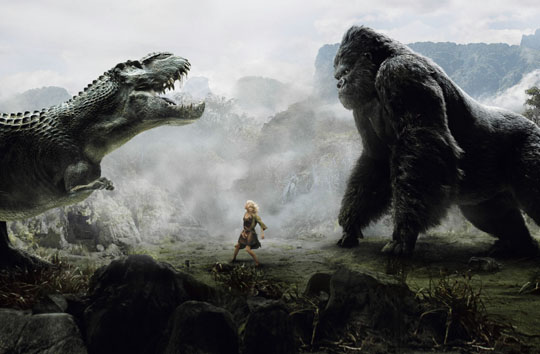
Some notes on the new King Kong


How does it compare with the original?

Meaningless comparison. Cinema is a young form that has seen enormous changes occur in a relatively short period of time (just a little over a century). In literary terms, the difference between the creaky 1933 King Kong and this new, CGI-fuelled one by Peter Jackson is as vast as that between the works of Chaucer and the modern-day novel, probably vaster.

But compare we must, for it is in our nature. So here goes.

Length quotient
My vote goes to the original, which was an hour and 45 minutes long, and used that time well. By contrast, in the new film, Peter Jackson presents the back-story in such painstaking detail that it becomes an end in itself. I can appreciate a beautiful, accurate recreation of the Depression Era as much as the next chap, but that wasn’t how I had planned to spend the first hour of this film. Yes, first hour! That’s when they land on Skull Island, and the big monkey only makes his appearance around 73 minutes into the movie (I timed it).

It’s all very well to say that talented actors like Adrien Brody and Naomi Watts should be given time to develop their characters, but many of the early scenes are unnecessarily stretched out. I’m beginning to worry about Peter Jackson. Much as I enjoyed the Lord of the Rings films (especially the first one), I never got completely involved in his Grand Vision; this need to be constantly larger than life. I wonder if he’s plain forgotten how to make a movie that’s less than 3 hours long?

Emotional quotient
The new version is far superior in this respect, deriving much of its power from the development of the relationship between Kong and Ann Darrow. There are scenes of great beauty between them - including the lovely one towards the end where they glide on the ice together before their world, literally, caves in (Jackson himself skates close to oversentimentality here, but he makes the scene work).

Problem is, this three-hour film needed more such moments. Instead of providing those, Jackson wastes precious reels on the exposition - and later, on pointlessly protracted scenes of dinosaurs bounding after humans. We’ve seen all that before.

Cockroach quotient
I’m a cockroach-phobe, so this is personally a very important criterion. Even if you love the wondrous things that can be achieved with modern computer technology, you might reluctantly agree with me that the ability to replicate a completely realistic two-foot-long cockroach is a not entirely desirable one. For the first time I can remember, I had to keep my eyes off the screen (or hold it in my peripheral vision) for a full five minutes, while the bug attack in the swamp was underway. I still can’t believe the censors allowed that sequence through (along with the shot of a man being devoured, head first, by a giant plant) given that so many kids will be seeing this film.

Special effects quotient
This has to be a one-monkey race, right? What chance could the primitive "technology" used in 1933 possibly have against the sophisticated computer-generated effects, the perfect pixellation, that’s possible today?

Well, yes and no. The new Kong is undoubtedly more impressive in all the obvious ways. The creatures are completely believable, their movements realistic, each nuance captured in astonishing detail. But as either James Berardinelli or Roger Ebert pointed out once (and I’m sure - I hope - others have too), there’s still something to be said for the visceral appeal of pre-computer era special effects: where, for instance, a miniature toy gorilla was arranged and photographed in different walking positions and the footage then run together to simulate the effect of Kong walking. In some ways the jerkiness, the cardboard-creakiness, that resulted was more effective because it felt otherworldly. Modern computer effects by their very nature don’t have that quality: they make everything crystal-clear, make the image of a giant gorilla fighting a giant dinosaur completely plausible. Which isn’t an unequivocally good thing. (This partly relates to what I’ve written earlier about the best horror movies seeming to come from an entirely different world.)

But sentimentalist though I am, I have to admit that all these thoughts vanished when I saw the magnificent climax on the Empire State Building; that sequence is so breathtaking it’s easy to forget everything that came before it. For that, and for a couple of other beautiful visuals, the new Kong just pips the original. Given of course that comparisons are meaningless...

Patna Roughcut review

(My review, which appeared in today’s Business Standard. Unfortunately I’ve only been able to scratch the book’s surface [as the review suggests]. There’s plenty more to say about it, but even 700 words was just not enough, and I never got around to writing a longer version. Will try later. As things stand, I ended up focusing on one aspect of the book that I could identify with, and sticking with it.)

Among the many passages in Siddharth Chowdhury’s debut novel that gave me a shudder of recognition is this one, a description of Cine Society regulars in Patna: "The men coming from offices in their sweat-soaked and defeated shirts…Seems frighteningly incongruous that they should watch Godard, or Truffaut, or Resnais, thrice a month…Did they really love the movies so much or was it something they just did, like eat mutton religiously on Sundays. A kind of middle-class conformity."

Reading this, I thought of film festival screenings at Siri Fort Auditorium and other venues in Delhi; of small groups of regulars waiting outside the theatre, conforming to the jhola-carrying stereotype; and of conversations that sometimes run along the lines "boss, this film is a bit slow, but it feels good to know that you’ve seen it - it gives you a sense of culture." And afterwards many of these people go back to humdrum jobs that have little to do with the world of the movies they so avidly discuss; or to college, to prepare for such careers.

This isn’t to suggest that most youngsters who frequent film festivals do so out of a sense of obligation, or that they get nothing worthwhile from the experience. And the Cine Society passage is, of course, only a small part of Chowdhury’s powerful book. But it captures a motif that runs through the work: that of disaffected people with idealistic notions about "high culture" that have little relevance to the realities of their lives; of dreams that come to naught; of too much thinking and not enough acting.

The narrative begins with Ritwik Ray, a reporter, returning to his hometown Patna after completing his Master’s in Delhi. He meets all the regulars, learns of the sad death of an old acquaintance, Harryda; he remembers his own relationship with the dead man. Ritwik moves on to tell the story of Mrinal Babu, a once-powerful landlord fallen on hard days, and of his retainer Saifu Mian, who becomes one of the book’s recurring characters. Then, midway through, there is a short, intense account of Ritwik’s childhood illness and his witnessing a scene of violence that forever alters the way he looks at the people around him. Here, the narrative abruptly fractures and the last two sections of the book are told by other people of Ritwik’s acquaintance. What this adds up to is a structure with elements of magic realism, and a kaleidoscopic narrative that becomes especially interesting towards the end. But this is only scratching the book’s surface.

Most of Ritwik’s reference points are drawn from films and literature: bandmasters in ballroom parties have "Errol Flynn’s moustaches", Mrinal Babu’s lady friend "looked like a young Charlotte Rampling with bobbed hair". Patna Roughcut is awash with such references, and part of the author’s point is that these things have little to do with the hard facts of the protagonists’ lives. Nowhere is this more true than in the section dealing with Harryda. As a youngster, he watched DeMille’s The Ten Commandments and dreamt of making an epic film. He ran into Marlon Brando once at the Patna aerodrome. He opened the young Ritwik’s eyes to the beauty of literature and cinema. And then he ended life a failed drunkard, broken in spirit, staying in a jhuggi with an illiterate woman. Ritwik’s reaction when he hears about this is very telling: "A man who loved style beauty and poetry…living with a low-caste washerwoman? Would she ever know who Cecil B DeMille is, or Sherwood Anderson for that matter?" But the subtext here is that this base washerwoman has at least reconciled herself to reality - unlike Harryda, who was crippled by his own pipedreams.

Patna Roughcut shows its hand early on; the very first paragraph of the book ends an overwrought analogy with the observation: "The poor shouldn’t dream. They can’t afford it." The remaining 180 pages are an illustration of this statement. Cynical though the idea is, it defines the lives of untold millions in this country - people who reach for greater intellect and "culture" and find that it destroys their pragmatism; that they are still unable to escape the vicious circle of their existence. Chowdhury’s achievement is that he filters this pessimistic worldview through a style that is tender, empathetic and even humorous when appropriate. This is crucial to the book’s success as a story of the aspirations and dashed hopes of young Indians caught between different worlds.

Tuesday, December 20, 2005

Deconstructing RGV: Company, Sarkar

This was long overdue, but I managed to watch Ram Gopal Varma’s Sarkar on TV the other night. Hands up everyone who thinks this film, and Varma’s gangland trilogy in general, is overrated.

No hands? Okay, I’ll plough on alone.

I still haven’t seen Satya, which everyone raves about – but if the tone of that film is the same as that of Company and Sarkar I’ll probably be underwhelmed. I saw Company when it was released a few years ago and thought it interesting in many ways (I’d been out of the Bollywood scene for years and it was an eye-opener that movies like this were even being made). But it was also an unspeakably self-conscious film, one in which the director seemed to have framed nearly every shot in such a way as to shout out to the audience, “See what I’m doing here with composition? And see the use of lighting here?” Watching it, I rarely got the sense of a film that was allowed to breathe. It felt more like a collection of setpieces neatly arranged together like dominoes.

It was irritating enough that some of the most ostentatious attention-seeking moments were “inspired” from foreign films, but what was more annoying was the static, ponderous way in which RGV presented them. The long shot of the car in the rain, for instance, with the windshield wipers: that was a classic example of a scene that cried out: “Look at me!” (And lots of people did look at it; it’s been referenced in at least three of the reviews I’ve read.)

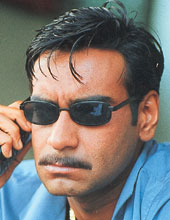
At the centre of it all, and emblematic for me of everything that was wrong with the film, was a spectacular non-performance by Ajay Devgan as the underworld don. Now as a movie reviewer one is used to hearing opinions that are completely different from one’s own; one assimilates them, shrugs and thinks noble, empathetic thoughts about how varied the human race is and how differently we all respond to things; but to this day I’m staggered by the acclaim given to Devgan’s performance in Company.

This wasn’t bad acting by any means, it was just no acting at all. Much of it consisted of the actor being shot in profile, in silhouette, in dark lighting, the cameraman doing all the work to make sure that the character conveyed the right amount of menace. Or Devgan just staring non-committally into the middle distance (that is, in the few scenes where he wasn’t wearing sunglasses) – a recurrent image that made me think of the famous Kuleshov experiment where a shot of a blank-faced actor was intercut with shots of a bowl of soup/a child playing/a dead body, so that the audience interpreted the actor’s expression as showing hunger/fondness/pity (though of course he had no idea what he was meant to be looking at in the first place).

But of course, as a seer once said, to be able to over-act you at least need to know how to act. By the same token, non-performances are often praised as great examples of “understated acting” – nowhere more so than in Indian cinema, where people are so starved of genuinely understated acting that they are quick to hail anything that remotely resembles it. I’ve seen enough of Ajay Devgan elsewhere to know he isn’t a bad actor, but he messed up this performance - with a little help from the man behind the lens.

Anyway, back then I was inclined to look at Company as a one-off, as an example of RGV being too earnest, and I figured that the next few films he made would be more relaxed. Watching Sarkar, however, I realised that this is probably the man’s patented approach to filmmaking. Almost every frame of this film was full of the same (over)careful composition of shots, the same stately gloominess, the same (over)long, (over)meaningful silences. (Seriously, without actually deleting any scenes Sarkar could easily have been 20-25 minutes shorter if it had been better paced.)

And oh oh oh, back to his direction of actors. In RGV’s world there has to be an element of barely suppressed hysteria in nearly every performance (except for the performances that require the actors to mostly sit around looking intense: Devgan in Company, Abhishek Bachchan in Sarkar). There are lots of pauses, lots of uncompleted sentences. A character will start to say something, stop abruptly, grit his teeth, look away, look back, start again. Presumably this is a stab at realism, an attempt to approximate real life where we don’t all speak like our lines have been pre-scripted for us. But it doesn’t ring true: you can’t achieve realism when you’re straining so hard, and so obviously, for it. (Some of us don’t achieve it even while living out our own lives!) I don’t know to what extent this is the director’s fault and to what extent the actors’, but both Company and Sarkar contain several moments of embarrassing faux-intensity masquerading as realistic acting. Worse, in the middle of all these careful attempts at understatement are inserted tired, melodramatic character tics – like the wicked sadhu in Sarkar, who moves a lock of his hair to one side after making a pronouncement.

And now, having said so many negative things about RGV’s films, let me retract a little. I didn’t actually regret watching either Company or Sarkar, the way I normally regret wasting my time on a film I didn’t like. Like I said before, there were many interesting things about those movies. There was enough in them to suggest that they were made by someone who knows his cinema very well. RGV counts among the directors whose films I’d always want to watch once, however dissatisfied I might be with them (another such director is M Night Shyamalan). But he’s probably spent more time than he needed to at film school. He has his theory down pat. Now he has to learn to make movies instead of textbooks.

P.S. since I haven’t supplied a review of Sarkar here, do read this fine one (albeit a favourable one) by Baradwaj Rangan, one of the best film writers in the blogosphere.

Sunday, December 18, 2005

In today’s funny papers: flirting with stupidity

If I started quoting all the moronic things I read in newspapers, I wouldn’t have time for anything else (including reading newspapers). But this one really deserves to be shared. The good people of Delhi Times, bless their collective soul, have a story headlined “If you are a flirt, read on…” in today’s edition. This is a collection of Tips for Flirting, and my favourite is this one:
Imply that you’re a stud
Use sexual innuendo to indirectly convey this message. For example, suppose you're at your place making a drink for a woman and she says, "Wow, you're good at that." Look at her square in the eye and say, "I'm good at a lot of things." She'll get the hint that you're a stud.

And then there’s the bit that advises the guy to say “Do you always receive, or do you like to give at times too?” when he’s bringing his female guest a cup of tea.

Around this point I was starting to wonder if anyone at Delhi Times ever gets laid. But then I found a nice little subtext to all this. I was searching for the article on the TOI website and while nothing showed up in the “search this website” section, when I searched “Web” I found this piece on a site called AskMen.com. And well, ho-hum, yes, the DT article has picked up six of the 10 tips on this page and reproduced them more or less verbatim. The only notable change is that “Spain” has been replaced by “Delhi” in one sentence:
If you find out a woman is from Delhi, you can say to her, “Hmm…you know what they say about women from Delhi, don’t you?” She will get the hint.

And no, I’m not jumping onto the plagiarism soapbox again. But I have to say I was disappointed that these gems of wisdom didn’t come from someone working in our own venereal, sorry venerable, city supplement. Still, here’s the introduction to the printed piece, which presumably is original:
Did you know that talking about sex with a woman can actually turn her on? However, if not done the right way, a man can end up coming across as “creepy”, or even worse, get beaten up.
Quite.

Friday, December 16, 2005

Sikandar aur Aristo

Enticed by Madhu Jain’s averment that Prithviraj Kapoor had great legs, I stayed behind after the Kapoors book launch and watched 10-15 minutes of the 1939 Sikandar, which was being screened at the same venue. Excellent fun. Greek people talking in shudh Hindi with, for whatever reason, French subtitles occupying the lower third of the screen. The exchanges between Alexander and his “guru” Aristotle were marvelous. “Agar tum duniya ko jeetna chahte ho, toh tumhe aurat se door rehna hoga,” (“If you wish to conquer the world, you will have to stay away from women”) said Aristotle – who I suspect was gay – to his dashing young ward. Prithviraj scowled handsomely and declaimed various things which I didn’t fully understand.

Aristotle wore a shimmering velvety robe and scampered up and down stairways in a manner that belied his age. He tricked Sikandar’s young lady friend Rukhsana into treating him like a horse and then told the young emperor, “If she can fool an old and wise man like me, imagine what she can do to you.” Or words to that effect. Point proved. Woman dispensed with. World now ripe for conquering.


Must obtain DVD and watch at length. By the way, one of the interesting things mentioned in the book is that in the 1940s some history textbooks carried photos of Prithviraj K playing Sikandar in the chapter on Alexander the Great – much to the mortification of Shammi and Shashi, who were in school at the time. Twenty years later, stills from Mughal-e-Azam were carried in chapters on Akbar.

Sixer! Sixer!

Sitemeter informs me that Jabberwock crossed the six-figure mark sometime yesterday. That’s total visits since December 2004, when I installed the counter. So thank you for your patronage etc - and that includes the many, many of you who came here searching for "sexy Urdu stories" and "what to do on suhaag raat". You’re all welcome.

And don’t worry that this will go to my head. I was preening for a bit but then I remembered that blogs like this one get 10 times as many hits in a day as I did in a year.

In the blogosphere, as anyplace else, it’s all relative.

P.S. Disregard the Blogpatrol counter - that was installed later, disappeared altogether for a couple of months in between and generally behaved badly through the year.

Thursday, December 15, 2005

A complete shutdown on literary talk

Martin Krasnik interviews Philip Roth for The Guardian:

I tell him that interviewing him can be extremely difficult - like climbing an iceberg without clothes on.

"Well, I wasn't put on this earth to make your life easy. Ha!" His laughter is like a proclamation - no smile, just "Ha!"

"Maybe we shouldn't be talking about literature at all," I say.

"Ha, ha," he says. "Now you're talking! I would be wonderful with a 100-year moratorium on literature talk, if you shut down all literature departments, close the book reviews, ban the critics. The readers should be alone with the books, and if anyone dared to say anything about them, they would be shot or imprisoned right on the spot. Yes, shot.


Funny, that’s what Chetan Bhagat says too, though in less fancy language.

There’s also a bit about Roth’s latest book, Everyman. (HOW is the man so prolific at this age??) Full interview here - read it, it's fun.

[And darn, just realised that Prufrock Two beat me to this.]

Wednesday, December 14, 2005

The Kapoors: Bollywood’s First Family

The Lyallpur district in the North West Frontier Province was a conservative place in the 1920s. If you came from a good family, the thing to do was to become a lawyer or something equally respectable – not throw up your studies, get on a train to Bombay and hang around studios on the pipedream of becoming an actor. This is exactly what a young man named Prithviraj Kapoor did in 1928, to his father’s vexation. “A kanjar - is that what you want to become?” the senior Kapoor bellowed at his errant son.

Seventy-seven years later, as Madhu Jain points out in the introduction to her fine book The Kapoors: The First Family of Indian Cinema, "Each decade in the history of Indian cinema has had at least one Kapoor playing a defining part in it." That’s a lot of “kanjars” from one family. And in a neat little twist, the flag of this once-conservative clan has been held aloft in the 1990s and 2000s by women - Prithviraj’s great-granddaughters
Karisma and Kareena.

It’s staggering enough to think that four generations of Kapoors (not counting Prithviraj’s father, who recovered sufficiently from his shock to play a tiny role in Awaara) have played starring roles in the history of Indian cinema. But even this is using the broadest, most conventional definition of "generation". In the cinematic context, the word has a very different connotation. Film is a relatively young art form and has seen many changes, some of them enormously fast-paced ones, in the first century of its existence. As a result, there have been cases when two actors who are separated from each other by just five years (in terms of age or in terms of when they began their careers) can be seen as representative of two different eras of film history. (An instance from Hollywood is that of the first generation of Method actors – notably Montgomery Clift and Marlon Brando. They were just 5-6 years younger than/junior to, say, Gregory Peck or Ingrid Bergman, but they could have stepped in from another world. They stood for a completely different approach to acting – and this approach in turn led to major changes in the look and feel of the movies they acted in.)

The point of this digression is that in actual cinematic terms, the scope of the Kapoor family’s influence was even wider than is suggested by “four generations”. For instance,
Raj Kapoor and his two brothers Shammi and Shashi (each separated from the next by seven years) must properly be regarded stars of three different eras, considering the vast changes that occurred in Bollywood between the time Raj made his debut in the late 1940s and Shashi became a star in the early 1970s. It would be no exaggeration to say that the story of the Kapoors covers every major twist and turn in Hindi film history from the dying days of the silent era onwards. (Prithviraj Kapoor featured in the first talkie, Alam Ara, in 1931.)

This is an enormous, daunting canvas, and Madhu Jain’s approach to her memoir is the sensible one. Rather than attempt an integrated, steadfastly chronological account of the khandan, she writes The Kapoors as a series of mini-biographies. Separate chapters are dedicated to the life and career of each major member of the family; consequently, while there is some overlapping, this structure keeps the focus firmly on each personality and enables the reader to appreciate some very dramatic individual stories.

Here you’ll learn about young Prithviraj being hand-picked, swayamvar-style, from a line of studio extras by a top actress to play the male lead; about his early films and his love for the stage, out of which grew the theatre group Prithvi. Here you’ll get an insight into the personal demons that spurred Raj Kapoor to become Hindi cinema’s greatest showman, the influences that lay behind Shammi’s screen persona (one of the most original in Bollywood history), how
Rishi Kapoor survived the Bachchan Era, and why his brothers’ careers fell by the wayside.

There is a wealth of anecdotes, most of them told entertainingly but also with restraint and taste. Rarely does Jain allow herself to get carried away – okay, so maybe she goes overboard in her florid descriptions of Prithviraj Kapoor’s good looks (“handsome, almost impossibly handsome, face framed by the abundant hair that often fell in cherubic locks…penetrating eyes brimming over with warmth and compassion…sculpted body…like an Apollo dropped down from the skies”). But I’m willing to overlook that bit – each of my grandmothers has described the man in much the same way, and in a most un-grandmotherly voice. (Some of the photographs, including the one on the cover, tell the story equally well.)

Importantly, this is no hagiography. Jain doesn’t shy away from holding a magnifying lens to the family’s less savoury side. She is especially sharp in noting Randhir Kapoor’s seemingly ambivalent attitude to his father – "his remarks reveal that he may have wanted a father more ordinary" – and uses this to dissect the burdens placed on the younger generation by the giants who preceded them. The Kapoor weakness for alcohol and food, and the subsequent tendency towards corpulence, are also discussed at length. As are some disturbing individual traits, like the “in your face faux-humility” displayed by Raj Kapoor in entering a room slightly bent forward, hands folded, saying “Mujhe Raj Kapoor kehte hain” – despite knowing very well that everyone there was in awe of him. But equally importantly, Jain’s handling of these flaws is frank and matter-of fact; she doesn’t gloat or get voyeuristic.

In her foreword, the author mentions that Shashi Kapoor’s advice to her when she started the project was to be honest. "I suppose that was a carte blanche to look at the less flattering side of the Kapoors as well as their achievements." She’s certainly succeeded. In less than 400 pages (too little space, one might have thought, to do this subject justice), The Kapoors paints a balanced, informative and very entertaining picture of a fascinatingly multi-dimensional family. “We are like the Corleones,” Randhir Kapoor preens at one point. This is a not fully comprehensible claim – but whatever the resemblances, the Kapoors are certainly much more colourful than Don Vito and his clan.

Monday, December 12, 2005

This little duckie wrote another bestseller

[Note: this isn’t a conventional review of The Manticore’s Secret, so purists will no doubt forgive my addressing the author by his first name rather than the formal ‘Basu’. And parts of this post will probably be incomprehensible to anyone who hasn’t read The Simoqin Prophecies, so proceed at your own risk etc. Or, as Samit would no doubt encourage you to do, go out and buy 50 copies of Simoqin, read one of them and then come back here.]

You heard it here first: young Samit has another winner on his hands. The Manticore’s Secret is a book that repeats the best qualities of its predecessor and adds some of its own. The Simoqin Prophecies (review here; para breaks not mine), as anyone who’s read it knows, was rich with quirky, subversive humour that simultaneously referenced the sci-fi/fantasy genre and overturned many of its staples. I remember reading the first paragraph of that book a couple of years ago and thinking to myself, Han Solo-style, “I have a bad feeling about this.” But against all expectations it just kept getting better. It was a rare example of a writer who showed off his cleverness but did it so good-naturedly (and with genuine skill and originality, not just by hacking his many influences) that it worked.

Manticore has all of these qualities, as well as the awesome imagination on view the first book – almost every page seems to be bursting with new ideas. But it also represents a step forward, showing a side of Samit’s writing that I had underrated: there is a new assuredness here in his descriptive skills (to complement his well-established knack for conversational scenes). If you know Samit, you’ll know he has a strong visual sense and a knack for storyboarding (it’s no coincidence that he loves comics so much and is a fan of writers like Neil Gaiman and Terry Pratchett). This comes across even more strongly in Manticore than it did in Simoqin and I was blown away by how cinematic some of the passages were. To cite just one example: the marvelous scene where the ravian Behrim is pursued by a pack of werewolves and then engages them in battle. It was so intense and vivid, I could actually see the whole thing unfolding in live-action in my mind. Which isn’t something that happens often (the last time I can recall it was when I was reading Susannah Clarke’s Jonathan Strange and Mr Norrell more than a year ago). It’s a rare talent.

At 530 pages Manticore can probably be accused of being overlong – but I say that about most books I read, so don’t take my word for it. Readers who are more in tune with the SFF genre than I am will probably relish the references a lot more anyway, and be able to cope better with the large number of characters moving in and out of the story. Also, the main plot (the mindgames, the continually – sometimes confusingly – shifting equations between the ravians, rakshas, humans, vamans and other races) is best treated as a Macguffin, a pretext for all the delicious embellishments that are the real strengths of these books.

‘May I ask you something?’ asked Akimis. ‘What are those dark lines under your eyes?’
‘I don’t know,’ said Kirin. ‘They feel like little scales. I think it’s from wearing the Gauntlet too long.’
‘The Gauntlet is evil,’ she said. ‘But the lines bring out your eyes.’
Kirin grinned. ‘Thank you.’


I want to avoid plot spoilers, but here are some tasters:

-- Watch out for the weather-influencing Kaos butterfly, one of my favourites among the new creations (“…it fluttered over to Asvin’s shoulder, causing a sudden gust of wind that blew a bandit off a cliff-top in Ventelot four months later”). Also, the Vindiciti Hoplites minotaurs, with their “single and straight-minded moo-vements”.

-- Maya gets to try on some “short vanaress robes”, which makes her a sight for sore eyes (now if only the young author would take my sage advice and incorporate a detailed 10-page sex scene between her and Kirin in the last book. But he won’t, I just know he won’t).

-- No I can’t tell you how it ends, except that it involves a kick-ass Trance Duel and a sort-of death of one of the key characters.

-- For those who have been wondering, yes, the Obiyalis Gameworld is explained (or is it?) – and the Gods overseeing the Game are as whimsical and colourful as the protagonists whose actions they are manipulating. (“Why do We do what We do?” they muse, and address each other as “Zivran, most optimistic of omnipotences…” and in other suchlike ways.) At one point Samit also uses their exchanges for an enjoyable little dig at the Artworld.

Congrats Samit, and may you quack and waddle evermore.

The rest of you, go and buy your 50 copies pronto. (They’ll also be available at the launch.)

Sunday, December 11, 2005

On the road with Sachin

Here’s a short post I wrote on Cricinfo’s Different Strokes: ‘I wasn’t there’, about listening to commentary on the car radio while Sachin was reaching his 35th century.

Saturday, December 10, 2005

Foodie pretensions

(Further to the Madhuban post)

I’m often asked (online and off) why I don’t work on the food beat. Immensely tempting though this beat is for a feature journalist (you get to sample new restaurants first, make contacts in a very interesting trade, wisely dole out recommendations to colleagues), I’ve never really got into it. There are two reasons for this. One is that when I eat out I want to be able to enjoy the food unconditionally - without having to make mental notes about everything, or worse, tolerate a PR person who points at each dish and announces its name loudly or revises the family histories of the restaurateurs while I’m trying to eat. I don’t like alloying my enjoyment of a good meal by mixing it with work. (As it is, too many other pleasures have gone that route: I still occasionally miss the days when I could read a book or watch a film without the burden of simultaneously composing the review in my head.)

The other reason is that though I think of myself as a foodie in a rough sense (I enjoy experimenting and discovering new foods and am very interested in the provenance and finer points of various cuisines), I’m quite undiscriminating in practice: a meal would have to be truly, deeply god-freakingly-awful for me to say something bad about it. Not a great quality for a restaurant reviewer: I’m always getting up the noses of the many food journos at Business Standard by shrugging and saying a restaurant was good enough when it was apparently very, very bad. (That’s okay though, I’m equally snobbish when they gush about Paulo Coelho or Dale Carnegie, so it evens out in the end.)

And yes, a lot of that lack of discrimination must have come from the mediocre-restaurant food I loved so much when I was growing up, years before Delhi turned into a foodie’s delight.

But it does hurt to have to say no to free meals…

P.S. just to show I’m not all pleb, here are some of my recos for (relatively high-end) eating out in Delhi:

- The Lutyens’ Lunch at Yellow Brick Road: chicken breast stuffed with mushrooms and the meltiest cheese ever.

- Fried rice with stir-fried vegetables at Pan Asian: I’m determinedly non-veg, so this reco means a lot more than it sounds.

- Prawn butter garlic at Swagath: it may seem silly but this is one prawn dish I can eat with a spoon straight out of the bowl - in between regular meals!

- Fish cakes at Chilli Seasson: most of the top Thai restaurants do a reasonable job with this starter, but here it’s exceptional.

- And lower-end but delicious nonetheless: the do-rukh seekh kababs and biryani at Indi Spice, in Malviya Nagar.

Thursday, December 08, 2005

Just realised that...

Dharam paaji turned 70 today. All rise and hail one of Bollywood’s finest ever (yes, you there, rise and hail even if you don’t agree)!

But, sniff, a 70-year-old Veeru? A 70-year-old Satya? A 70-year-old Dr Parimal? Anyone reading this who can see how tragic that is, be warned: that means you’re getting old too!

(My previous tribute to Dharmendra here. And a nice profile from Rediff here.)


P.S. While in On-This-Day mode, The Griff reminds us that today is the 25th anniversary of John Lennon’s murder. Nice sketch, Peter.

Wednesday, December 07, 2005

Roberto Calasso and the frig vedas (sorry, couldn’t resist!)

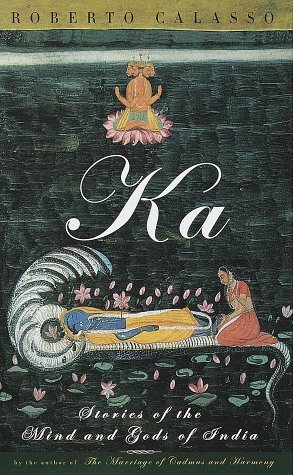
The decision to publish a Hindi translation of Roberto Calasso’s Ka is an intriguing one. Rajkamal Prakashan have just completed work on the translation and while their representatives don’t think there will be a controversy, I don’t see how one can be avoided. To begin with, this is a less-than-conformist interpretation of ancient Indian texts by a non-Indian, now to be made available to a Hindi-reading audience: that combination alone should incense many of our renowned culture-guardians. Add to this Calasso’s taking a few liberties with the text of the Vedas – reshuffling the chronology of selected myths and using a novelistic framework to emphasise the "eternal cyclical tangle" that is Indian mythology.

And then of course there’s the sexual explicitness.

I’ve always been very interested in what our Gods really get up to in their antechambers when they aren’t being sanitised by the Hindutva brigade or turned into cardboard-cutout soap actors with Colgate smiles by Ramanand Sagar and others. So I was gladdened by, for instance, a passage in Ka where a marathon copulation session between Shiva and Parvati is interrupted by the other Gods nervously knocking on the bedroom door. Shiva strides to the door, opens it and is so bemused by the expression on the faces of the other celestial beings that he fails to notice that "his phallus was squirting out its seed". Lord Agni now lunges forward and takes said seed in his mouth, thereby saving the world from certain destruction.

Now I’m reasonably sure Calasso isn’t making any of this up, though he may have added a few creative flourishes of his own (Shiva smiles at the writhing Agni and says, "Isn’t that what you came here for?"). It’s been easy enough to read between the lines in the mythological texts I’ve encountered before this (even in the translations done by relatively conservative Indian scholars; cleaning up the language is one thing but you can’t bowdlerize all the raunchy bits without losing the essence of some of these stories).

Anyway, Ka has a few thrilling little moments like that one, along with has some long, dreary passages that read like they were written by a more erudite, more sophisticated Paulo Coelho. All told, however, if you have a lot of patience, you might want to check it out. I appreciated the retellings of some of the stories (especially the Garuda one), as I did Calasso’s view of the Mahabharata as "an overwhelming demonstration of the futility of conflict" (as opposed to a straightforward morality tale). And his central conceit – that of naming the book after the Rig Veda refrain "Who (Ka) is the god to whom we should offer our sacrifice?" – is also noteworthy.

I met Calasso yesterday, if you can call it a meeting. It was part of a generally bad day for me, one interview after another being delayed or scrapped – which meant several hours of running around with almost nothing to show for it. In Calasso’s case I had to wait nearly an hour because his appointment schedule, much like Shiva’s seed, had spilled over, and when my turn finally came he dusted me off after 10 minutes because a friend was waiting for him. In those 10 minutes we did talk a little about the sanitising of ancient texts and the doublethink in modern-day religious worship. Since we were both obviously on a Shiva trip, the subject also turned to how many devout people in contemporary Indian families don’t even know what the linga represents.

Sexual conservatism has been a part of India’s societal framework for a very long time, the reasons for it are many and complex and they go back a long way – and it’s difficult to outright condemn attitudes that have been ingrained in millions of families over centuries. But an even bigger problem in my view is the blind faith people have in traditions as they have been handed down to them. This affects their ability to be open-minded about religion, to see the often-dubious roots of the customs they take for granted. It also, crucially, builds up too many sacred cows and stilts their sense of humour. (Of course, much of this is my personal perspective as an atheist, but there are many believers who succeed in staying away from religious dogmatism even while continuing to maintain their own private faith in a higher power.)

All the best to Rajkamal for their new project, though I won’t be too surprised if it raises a few eyebrows, or even a minor storm, in the coming days.

Sunday, December 04, 2005

Eraserhead, and thoughts on horror films

Watching David Lynch’s Eraserhead, I realised how wantonly we overuse words like “bizarre”, “unsettling” or “unnerving” when describing even moderately unusual films. But this 1976 feature is a movie that really does fit those descriptions. It’s a film that seems to directly address your subconscious: for days after you’ve put it out of your mind (having decided either that it was intriguing in an abstruse sort of way, or that it was stark and brilliant, or just pretentious arty nonsense), you’ll find sounds, images and ideas from the movie coming back to you when you least expect it.

I found myself thinking about factory workers living drab lives in dilapidated apartment blocks; about families sitting down to dinner together with nothing much to say to each other; about the fear of sex and the responsibilities that parenthood brings; about the terror of oblivion –that nothing will remain of us one day, that we will be no more significant than pencil shavings drifting through the air. (And then of course my conscious mind regains control and I wonder how appropriate it is to place a cult movie alongside Hamlet’s “what dreams may come…”)

Is Eraserhead explicitly about any of those things? No it isn’t. It’s a film that will confound and annoy you if you have no time for ideas being conveyed in fragments rather than in readily understandable wholes; or if you believe that what can’t be explained in straightforward terms must necessarily be pretentious (like a Dylan lyric from Blonde on Blonde, or the Dali-Bunuel collaboration on Un Chien Andalou). For that reason, no synopsis can do justice to this film, but here’s an obligatory one anyway. It begins with a distorted shot of the protagonist Henry (played by the remarkable John Nance, a perpetually startled expression on his face, with a shock of hair that will remind you of Elsa Lanchester as the bride of Frankenstein). His eyes are open but he’s clearly dreaming: he sees the moon hanging ominously behind his head; a scarred man pulling at levers; Henry opens his mouth and a slimy, sperm-shaped creature emerges and slithers off into the unknown.

The dream ends, but the “real” world is scarcely less strange. In stark black-and-white cinematography that recalls the Expressionist films of the 1920s, we see the wide-eyed Henry making his way home through a bleak, water pipe-ridden landscape as industrial noises (which we will soon realise form the film’s soundtrack) play in the background. The constant hum of machinery, whirrs and clangs, the sound of static – all of it adds up to something that could have been composed by the early Pink Floyd or even Depeche Mode, only much spookier. (Which also reminds me that many brilliant MTV skits/animated fillers have been inspired by scenes from this film.)

Henry learns that a girl he once knew, Mary, has invited him to her house for dinner. He goes there, meets her strange parents, is asked to carve up the chicken at the table; the headless chicken performs a little dance on the plate (another MTV moment). Henry learns that Mary has delivered his child – or at least something that might be a child. He marries her, they stay together in his shabby little flat as the monster-baby (a creepier version of baby E.T.) wails the nights away. Mary goes away, leaving Henry holding the baby. He dreams again, this time about a factory where his head is being turned into a pencil-eraser. He enters his radiator, where a timid bearded lady is singing a plaintive song with the refrain “In heaven, everything is fine…”

Eraserhead isn’t a horror film in some of the more obvious ways. There isn’t a single jump-out-of-your-seat moment (though of course if you don’t know this, you’ll be frightened enough just anticipating one). There are two intensely gory scenes but they unfold slowly, so that you’ll have plenty of time to look away from the screen if such things make you cringe. However, it fits into the best horror tradition in the sense that it seems to come from an entirely different world from the one we know – and more importantly, that the film itself completely believes in this world. The characters may be bemused about some of the goings-on, but the movie stays true to itself; it never wavers, never seems to think of itself as strange.

The great horror movies carry a conviction that often attains the intensity of a paean. To a greater extent than any other film genre, horror delineates a whole new universe with its own set of rules: a good horror film, even one that’s located in a familiar setting and has no obviously supernatural elements, will feel weirder and more self-contained than even a sci-fi/fantasy movie that really is set on, say, Middle-Earth or Narnia or the moons of Jupiter. If the film does these things well, the audience will go along with the conviction and get sucked into its very particular world. This is one reason for that common movie-going phenomenon of people being genuinely scared and affected by a horror film while they are actually watching it, but then emerging from the hall and dismissing the film as nothing more than fantasist entertainment. (Here's an excellent related essay by Jim Emerson.)


P.S. Eraserhead is also interesting for the way it foreshadows many themes and visual motifs in the career of David Lynch, one of the most provocative directors of the past 30 years: disfigurement (which he would tackle brilliantly in The Elephant Man, a few years later); a nightmare world existing just beneath the surface of the real one (which is given an almost garishly literal treatment in Blue Velvet). And the bearded lady’s song always reminds me of the haunting “Silencia” number in Mulholland Drive.

Blog meet

Just back from a nice blog meet at DV8, Connaught Place. I’m usually sceptical about those things, especially when they are large gatherings (as this one was), but after some initial fumbling it settled down into relaxedness and informality. Freelance journalism was discussed, as were trolls, Ranjan Yumnam and whether Delhi Times’s general dislike for bloggers could possibly have anything to do with an exposé involving their editor a year ago.

Young Nikhil did what he could to unsettle some of us but we survived him. Saket and I overcame the initial shyness caused by Amit Varma’s slanderous joke about where bloggers reside, and soon settled down to a thoughtful discussion about the True Nature of Egoism. This was all very profound, as were the Bacardi and the beer.

Not listing the bloggers who attended (partly because I don’t know all the URLs) but thanks to Aanchal for hosting a very motley bunch – and I’m sure more comprehensive accounts of the meet will follow soon. Will provide updates here.

Update: posts by Saket and Tarun.

Friday, December 02, 2005

Matchstick Men review

(Did this review for The Statesman a couple of years ago. Am posting it here to link to the Bluffmaster review.)

Now that the dazzling three-ring circus called Oscar 2003 has rolled on, we can allow ourselves to contemplate the less hyped, un-nominated but equally meritorious movies of the past few months. Placing high on that heap is Ridley Scott’s Matchstick Men, a beautifully written and acted film that will, hopefully, gain popularity through word of mouth and not just fade away after a week’s run.

Matchstick Men begins by introducing us to Roy (Nicolas Cage) and his partner Frank (Sam Rockwell), who earn their living by pulling off sophisticated, often labyrinthine, con jobs. Roy, as it happens, also suffers from various neuroses, including obsessive-compulsive disorder. He’s the sort who keeps his money in a plastic dog in his living room, frets maniacally on seeing a loose thread or a stain, and confesses that during his panic attacks he feels like blowing his brains out but “I worry about what it would do to my carpet”.

Meanwhile, just as the movie itself has conned us into thinking it might be a heist flick, it switches gear. Roy’s life takes an unexpected new turn as he meets – for the first time – his 14-year-old daughter Angela (Alison Lohman), the result of a brief, unhappy marriage. Even as he tries to cope with an unfamiliar paternal role, he finds that Angela is intrigued by his “work” and wants to help out. But what might the repercussions be when a hoax concocted by Roy and Frank doesn’t go according to the script, and Angela is caught in the mess?

What the answer to that question is, and where the film goes from here, is best left for the viewer to discover but it’s enough to say that Matchstick Men straddles – and transcends – genres with extraordinary ease. You never know in what direction it’s going to take you, but you go along for the ride because it’s so consistently engrossing.

The acting is top-drawer. Rockwell (who was wonderful in George Clooney’s Confessions of a Dangerous Mind last year) is good as the wisecracking Frank, and so is young Lohman, but this is Nicolas Cage’s film through and through. Cage is astonishing in one of his best roles – for my money, his performance is better than at least two of this year’s best actor Oscar nominees. Many actors would flounder with the facial tics and uncontrollable twitches that accompany Roy’s medical condition, overplaying them so that they became the focal point of the performance. But Cage incorporates them so seamlessly that they remain mere accessories – supplementing, rather than delineating, a completely believable portrait of a man trying to cope with his many roles.

The writing and direction is near-perfect too; in fact, there’s very little one can find fault with in this movie. Admittedly, the climactic twist is a little improbable, and very cynical for that matter. But the movie’s final moments do leaven it somewhat; we are left with the satisfying sense that Roy’s experiences have had a therapeutic effect on him. And that he has probably acquired better appreciation of a remark he flippantly made earlier in the film: “Crime does pay, but not much.”

Thursday, December 01, 2005

Different strokes for different posts

I’ve just put up my first post, "The graph of a cricketer’s life", on Different Strokes, a new group blog started by Cricinfo. Predictably, the post is related to a book - the Steve Waugh autobiography. Take a look.

(And for more about Different Strokes, see this.)